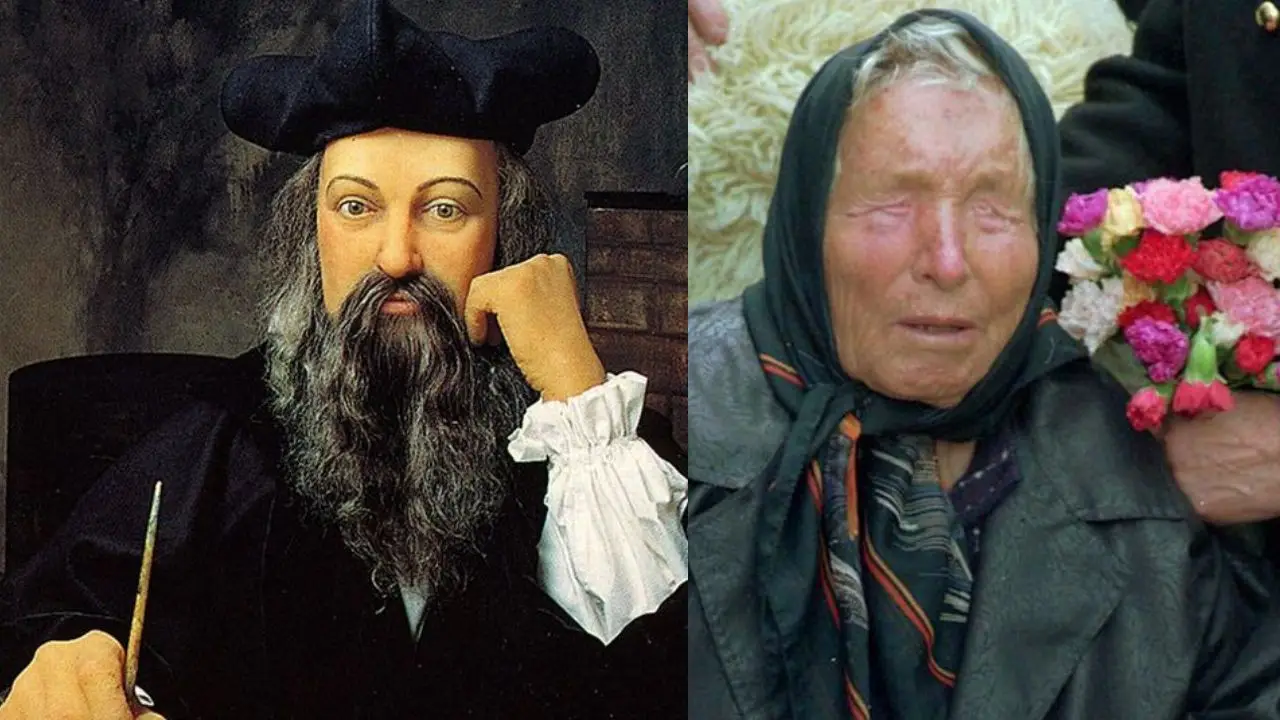
As 2025 draws to a close, discussions around famous prophecies and predictions have once again gained momentum on the internet. Throughout the year, social media platforms were flooded with claims linked to legendary figures such as Baba Vanga, French astrologer Nostradamus, and Japanese manga artist Ryo Tatsuki. Their alleged forecasts sparked fear, curiosity, debate, and entertainment among people worldwide. Now, at the year’s end, a key question dominates public discussion: how many of these predictions actually came true, and how many remained mere speculation?
Predictions That Dominated Social Media in 2025
In 2025, viral posts repeatedly claimed that Baba Vanga had foreseen major global events such as an economic collapse, a massive natural disaster in Asia, and a groundbreaking cure for cancer. Similarly, Nostradamus’ centuries-old writings were interpreted to suggest the fall of powerful leaders, worsening climate disasters, and a dramatic technological transformation. Meanwhile, Japanese manga artist Ryo Tatsuki was labeled the “new Baba Vanga” after claims surfaced about her predicting a devastating tsunami in Asia.
These prophecies circulated widely on platforms like Instagram, YouTube, and X (formerly Twitter), often amplified by self-proclaimed astrologers, tarot readers, and content creators. While some people took these predictions seriously, many viewed them as a mix of fear-driven narratives and online sensationalism.
Baba Vanga’s 2025 Predictions: What Actually Happened?
According to viral claims, Baba Vanga had predicted a severe global economic breakdown in 2025. In reality, the world economy experienced fluctuations, inflation concerns, and market volatility in certain regions, but no large-scale economic collapse occurred. Global financial systems remained stable despite ongoing challenges.
Another widely shared claim suggested a catastrophic natural disaster in Asia. While 2025 did witness natural events such as earthquakes, storms, and floods across parts of Asia, none matched the scale of a continent-wide catastrophe. These incidents, though serious, fell within patterns of ongoing climate-related challenges rather than an unprecedented disaster.
On the medical front, predictions about a revolutionary cancer cure were partially aligned with reality. Although no single “miracle cure” emerged, significant progress was made in areas like gene therapy, personalized medicine, and advanced cancer research. Scientists reported promising breakthroughs, but experts emphasized that cancer treatment remains a complex and evolving field.
Nostradamus and the Reality of 2025
Nostradamus’ cryptic verses are often reinterpreted every year, and 2025 was no exception. Claims suggested he had predicted the downfall of major rulers and dramatic political upheavals. While several countries experienced elections, leadership changes, and political shifts, no sudden or shocking global collapse of power structures took place.
However, some interpretations appeared loosely connected to real events. Climate-related crises intensified in 2025, with Europe facing extreme heatwaves, wildfires, and environmental stress. Climate change continued to be one of the most pressing global concerns, aligning broadly with predictions of environmental turmoil.
In technology, Nostradamus-inspired claims about a “tech revolution” seemed closer to reality. The year saw rapid advancements in artificial intelligence, automation, and quantum computing research. While these developments were driven by scientific progress rather than prophecy, they reinforced the idea that technology is reshaping the modern world at an unprecedented pace.
Ryo Tatsuki: The “New Baba Vanga” Claim Tested
Japanese manga artist Ryo Tatsuki gained sudden attention in 2025 after predictions attributed to her warned of a massive tsunami hitting Japan and other parts of Asia in July. The fear spread so widely that some travelers reportedly canceled trips to the region.
Ultimately, no such catastrophic tsunami occurred. While seismic activity is common in the region and minor warnings are routine, the predicted disaster never materialized. This episode highlighted how quickly unverified claims can influence public behavior in the age of social media.
The Bigger Picture: How Accurate Were the Predictions?
By the end of 2025, it became clear that most viral prophecies failed to come true. There was no world war, no alien contact, no global apocalypse, and no sudden collapse of civilization. Life continued with its usual mix of challenges, progress, and resilience.
What stood out instead was the growing influence of online prediction culture. Astrologers, tarot readers, and self-styled prophets gained massive followings, often presenting vague statements that could later be linked to real events without concrete evidence.
Final Verdict on 2025 Predictions
In summary, while a few predictions loosely overlapped with real-world developments—such as climate stress and technological progress—the majority of claims made by Baba Vanga, Nostradamus, and others did not come true in any literal or dramatic sense. The year 2025 proved once again that prophecies thrive more on interpretation and viral momentum than on factual accuracy.
As the world moves forward, these predictions remain a source of curiosity and conversation, but real change continues to be shaped by human decisions, science, and global cooperation—not destiny written centuries ago.