LIFESTYLE
Why Does Lord Shiva Wear a Snake Around His Neck? Know the Religious Significance of Vasuki
The month of Sawan holds a special place in the Hindu calendar and is considered an important time for devotees of Lord Shiva. The month is also associated with festivals such as Nag Panchami, when serpents are traditionally worshipped.
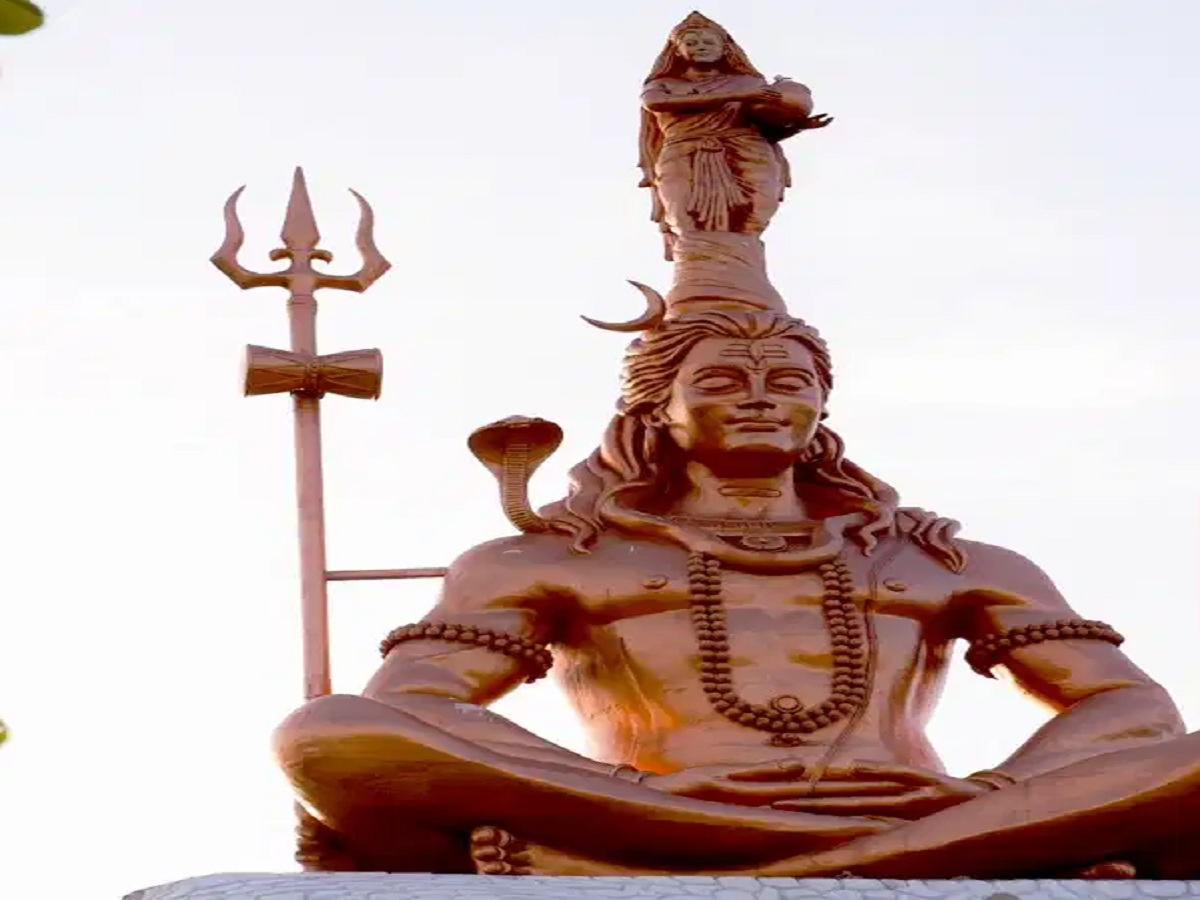
One of the most recognizable features of Lord Shiva is the serpent shown coiled around his neck. But why is a snake associated so closely with Mahadev? According to Hindu religious traditions, the serpent carries several symbolic meanings connected with fear, time, death, power and spiritual transformation.
Why is a snake shown around Lord Shiva's neck?
In Hindu traditions, snakes are often associated with power, mystery, protection and Kundalini energy. The serpent around Shiva's neck is therefore not merely an ornament but is considered to have deep symbolic significance.
A snake can represent fear and danger. Shiva wearing it calmly around his neck is traditionally interpreted as a symbol of fearlessness and mastery over forces that humans often fear.
It is also associated with the idea that a person who overcomes fear of death can rise above the fear and limitations associated with worldly existence.
What does the snake symbolize?
The serpent is also connected with the concepts of time and mortality. One of the most striking characteristics of a snake is its ability to shed its skin and emerge with a new outer form.
In religious interpretations, this can represent change, renewal and the continuous cycle of life.
Lord Shiva is also regarded as Mahakal, the one associated with and beyond the concept of time. Therefore, the serpent around his neck is sometimes interpreted as a reminder that Shiva transcends time, change and death.
Is the snake around Shiva's neck Vasuki?
According to popular Hindu religious traditions, the serpent associated with Lord Shiva is identified as Vasuki.
Vasuki also plays an important role in the story of Samudra Manthan, or the churning of the ocean. According to the legend, the gods and asuras used Vasuki as the rope to churn Mount Mandara.
During the churning, the deadly poison known as Halahal emerged from the ocean. The poison was believed to be powerful enough to threaten the entire universe.
Lord Shiva consumed the poison to protect creation. According to the legend, Goddess Parvati prevented the poison from spreading through his body, leaving his throat blue. This is why Shiva is known as Neelkanth.
What does this teach devotees?
The image of Shiva wearing a serpent around his neck is traditionally understood as a powerful spiritual symbol. It represents fearlessness, control over destructive forces and freedom from the fear of death.
The association with Vasuki and the Samudra Manthan story further connects the serpent with one of the most important episodes in Hindu mythology.
Thus, the snake around Lord Shiva's neck is not simply a distinctive feature of his appearance. In religious tradition, it represents deeper ideas about time, transformation, fear, mortality and spiritual strength.