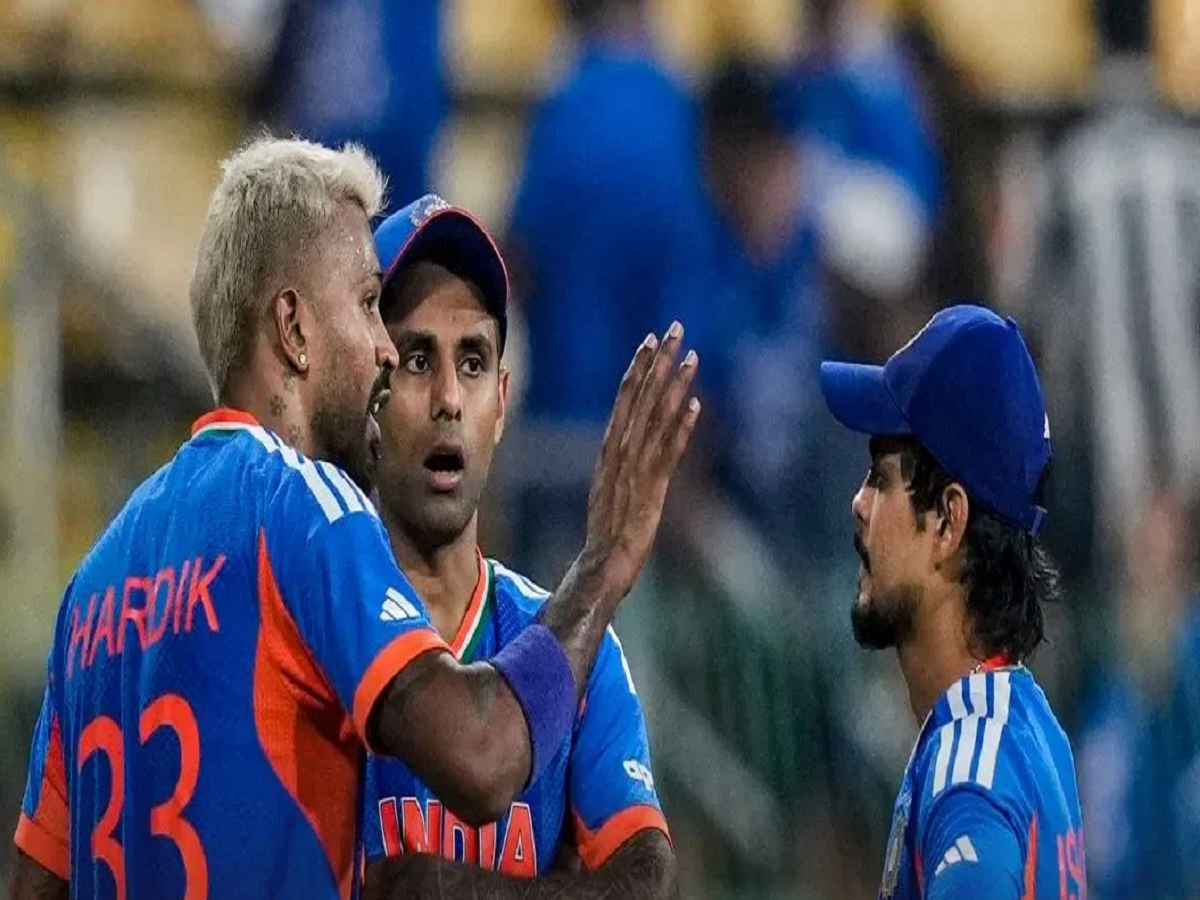
India’s road to the semi-finals of the ICC Men’s T20 World Cup 2026 has become extremely challenging after a heavy 76-run defeat against South Africa in the Super 8 stage. The loss has severely dented India’s Net Run Rate (NRR), which has dropped to –3.800, leaving the team with no margin for error.
Placed in Group 1, India now have two must-win matches remaining—against Zimbabwe and West Indies. Even victories, however, may not be enough unless India also manage to dramatically improve their NRR, which is likely to decide qualification in the event of teams finishing on equal points.
India’s immediate focus will be their upcoming clash against Zimbabwe, where the team’s strategy will revolve around converting the negative run rate into positive territory.
A Tough Mathematical Battle
India will need not just a win, but a big win. If India bowl first, restricting Zimbabwe to a low total will be critical. A smaller target allows for a quicker chase, which directly boosts the NRR. However, aggressive batting will still be essential regardless of the target.
If Zimbabwe are restricted to around 90 runs, India would need to chase the target within nine overs to achieve a significant jump in net run rate. Such a result could immediately bring India back into contention.
Should the target be closer to 150 runs, India would need to finish the chase in approximately 11 overs—a difficult but achievable task if the top order provides an explosive start. Even in this scenario, India’s NRR could move into the positive zone.
If Zimbabwe post a bigger total in the range of 180–200 runs, India would need to complete the chase within 12 to 15 overs. While this would still improve the NRR, it may not be sufficient on its own, leaving further pressure on the match against West Indies.
If India Bat First
The challenge becomes even steeper if India are forced to bat first. In that situation, the team would likely need to post a massive total of 220 to 250 runs or more, followed by a dominant bowling performance to restrict Zimbabwe to 100–120 runs or below.
Bowling the opposition out carries additional value, as dismissing a team before 20 overs significantly improves the NRR. India’s own collapse in their opening Super 8 match—where they were bowled out—has been a major factor behind the sharp decline in their net run rate.
As the Super 8 stage intensifies, India’s campaign now hinges not just on winning, but on winning big and fast. With little room for error, every over, boundary, and wicket will matter in their bid to stay alive in the tournament.