BUSINESS
Stock Market Rally: Sensex Surges Over 2,000 Points After 542 Days, Investors Gain ₹8 Lakh Crore in Just 5 Hours
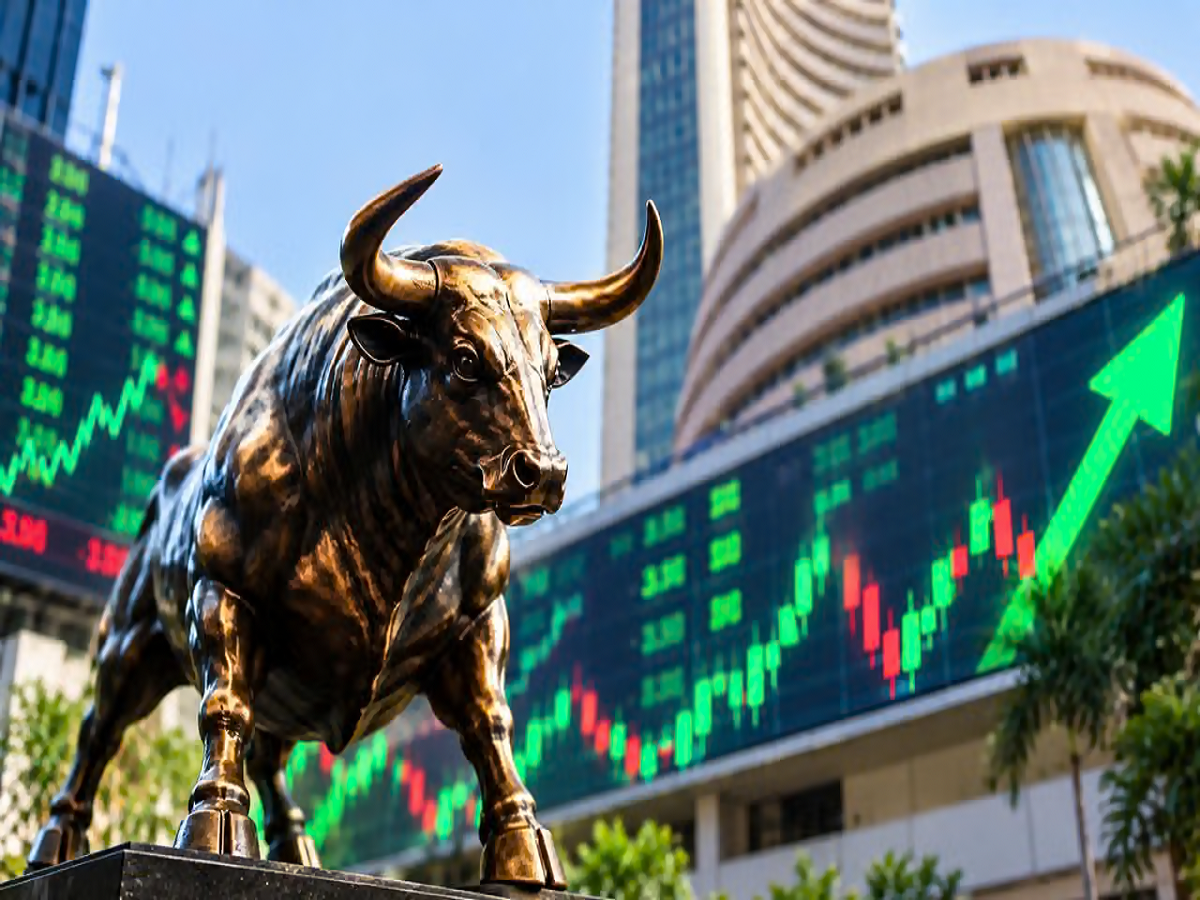
The Indian stock market witnessed a massive rally on November 5, 2026, bringing a wave of excitement to Dalal Street. Benchmark indices recorded their strongest gains in nearly 542 days, with the Sensex jumping more than 2,000 points during the trading session. The sharp rally also increased investors' wealth by approximately ₹8 lakh crore within just five hours.
The BSE Sensex surged 2,078.35 points, or 2.68%, to reach 79,379.75. Meanwhile, the Nifty 50 climbed to 24,557.80, comfortably crossing the 24,300 mark. Positive signals from GIFT Nifty before the opening bell had already indicated a strong start for the domestic market.
Biggest Sensex Rally in 542 Days
The latest surge stands out because the market had not witnessed a rally of nearly 2,000 points in the previous 542 days.
The last comparable major jump came on May 12, 2025, when the Sensex gained 2,975.43 points, or 3.74%. That rally followed easing tensions between India and Pakistan after a ceasefire agreement, along with improving global sentiment after a US-China trade deal.
This time, the rally has been driven by a different combination of global developments, including the outcome of the US midterm elections and a significant fall in international crude oil prices.
US Election Results and Falling Crude Oil Prices Boost Sentiment
Positive global cues played a major role in lifting the Indian stock market. According to the reported election results, the Democratic Party secured victories in both chambers of the US Congress, easing political uncertainty in Washington.
The developments also triggered a strong rally on Wall Street. The Dow Jones Industrial Average closed 3.03% higher, gaining 1,569 points. The S&P 500 advanced 1.58%, while the Nasdaq rose 1.44%.
Another major factor supporting the Indian market was the sharp decline in crude oil prices. Expectations of renewed diplomatic efforts towards peace in West Asia reportedly contributed to a 9% fall in Brent crude prices, bringing them down to $94.12 per barrel.
Lower crude oil prices are particularly beneficial for India, which depends heavily on imports to meet its energy requirements. Cheaper oil can reduce the country's import expenditure, ease pressure on the current account deficit and help control inflation.
Foreign Investor Buying Lifts Banking and Financial Stocks
The weakening US dollar and declining yields on American 10-year government bonds have also improved the attractiveness of emerging markets such as India.
Foreign institutional investors (FIIs) reportedly made net purchases worth ₹7,284 crore in the Indian stock market during the previous trading session. The return of foreign capital has provided additional support to domestic equities.
Banking and financial stocks emerged as major contributors to the rally. The Nifty Bank index jumped 1,516 points to reach 57,429.65, while the Bankex gained 2.85%.
Other sectors also witnessed strong buying activity. The Nifty IT index advanced 1.80% to 32,639, while the midcap index climbed 1.42%.
Heavy buying in leading companies such as Reliance Industries, ICICI Bank, HDFC Bank and Axis Bank further strengthened the benchmark indices.
What Could Happen to the Market Next?
Despite the sharp rally, market participants will be closely watching global developments to understand whether the momentum can continue.
Ponmudi R., CEO of Enrich Money, believes that the decline in international crude oil prices has provided significant support to Indian equities. However, the sustainability of the rally will depend on two important factors.
First, investors will monitor whether foreign institutional investors continue buying Indian stocks. Consistent foreign inflows could help maintain positive market sentiment.
Second, crude oil prices will remain an important indicator. If Brent crude continues trading below the $95-per-barrel level, it could offer further relief to the Indian economy and support market sentiment.
For investors, the sharp rally is encouraging, but market movements will continue to depend on global economic developments, foreign fund flows and commodity prices.