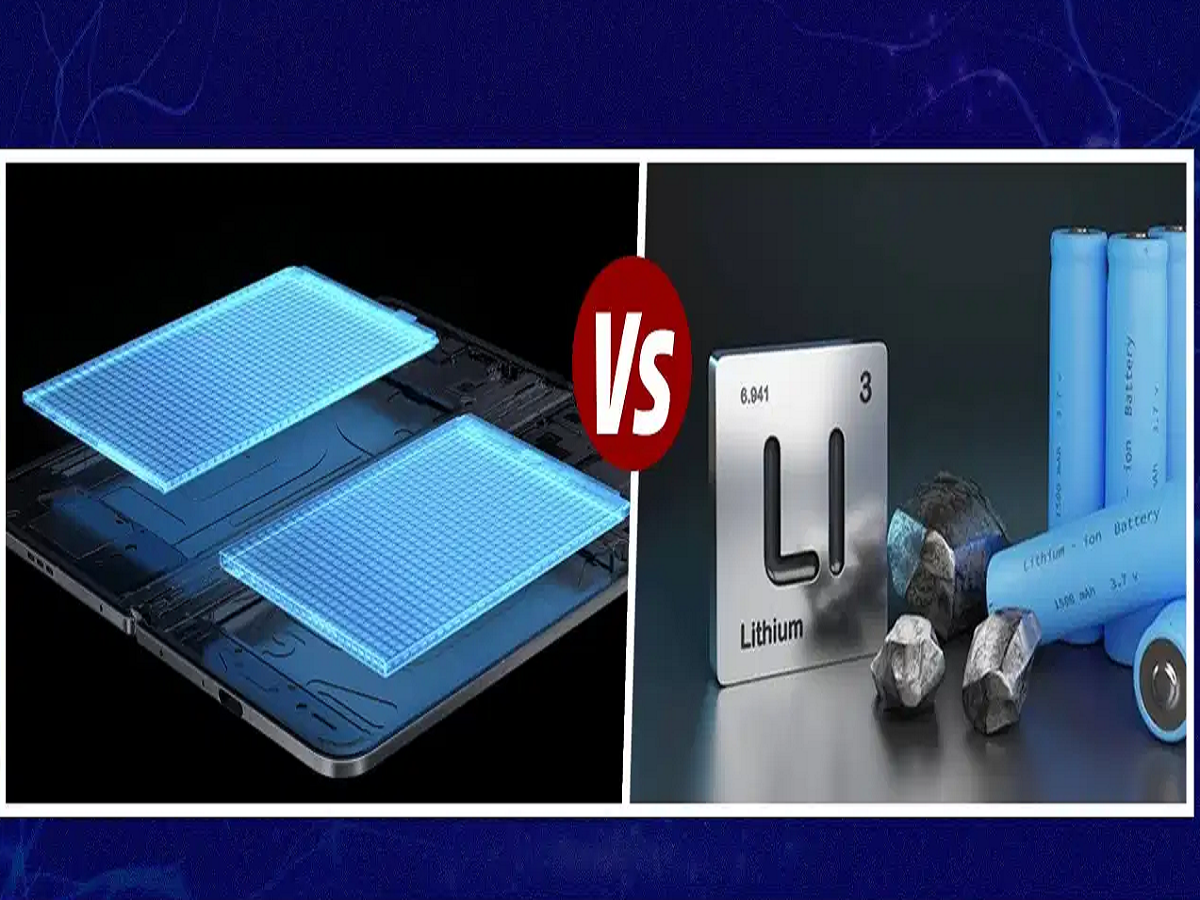
Smartphone batteries have become an important factor when choosing a new phone. While buyers often compare cameras, processors and displays, battery capacity and charging speed can make an equally significant difference to everyday use. To meet the demand for longer battery life without making smartphones thicker, manufacturers are increasingly adopting silicon-carbon battery technology.
Brands such as OnePlus, Oppo, Vivo, Xiaomi and Realme have introduced smartphones featuring this technology. However, traditional lithium-ion batteries remain widely used, including in several premium smartphones.
So, what exactly separates these two technologies, and which one should you choose?
What Is a Silicon-Carbon Battery?
A silicon-carbon battery is a type of lithium-ion battery that uses a silicon-carbon composite in its anode, the electrode that stores lithium during charging. Conventional lithium-ion smartphone batteries generally use graphite as the primary anode material.
Silicon can store substantially more lithium per unit of mass than graphite. By incorporating silicon into the anode, manufacturers can potentially increase the amount of energy stored in a given space.
This allows smartphone companies to fit larger batteries into relatively slim devices. It is particularly useful for foldable phones, where internal space is limited, and for smartphones designed to deliver extended battery life.
Importantly, silicon-carbon batteries are not a completely separate battery family. They are an advancement within lithium-ion battery technology.
1. Battery Capacity: Silicon-Carbon Has an Advantage
One of the biggest advantages of silicon-carbon technology is its potential to deliver greater battery capacity without significantly increasing a phone's thickness or weight.
Some conventional smartphones have batteries around 4,000–5,000 mAh, while newer models using silicon-carbon technology can offer capacities well above 6,000 mAh. Certain devices have even crossed the 10,000 mAh mark.
For example, the Realme P4 Power features a 10,001 mAh battery, demonstrating how manufacturers are pushing the limits of smartphone battery capacity.
However, battery capacity alone does not determine how long a phone lasts. Processor efficiency, display brightness, network conditions, software optimisation and usage patterns also affect battery life.
2. Charging Speed: Which Technology Is Faster?
Silicon-carbon batteries can support fast charging, but the technology itself does not guarantee faster charging speeds.
The actual charging rate depends on the battery's design, charging circuitry, thermal management and the power adapter supported by the phone.
Some smartphones with silicon-carbon batteries offer charging speeds of 80W, 100W or higher. However, conventional lithium-ion phones can also support fast charging at comparable speeds.
Therefore, when comparing smartphones, check the manufacturer's advertised charging time and independent reviews rather than assuming that one battery type always charges faster.
3. Battery Life and Long-Term Durability
Traditional graphite-based lithium-ion batteries benefit from decades of research and extensive real-world use. Manufacturers understand their ageing characteristics and have developed established methods for managing battery health.
Silicon offers higher lithium-storage capacity, but it expands considerably as lithium enters its structure during charging. Repeated expansion and contraction can cause mechanical stress, potentially affecting capacity retention over time.
Silicon-carbon anodes are designed to manage this challenge by combining silicon with carbon and using improved electrode structures. Nevertheless, long-term durability depends on the specific battery chemistry and engineering used by each manufacturer.
Neither technology guarantees a particular lifespan. Battery health is influenced by charging cycles, temperature, charging speed and how the phone is used.
4. Heat Management and Safety
Heat is an important consideration for every rechargeable lithium-ion battery, regardless of whether its anode uses graphite or silicon-carbon materials.
Excessive heat can accelerate battery ageing and, in extreme circumstances, contribute to battery failure. High-performance phones therefore use charging controls, temperature sensors and protective circuitry to manage heat.
Silicon-carbon technology does not automatically make a phone unsafe, nor does a traditional lithium-ion battery guarantee better safety. The quality of the battery cells, manufacturing process and phone-level safety systems matters considerably more than the technology's name alone.
Avoid leaving a phone in direct sunlight, using damaged charging accessories or charging a device that is unusually hot.
5. Which Battery Is Better for Foldable Smartphones?
Silicon-carbon technology can be particularly useful in foldable smartphones because these devices need to remain thin while accommodating multiple displays, cameras, hinges and other components.
A higher-capacity battery within a limited space can help manufacturers balance slim designs with practical battery life.
Traditional lithium-ion batteries can also be engineered for compact devices, but silicon-carbon technology offers another way to improve energy density. This makes it an attractive option as foldable phones become thinner and more feature-rich.
Silicon-Carbon vs Traditional Lithium-Ion: Quick Comparison
| Feature | Silicon-carbon battery | Conventional graphite-anode lithium-ion |
|---|---|---|
| Energy density potential | Higher | Generally lower |
| Capacity in limited space | Major advantage | More space may be required |
| Fast charging | Supported in suitable designs | Also supported |
| Long-term durability | Depends on silicon formulation and design | Well-established technology |
| Heat management | Requires careful engineering | Requires careful engineering |
| Best-known advantage | More capacity in a compact size | Mature, extensively established technology |
Which Battery Should You Choose When Buying a Phone?
If your priority is maximum battery capacity in a slim smartphone, a well-designed silicon-carbon model is worth considering. It can be especially useful for heavy users who spend long hours gaming, travelling, streaming videos or using mobile data.
However, do not choose a phone based on battery chemistry alone. Compare its actual battery capacity, screen-on time, charging speed, software support, battery replacement options and independent durability tests.
For people who keep their smartphones for three to five years, manufacturer-provided battery health information and warranty terms can be particularly useful.
Final Verdict
Silicon-carbon batteries represent an important development in smartphone battery design because they allow manufacturers to increase energy density and fit larger batteries into smaller spaces.
Traditional lithium-ion batteries remain a proven option, and their performance can be excellent when paired with efficient hardware and software.
Ultimately, silicon-carbon has a promising advantage in capacity per unit of space, but neither technology is universally better in every respect. The best smartphone battery is one that combines strong real-world endurance, reliable charging, effective temperature control and good long-term battery health.