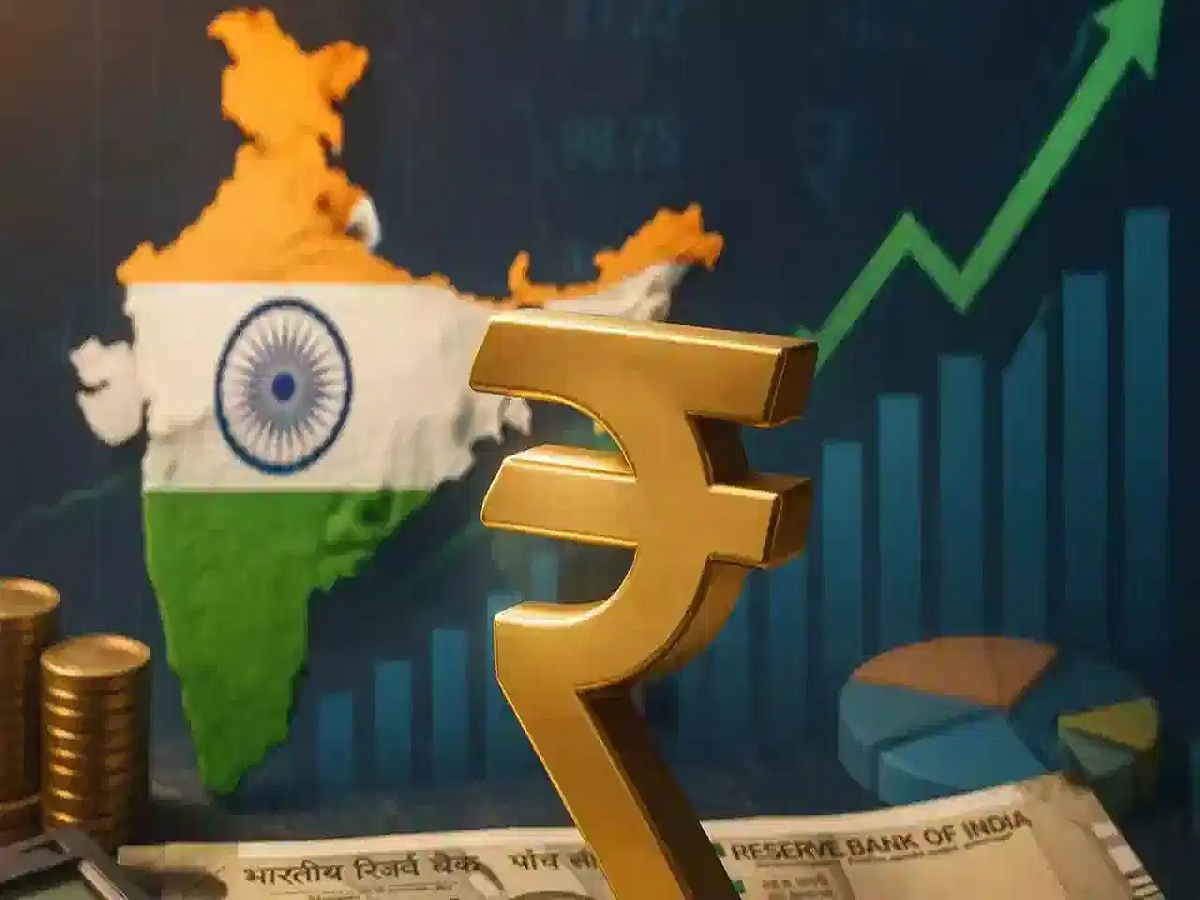
The Indian rupee ended Thursday's trading session on a positive note, recovering slightly against the US dollar as investors positioned themselves ahead of the Reserve Bank of India's monetary policy announcement. Support from lower global crude oil prices and expectations surrounding the RBI's policy decision helped the domestic currency strengthen, although geopolitical tensions in West Asia prevented a larger rally.
Market participants remained cautious as the RBI's Monetary Policy Committee (MPC) prepared to announce its latest policy decision, a development that could influence the direction of the rupee, bond yields, and equity markets in the coming days.
Rupee Ends Higher Against the Dollar
In the interbank foreign exchange market, the rupee opened at 95.70 against the US dollar and witnessed a volatile trading session.
During the day, the currency touched an intraday high of 95.59 and slipped to a low of 95.87 before settling at 95.74 per dollar. This represented a gain of 2 paise compared to the previous session's close.
The recovery came after the rupee had experienced significant pressure on Wednesday, when it weakened by 40 paise and settled at 95.76 against the greenback.
RBI Policy Decision in Focus
The primary focus for investors remains the outcome of the RBI's Monetary Policy Committee meeting.
The six-member MPC, chaired by RBI Governor Sanjay Malhotra, is expected to announce its policy decision on June 5. Financial markets are closely monitoring whether the central bank will alter interest rates or maintain the current stance amid global uncertainties.
Many economists believe that the RBI may prefer a cautious approach and leave the repo rate unchanged at 5.25 percent, considering the evolving inflation outlook and geopolitical developments.
West Asia Tensions Create Uncertainty
While lower crude oil prices provided support to the rupee, escalating tensions between the United States and Iran continued to keep investors on edge.
India remains heavily dependent on imported crude oil, making developments in West Asia particularly important for the country's economy. Any disruption in oil supplies or a sharp rise in energy prices could increase inflationary pressures and impact economic growth.
As geopolitical risks rise, investors often move money toward traditionally safer assets, increasing volatility across global currency and financial markets.
Dollar Index and Oil Prices Ease
The rupee also benefited from weakness in the US dollar and softer crude oil prices.
The dollar index, which tracks the performance of the US currency against six major global currencies, declined by 0.21 percent to 99.31.
At the same time, Brent crude oil prices fell by more than 2 percent, settling near $95.81 per barrel. Lower oil prices are generally viewed as positive for India because they help reduce import costs and ease pressure on the country's trade balance.
What Could Be Next for the Rupee?
Market analysts believe the rupee's near-term direction will depend on a combination of domestic and global factors.
According to market experts, rising US bond yields and continued geopolitical uncertainty could limit gains in the Indian currency. However, any positive breakthrough in diplomatic discussions between the US and Iran could improve investor sentiment and provide additional support to the rupee.
Apart from geopolitical developments, traders will closely monitor US employment data and the RBI's policy commentary for fresh clues about future market trends.
Analysts expect the dollar-rupee exchange rate to remain within the range of 95.40 to 96.15 in the near term, depending on incoming economic and geopolitical developments.
Stock Markets End Slightly Higher
Indian equity markets also finished the session in positive territory, though gains remained modest.
The benchmark BSE Sensex rose 13.84 points to close at 74,360.01, while the Nifty 50 gained 10.95 points to settle at 23,416.55.
However, foreign institutional investors remained net sellers during the session, offloading equities worth ₹4,447.06 crore. Continued FII selling remains a key factor that could influence both the stock market and the rupee in the coming weeks.
With the RBI policy decision now at the center of attention, investors are preparing for a potentially eventful trading session that could shape the direction of India's currency and financial markets in the short term.