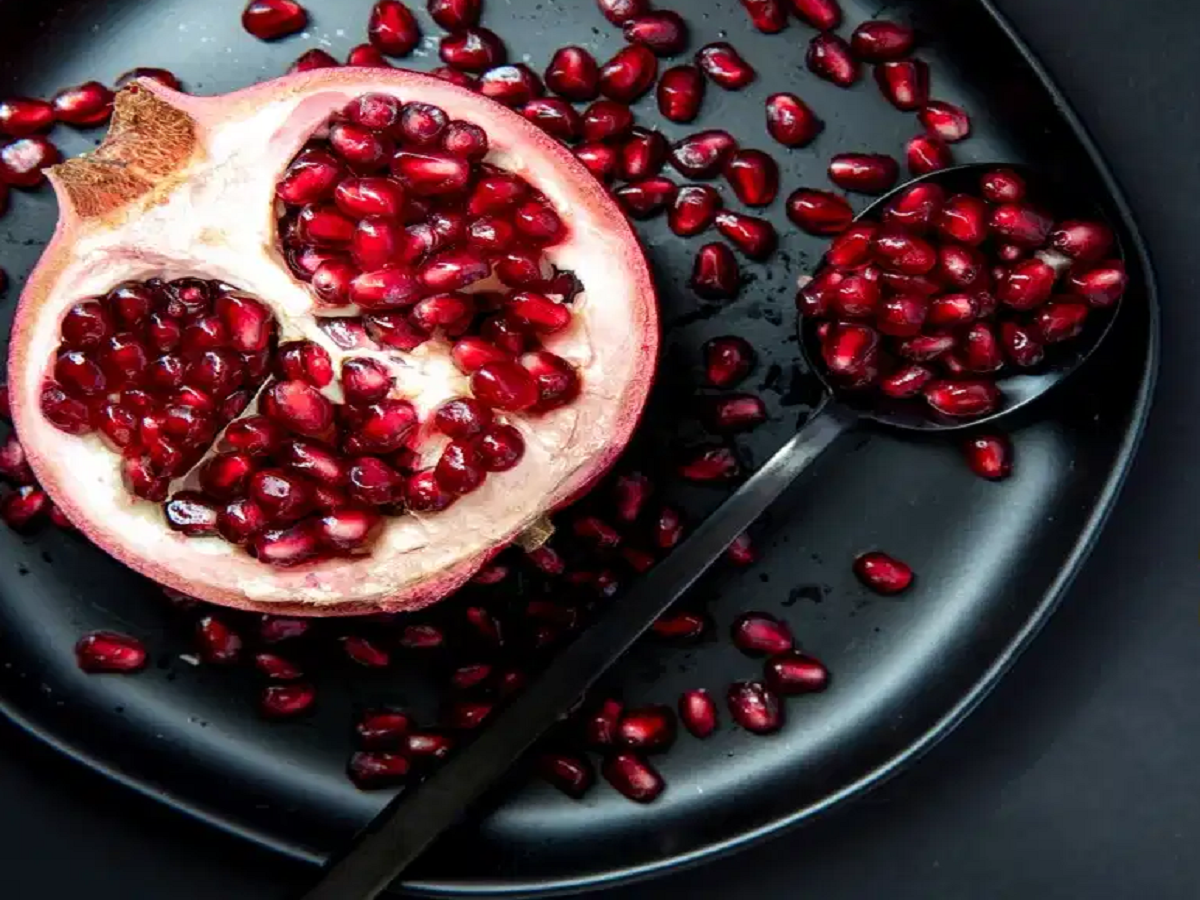
Fruits are widely considered an important part of a balanced diet because they provide vitamins, minerals, antioxidants and other beneficial plant compounds. Among them, pomegranate has long attracted attention for its potential cardiovascular benefits. Now, new research has highlighted a compound associated with foods such as pomegranates, walnuts and certain berries that could offer a new direction for studying heart disease.
Researchers at King's College London examined urolithin A, a compound that can be produced in the body when gut bacteria process certain substances found in foods including pomegranates and walnuts. The study suggests that urolithin A could help improve the heart's ability to relax and function properly.
In animal experiments, researchers observed improvements of up to 80% in certain measures of heart function. However, the findings should be interpreted carefully: the reported improvement was seen in experimental models and does not mean that eating pomegranate can improve human heart function by 80%.
Why Is the Heart's Ability to Relax Important?
The heart continuously contracts and relaxes to circulate blood throughout the body. After each contraction, the heart muscle must relax so its chambers can fill with blood before the next heartbeat.
In some forms of heart failure, the heart can still pump blood, but the muscle becomes unusually stiff and does not relax effectively. As a result, the heart may not fill with enough blood between beats.
People affected by this type of heart problem can experience symptoms such as shortness of breath, tiredness and reduced ability to exercise or perform routine physical activities.
Researchers are therefore interested in finding treatments that can improve relaxation of the heart muscle and potentially reduce some of the structural changes associated with the condition.
What Is Urolithin A?
Urolithin A is not simply a nutrient present in large quantities in pomegranate itself. Instead, it can be produced by certain gut bacteria after a person consumes foods containing compounds known as ellagitannins and ellagic acid.
Pomegranates, walnuts and some berries contain these naturally occurring plant compounds. However, people's ability to produce urolithin A can vary depending partly on the composition of their gut microbiome.
The researchers investigated whether urolithin A could influence mechanisms involved in the contraction and relaxation of heart muscle.
According to the findings, the compound appeared to activate a protein involved in the functioning of the heart and blood vessels. This activity may help heart muscle relax more effectively.
Heart Function Improved by Up to 80% in Animal Experiments
One of the most notable findings came from animal studies. Researchers reported improvements of up to 80% in certain measurements associated with heart function after treatment with urolithin A.
The experiments also indicated potentially beneficial changes in the structure of the heart. Researchers observed reductions in harmful scarring of heart tissue, known as fibrosis, as well as improvements related to abnormal thickening of the heart muscle.
These changes are important because excessive fibrosis and thickening can make the heart stiffer and interfere with its ability to relax and fill with blood.
Researchers also went beyond animal experiments by studying laboratory-grown heart tissue created using human cells.
In these laboratory tests, urolithin A similarly appeared to help the heart tissue relax more effectively, providing researchers with another reason to investigate the compound further.
Does Eating Pomegranate Treat Heart Disease?
Not based on the evidence available so far.
Although the findings are promising, they do not establish pomegranate, walnuts or urolithin A as a proven treatment for heart failure in humans. The strongest results reported in the research came from experimental models, while the human-cell findings were obtained from tissue studied in a laboratory rather than from patients.
Clinical trials involving people would be needed to determine whether urolithin A is safe and effective as a treatment, what dose might be appropriate and whether the benefits observed experimentally can be reproduced in patients.
It is therefore misleading to interpret the research as evidence that simply eating more pomegranate can cure heart disease or improve heart function by 80%.
What Does the Study Mean for the Future?
The research provides scientists with a potentially interesting pathway for developing or investigating future therapies for conditions in which the heart has difficulty relaxing properly.
Urolithin A's effects on heart-muscle relaxation, fibrosis and abnormal thickening make it a candidate for further research. However, the transition from successful animal and laboratory experiments to an effective treatment for people can take considerable time and requires carefully controlled clinical studies.
For now, pomegranates, walnuts and berries can continue to be consumed as part of a balanced diet, but people with heart disease should follow medical advice and prescribed treatments rather than using these foods as substitutes for proven care.
The study's most important message is not that pomegranate is a new cure for heart disease, but that a compound linked to certain foods has shown potentially significant cardiovascular effects in early-stage research. Whether those benefits ultimately translate into an effective treatment for humans remains to be established.