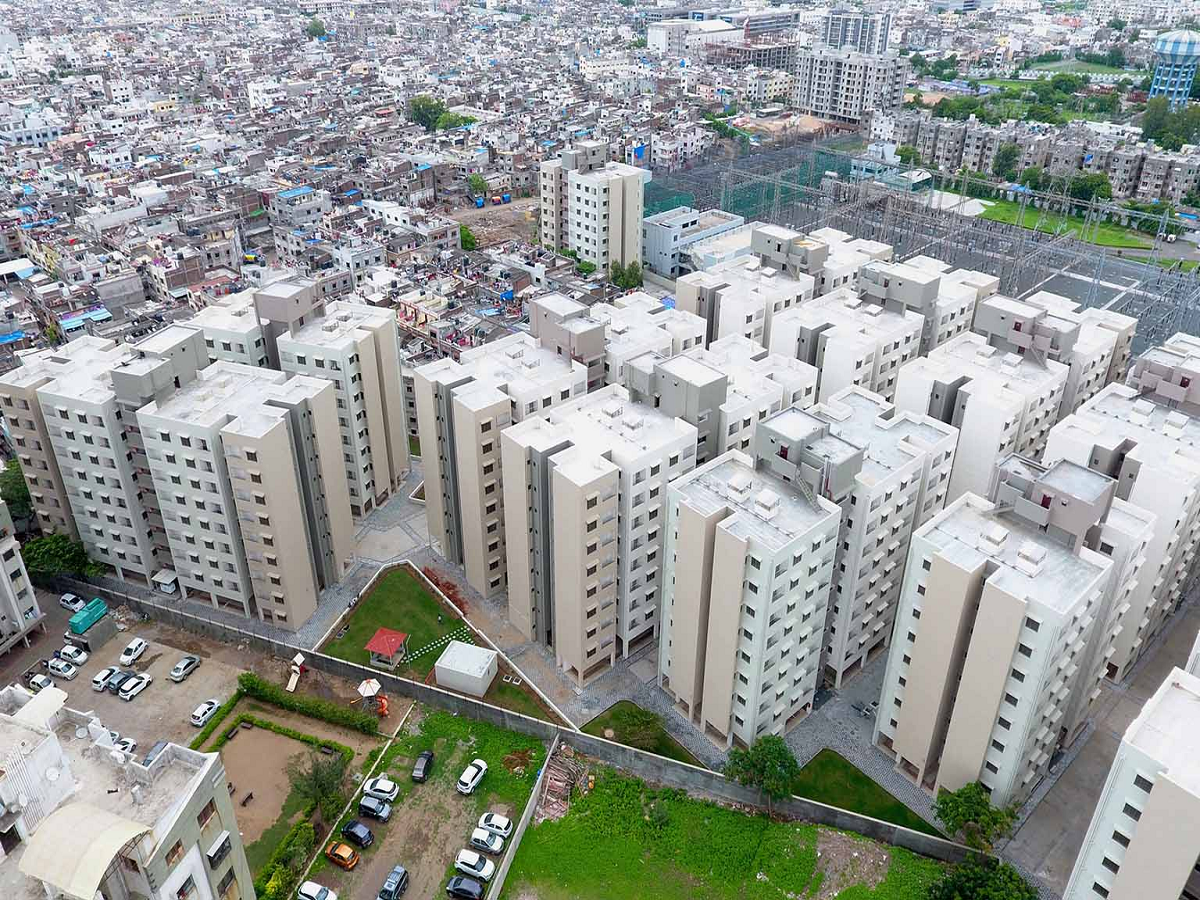
For families living in urban areas, buying or constructing a house can be a major financial challenge. The Government of India is implementing Pradhan Mantri Awas Yojana–Urban 2.0 (PMAY-U 2.0) to provide housing assistance to eligible urban families.
A recent government update said that more than 29,000 additional houses were approved under the scheme, taking the total number of houses sanctioned under PMAY-U 2.0 to 18.77 lakh as of September 2026.
What is PMAY-U 2.0?
PMAY-U 2.0 is the government's housing programme for eligible families in urban areas.
The scheme is intended to provide assistance to families who do not have an eligible permanent house and need support for constructing, purchasing or obtaining affordable housing, depending on the applicable component.
The programme covers the period from 2024 to 2029.
Who can benefit?
The scheme primarily targets eligible urban families belonging to economically weaker and lower-income sections, as well as other specified income categories covered by the scheme.
One important condition is that the beneficiary family should meet the applicable housing and income eligibility requirements.
Applicants should also check whether they or their family members have already received benefits under previous government housing schemes, as this can affect eligibility.
What types of assistance are available?
PMAY-U 2.0 has multiple components designed for different housing requirements.
1. Beneficiary-Led Construction
Eligible families who own land can receive assistance for constructing a house, subject to the scheme's conditions.
This can be useful for families that have a plot but require financial assistance to construct a proper dwelling.
2. Affordable Housing in Partnership
Under this component, affordable houses are developed through partnerships involving government agencies, private agencies and other implementing organisations.
Eligible beneficiaries can purchase houses developed under the programme according to the applicable rules.
3. Affordable Rental Housing
The scheme also includes affordable rental housing for eligible groups who may not be looking to immediately purchase a home.
This component is particularly relevant for migrants, workers and other urban residents who require affordable rental accommodation.
4. Interest Subsidy Scheme
PMAY-U 2.0 also includes an Interest Subsidy Scheme for eligible home loans.
Depending on eligibility and the applicable conditions, the subsidy can reduce the effective cost of borrowing for a qualifying beneficiary.
The exact benefit depends on factors such as the loan amount, income category and other scheme requirements.
Recent government update
The Ministry of Housing and Urban Affairs approved more than 29,000 additional houses at its Central Sanctioning and Monitoring Committee meeting held on 10 September 2026.
With these approvals, the cumulative number of houses sanctioned under PMAY-U 2.0 reached 18.77 lakh.
The government has described the programme as part of its effort to expand access to affordable housing in urban areas.
How can eligible people apply?
People interested in PMAY-U 2.0 can check their eligibility and apply through the official PMAY-U 2.0 system or through the relevant government authorities and implementing agencies.
Applicants should keep documents such as Aadhaar, bank-account details, income-related documents and property or land documents, wherever applicable, ready for verification.
The documents required can vary depending on the component under which a person applies.
Important point before applying
Approval under PMAY-U 2.0 is not automatic simply because a person falls within a particular income group.
Eligibility is determined according to the scheme's specific conditions, including household status, existing housing ownership, income and the particular component being applied for.
Therefore, applicants should verify their eligibility through the official government portal or designated authority before making any financial commitment.