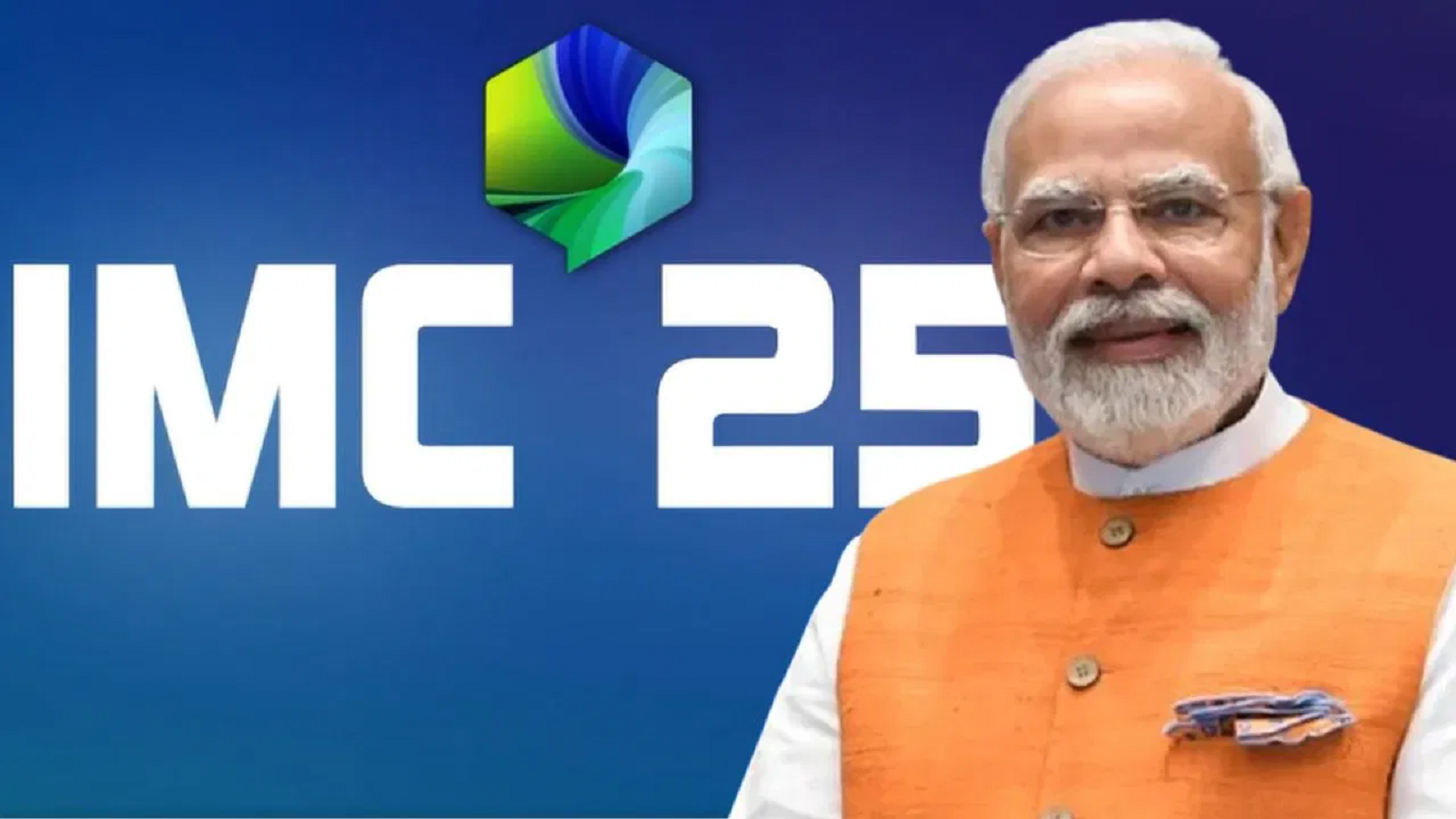
Prime Minister Narendra Modi inaugurated the 9th edition of the India Mobile Congress (IMC) 2025 on October 8 at the Yashobhoomi International Convention Center in New Delhi. India Mobile Congress is Asia’s largest telecom, media, and technology event, jointly organized by the Department of Telecommunications (DoT) and the Cellular Operators Association of India (COAI).
The theme for IMC 2025 is "Innovate to Transform," highlighting India's commitment to leveraging innovation for digital and societal progress. The four-day event runs from October 8 to 11 and focuses on cutting-edge topics such as 6G, satellite communications (satcom), quantum communications, semiconductors, cybersecurity, artificial intelligence (AI), clean technology, smart mobility, and Industry 4.0.
IMC 2025 will showcase over 1,600 new technology use cases and host more than 400 companies with participation from over 7,000 delegates and 150,000 visitors representing more than 150 countries. International delegations from countries including the UK, Japan, Canada, Austria, and Russia are present, strengthening global technology partnerships for India.
Union Communications Minister Jyotiraditya Scindia, who visited the venue to review preparations before the inauguration, announced that the government has issued three SATCOM licenses. The SATCOM Summit at the event aims to discuss expanding satellite communication services to provide connectivity, especially in rural and remote areas of India. Scindia stressed the importance of securing telecom services and protecting data privacy.
PM Modi praised the rapid digital transformation India has achieved, driven by youthful innovators, startups, and government support. He called IMC 2025 a global platform symbolizing India’s rise as a leader in the digital economy and next-generation technologies.
The event marks a major milestone in India’s journey towards becoming a self-reliant and globally influential technology powerhouse by 2047, with a clear focus on future-ready fields including 6G, AI, quantum computing, and advanced cybersecurity.