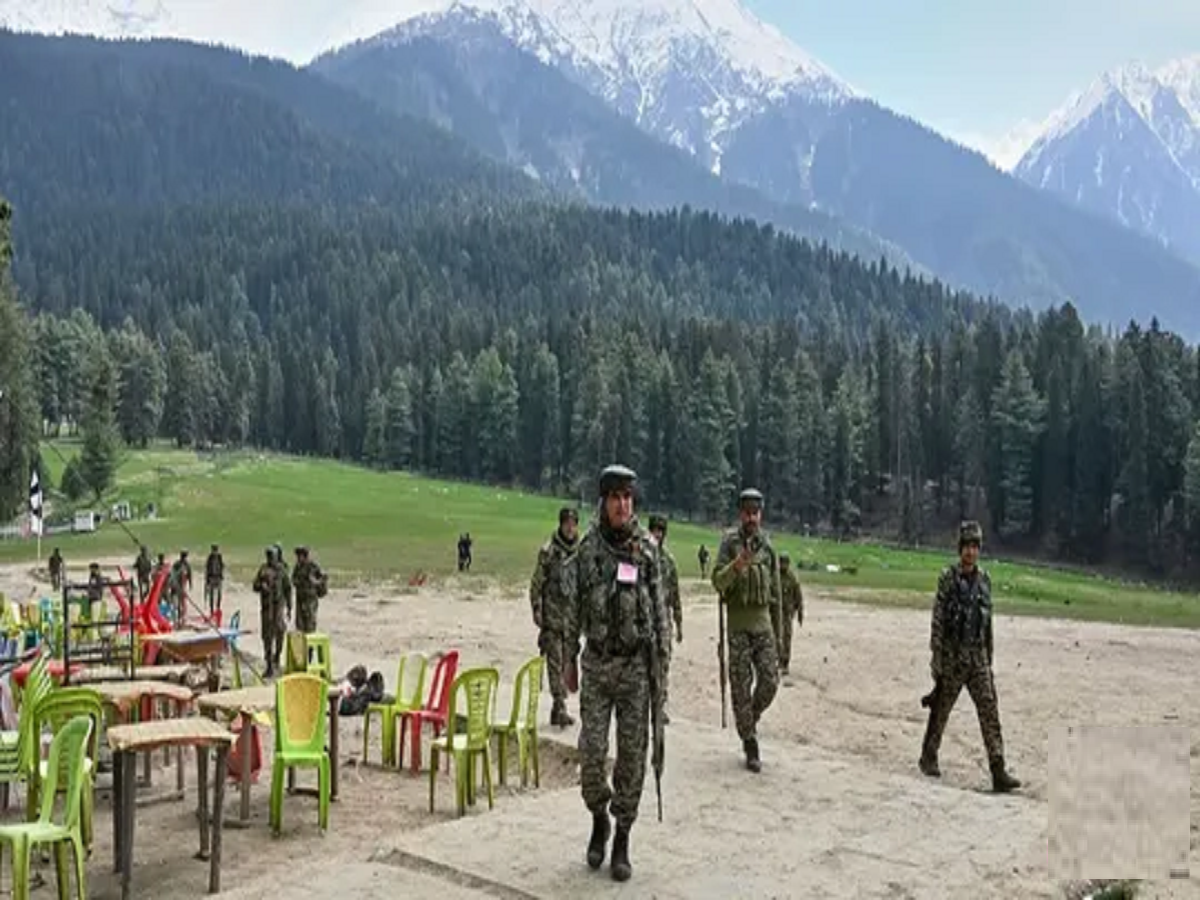
Phones purchased from Pakistan, encrypted apps, and local support... this is how the Pahalgam attack was planned
According to the NIA chargesheet, data recovered from the terrorists' phones revealed the plot of the Pahalgam attack. The data revealed that preparations for the attack had been underway for a week. The terrorists involved in the attack were killed by security forces in Operation Mahadev on July 28, 2026.
More than a year has passed since the Pahalgam attack. Meanwhile, it has been revealed that the April 22nd attack was planned approximately a week earlier. According to the NIA chargesheet, data recovered from the terrorists' phones revealed the Pahalgam attack plot. The data revealed that preparations for the attack had been underway for a week. The terrorists involved in the attack were killed by security forces in Operation Mahadev on July 28, 2026. The NIA found two screenshots from their phones, which contained a map of the Baisaran Valley.
According to the Indian Express report, these screenshots also had time stamps. This revealed that they were taken on April 15th and 16th. According to the NIA, the screenshots show that points were marked on a mobile app. These marks were placed at the same points that Sajid Jatt, the handler in Pakistan, had instructed the terrorists. The time stamps indicate that the terrorists had begun planning the attack and reconnaissance of the Baisaran Valley at least as early as April 15th. Furthermore, the use of a GPS-based app has also been revealed in this case. This GPS-based mobile app is used for hiking and mountain navigation. However, the terrorists used it to share coordinates.
Two people gave local support
According to the NIA investigation, on April 21, the three terrorists—Faisal Jatt alias Suleman, Habib Tahir alias Jibran, and Hamza Afghani—took refuge in a mud hut in the upper reaches of the valley. In Kashmir, such a hut is called a dhok, used by shepherds during the summer. This dhok belonged to Parvez and his uncle, Bashir Ahmed, who provided local support to the terrorists. They are accused of providing food and shelter to the terrorists a day before the attack.
According to the NIA, analysis of data extracted from two mobile phones revealed numerous photographs of terrorists and screenshots of chats with terrorist handler Ali Sajid, also known as Ali Bhai. These screenshots showed the terrorists guiding them on their path. Furthermore, the phones contained screenshots of an app displaying coordinates of locations near Baisaran. Sajid, the handler in question, is a Pakistani national. The chargesheet describes Sajid as a commander of the banned terrorist organization Lashkar-e-Taiba and its proxy organization, The Resistance Front.
According to the NIA, analysis of data extracted from two mobile phones revealed numerous photographs of terrorists and screenshots of chats with terrorist handler Ali Sajid, also known as Ali Bhai. These screenshots showed the terrorists guiding them on their path. Furthermore, the phones contained screenshots of an app displaying coordinates of locations near Baisaran. Sajid, the handler in question, is a Pakistani national. The chargesheet describes Sajid as a commander of the banned terrorist organization Lashkar-e-Taiba and its proxy organization, The Resistance Front.
The witness also identified
A witness who identified Faisal's body told the NIA that he met Faisal and three other terrorists in September 2024. His identity has been withheld for his safety. According to the witness, all four terrorists spoke Punjabi and Urdu. He said he was forced to lead the terrorists to the location where a drone dropped a yellow package. The package contained 20 pistols, 1.5 million rupees, and triangular bombs.
The phones were purchased in Pakistan.
The investigation also revealed that two phones recovered from the terrorists were purchased in Pakistan. They used special apps on their mobile phones to communicate with overground workers (OGWs). Baisaran's remote location and lack of CCTV cameras made it an easy target for terrorists. During the investigation, the NIA interviewed over 1,100 witnesses.
PC: Lalantop