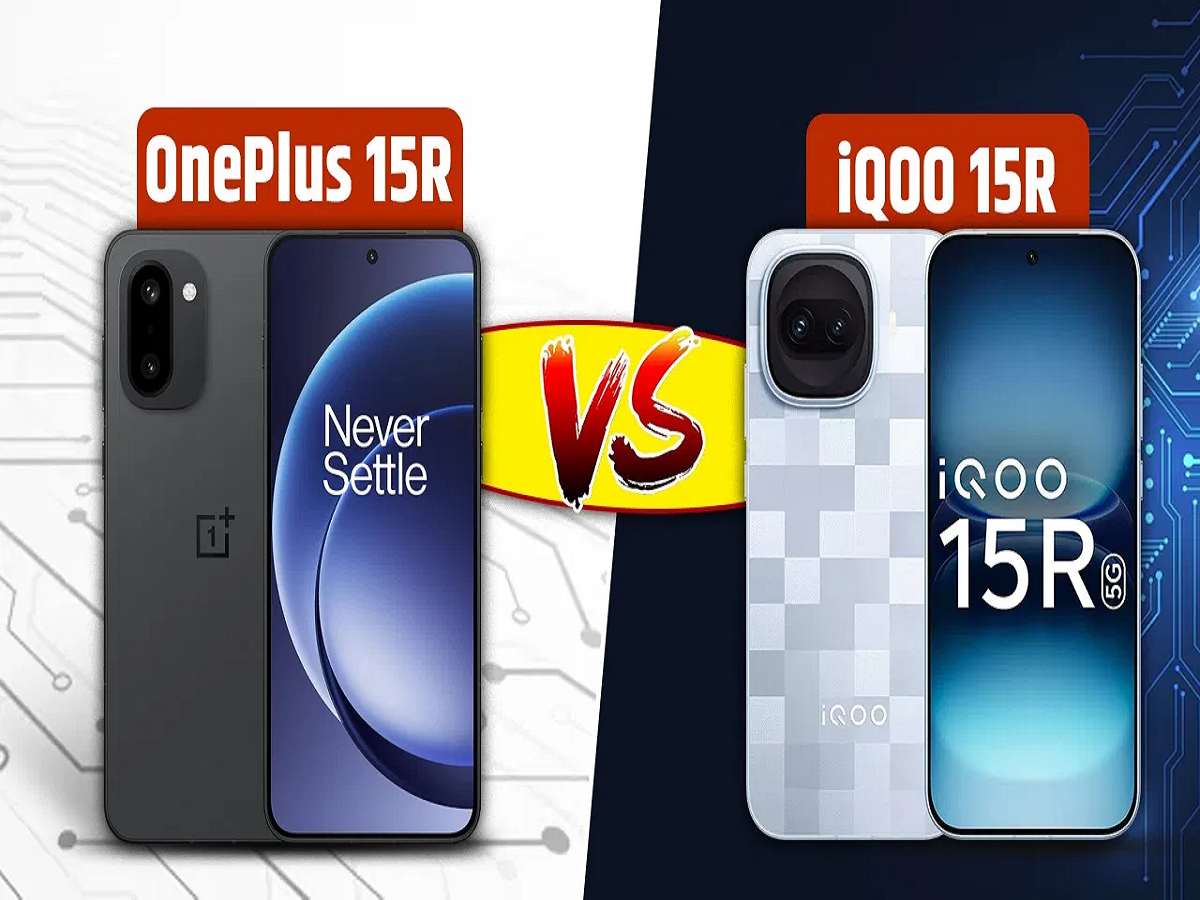
If you’re planning to spend around ₹50,000 on a new smartphone, the competition between OnePlus 15R and iQOO 15R is hard to ignore. Both devices target the premium mid-range segment and promise top-tier performance—but which one actually delivers more power?
On paper, both phones are powered by the same chipset—the Snapdragon 8 Gen 5. This means in real-world usage, there’s barely any noticeable difference in everyday performance. Apps open quickly, gaming is smooth, and multitasking feels effortless on both devices. However, when you look at benchmark scores, a slight difference appears. The iQOO 15R scores around 3,078,708 on AnTuTu, while the OnePlus 15R comes in slightly lower at 2,957,229. This suggests that the iQOO device has a marginal edge in raw performance, especially for heavy gaming or intensive tasks.
Beyond the processor, both phones offer strong overall packages. The OnePlus 15R features a larger 6.83-inch AMOLED display with a higher 165Hz refresh rate, making it slightly smoother for scrolling and gaming. Meanwhile, the iQOO 15R has a slightly smaller 6.59-inch AMOLED display but compensates with higher brightness levels, which can be useful outdoors.
Battery is another area where iQOO pulls ahead. It packs a massive 7600mAh battery with 100W fast charging, compared to the OnePlus 15R’s 7400mAh battery and 80W charging. This gives iQOO a slight advantage in both endurance and charging speed.
Camera performance is fairly competitive. The iQOO 15R offers a 50MP Sony LYT-700V main sensor and supports 4K 60fps recording on both front and rear cameras. The OnePlus 15R, on the other hand, uses a 50MP Sony IMX906 sensor and stands out with 4K 120fps video recording on the rear camera, which is great for videography enthusiasts.
In simple terms, if your main focus is raw performance and battery, the iQOO 15R has a slight edge. But if you value smoother display experience and advanced video features, the OnePlus 15R is equally compelling. The difference in processor power exists, but it’s not big enough to drastically change everyday usage—so your final choice should depend more on your overall priorities than just the chipset.