BUSINESS
October 1 Rules Change: From SBI ATM Charges to LPG and Railways, These New Rules Can Affect Your Pocket
The beginning of October brings several important changes for bank customers, LPG consumers, NPS subscribers, taxpayers and railway passengers. While some rules have come into effect from October 1, other changes, such as the new UPI merchant-discount framework, are scheduled to take effect later in the month.
SBI ATM transactions become costlier after the free limit
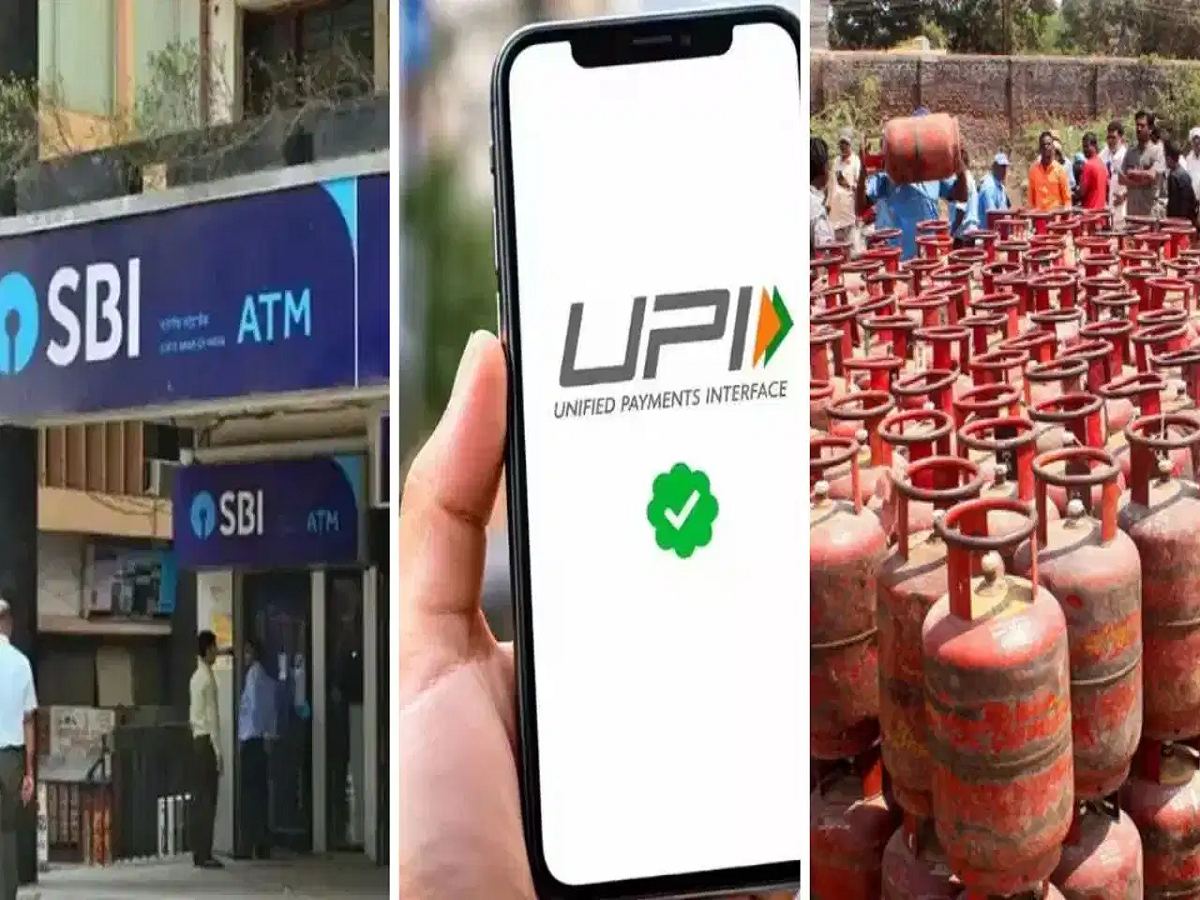
SBI salary package account holders will now have a lower free transaction limit when using other banks' ATMs. From October 1, the number of free transactions has been reduced from 10 to 5 per month.
After the free limit is exhausted, financial transactions at other banks' ATMs will attract a charge of ₹23 plus GST, while non-financial transactions will cost ₹11 plus GST.
For Basic Savings Bank Deposit accounts, the first four cash withdrawals in a month remain free. Additional withdrawals may attract applicable charges.
Aadhaar authentication required for LPG subsidy
Domestic LPG customers receiving subsidy-related benefits will need to complete Aadhaar-based biometric authentication.
Customers who have already completed the required authentication do not need to repeat the process. Depending on the oil marketing company, authentication may be possible during delivery, at the distributor's office or through its mobile application.
The objective is to ensure that subsidised LPG benefits reach eligible beneficiaries.
New MDR framework for some UPI merchant payments
A new UPI merchant-payment framework is scheduled to take effect from October 15, 2026.
Under the reported framework, certain Person-to-Merchant transactions above ₹2,000 will attract an MDR within the merchant-payment ecosystem. This does not mean customers will see a separate MDR charge simply for making a qualifying UPI payment.
Person-to-person UPI transfers continue to remain free, while merchant transactions within the applicable threshold remain outside the new MDR.
NPS charges also change
NPS subscribers opening accounts through a Point of Presence will see a revised charge structure from October 1.
A one-time onboarding charge of ₹200 per PRAN has been specified for PoP-based onboarding, while fully digital, non-face-to-face onboarding can attract a lower charge. An annual AUM-based charge will also apply to eligible non-dormant accounts.
GST and other applicable taxes may be charged separately.
Buying property from an NRI becomes simpler for buyers
For resident individuals and HUFs purchasing property from an NRI, the process for depositing and reporting TDS has been changed.
A separate TAN is no longer required in the specified cases. Buyers can use their PAN under the new reporting mechanism. However, the underlying obligation to deduct TDS when applicable continues.
Tax deadlines extended
Taxpayers covered by tax-audit requirements have received additional time for AY 2026-27.
The tax-audit report deadline has been extended to October 21, 2026, while the corresponding ITR filing deadline has been extended to November 21, 2026 for the taxpayers covered by the extension.
Banks to disclose bulk-deposit rates more transparently
New RBI requirements will make interest-rate information for large or bulk deposits more transparent.
Banks will have to publish applicable rates on their websites within the prescribed daily reporting window. The rules also aim to reduce arbitrary differences in rates offered by different branches for comparable deposits.
Carry original ID when travelling by train
Indian Railways is conducting a special ticket-checking drive from October 1 to October 31 across the Central Railway network.
Passengers travelling using concession tickets, specified reservation quotas, railway passes, e-Passes and PTOs may be asked to produce their original identification and eligibility documents.
Therefore, carrying the required original documents along with the ticket can help avoid problems during checking.
No valid PUCC, no fuel in Delhi-NCR
A particularly important rule for vehicle owners in Delhi-NCR concerns the Pollution Under Control Certificate.
Vehicles without a valid PUCC may be denied petrol, diesel or CNG at participating fuel stations. Authorities are using systems such as Automatic Number Plate Recognition to identify vehicles and enforce the requirement.
What should you check this month?
From ATM usage and LPG authentication to tax deadlines and vehicle documents, several everyday financial and administrative rules are changing.
Before making a payment, travelling by train or visiting a fuel station, it is worth checking whether the new requirements apply to you. A few minutes of preparation can help avoid additional charges, delays or unnecessary inconvenience.