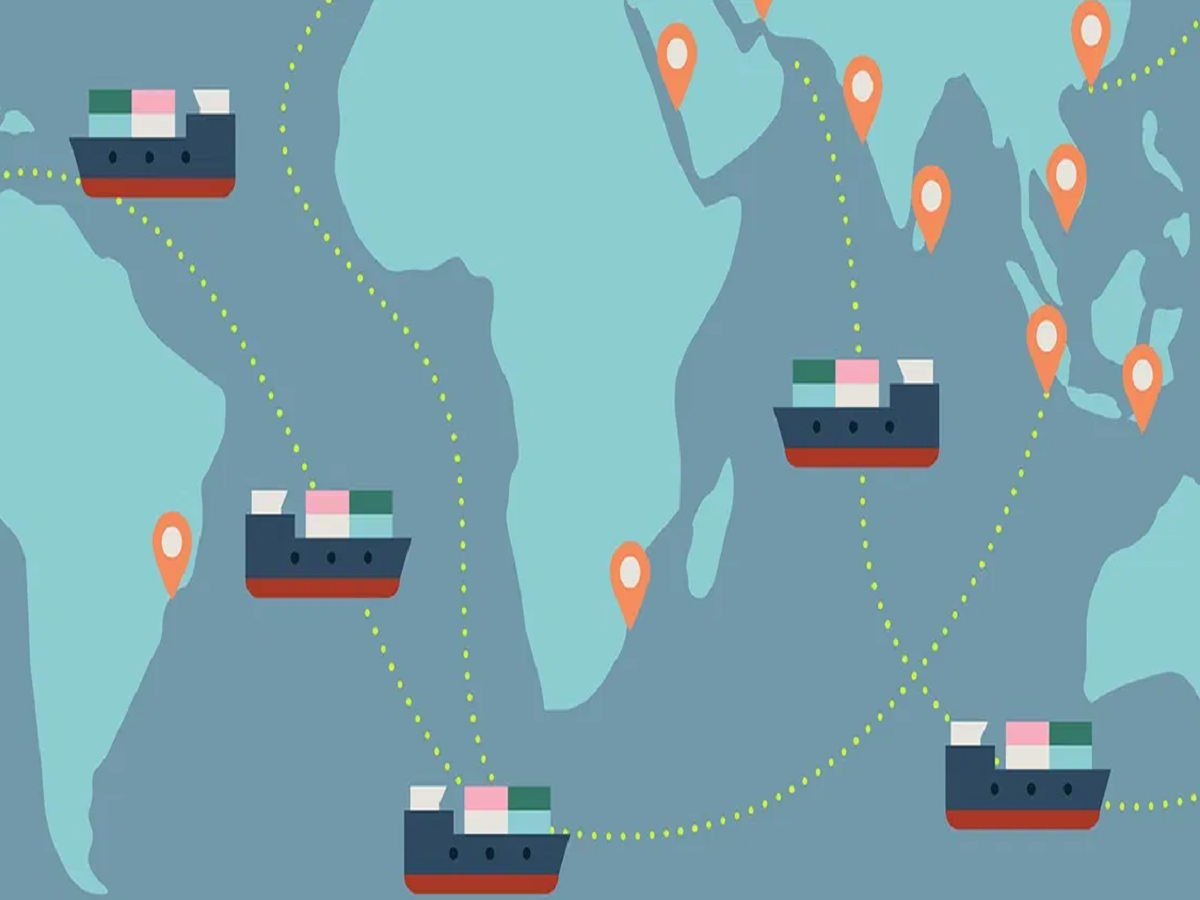
Today’s global power dynamics are no longer defined only by land borders—they are increasingly shaped by control over the seas. Nearly 80% of global trade moves through maritime routes, making oceans the backbone of energy supply, trade networks, and economic stability. Countries that dominate these sea lanes gain a significant strategic advantage in global politics.
One of the most critical regions is the South China Sea, which carries about one-third of global trade. China has steadily strengthened its hold here by building artificial islands and increasing its military presence, clearly signaling its intent to control this vital corridor. This dominance allows China to influence not just regional trade but also global supply chains.
The Arabian Sea is another crucial maritime region, acting as a bridge between Asia, Europe, and Africa. It is especially important for oil transportation from Gulf countries to the rest of the world. India holds a strong strategic position in this region, supported by its growing naval capabilities and geographic advantage, making it a key player in securing energy routes and trade flows.
Moving west, the Mediterranean Sea and the Suez Canal form one of the most important trade links between Asia and Europe. Egypt’s control over the Suez Canal gives it immense strategic importance, as even a minor disruption here can impact global trade, including food and fuel supplies. Along with the Bab-el-Mandeb strait, this region handles a significant share of the world’s maritime movement.
The Bay of Bengal is another area where India has been steadily expanding its influence. This region is vital for trade with Southeast Asian countries, and India has strengthened its position through naval bases and strategic partnerships, particularly around the Andaman and Nicobar Islands, which lie close to key global shipping routes.
In Europe, the North Sea plays a major role due to its oil, gas, and commercial shipping activities, with countries like the United Kingdom and Norway maintaining strong control. Important routes such as the English Channel and the Strait of Gibraltar further highlight how critical these narrow passages are for global connectivity and trade.
The Black Sea, on the other hand, serves as a strategic link between Europe and Asia, with Russia holding significant influence. It is not only important for trade but also plays a key role in military strategy, especially in times of geopolitical tension.
At the heart of global maritime power are chokepoints like the Strait of Malacca, Bab-el-Mandeb, and the Suez Canal. These narrow passages handle a large portion of global trade, and any disruption in these areas can have immediate worldwide consequences. India’s proximity to the Strait of Malacca gives it a strategic advantage in monitoring and influencing one of the busiest trade routes in the world.
Overall, the balance of global power is increasingly shifting toward those who control the seas. While traditional powers still play a major role, emerging forces like China and India are rapidly expanding their maritime capabilities. In the coming years, dominance over oceans will likely become one of the most important factors in determining global influence and leadership.