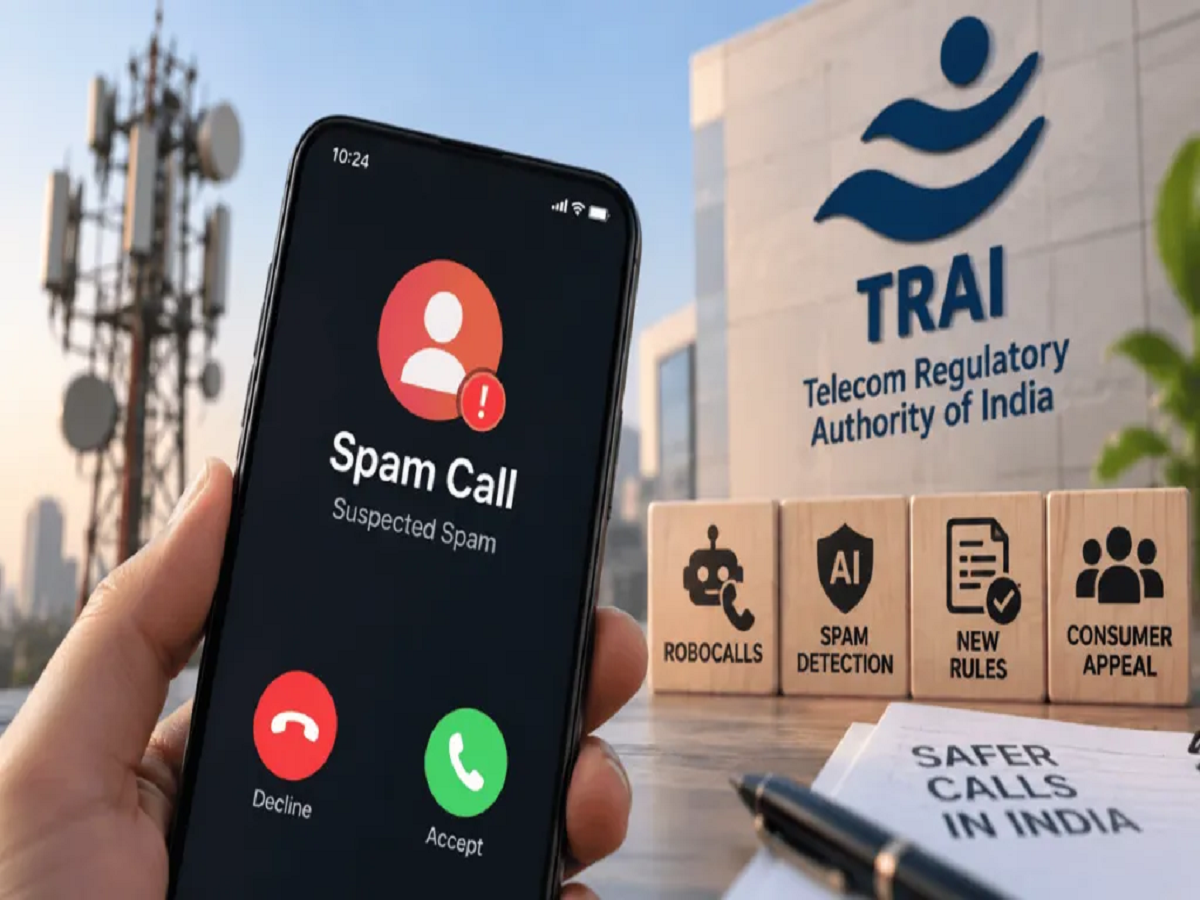
If you are tired of receiving unwanted promotional calls, robocalls and suspicious phone calls, a new regulatory change in India could affect how such calls are identified and handled.
The Telecom Regulatory Authority of India (TRAI) has amended its rules for commercial communications, introducing new requirements for caller-ID and call-management apps while also bringing automated and AI-generated voice calls under its application-to-person communication framework.
The changes are aimed at strengthening India's system for identifying and taking action against spam and unwanted commercial communications.
What has changed for spam-reporting apps?
Under the amended rules, caller-ID and call-management apps that allow users to report calls as spam or junk will have to share those spam reports with telecom operators.
The reports will feed into a blockchain-based platform maintained by telecom operators for tracking commercial communications and enforcing anti-spam rules.
This creates a closer connection between information collected by caller-identification apps and the telecom industry's anti-spam system.
Why is this important for smartphone users?
Apps that identify spam calls often rely partly on reports submitted by their users.
For example, when a large number of people report a particular number as spam, that information can help identify potentially unwanted callers.
Under the new framework, such reports can also become part of the telecom operators' wider anti-spam enforcement system.
The intention is to increase the amount of information available to telecom operators when dealing with unwanted commercial communications.
AI-generated calls are also covered
One of the most interesting aspects of the new rules is the treatment of automated and AI-powered voice calls.
Calls made automatically without a person directly dialling the number will now fall under TRAI's application-to-person, or A2P, framework. This includes robocalls, prerecorded calls and calls using artificially generated voices.
Businesses using these systems will have to declare their use of such calling technology and provide information about the phone numbers involved to their telecom operators in advance.
What happens to undeclared automated calls?
According to TRAI's amended framework, undeclared A2P calls will be treated as spam.
This means businesses using automated or AI-powered calling systems will have an additional compliance requirement before making such calls.
The objective is not to prohibit businesses from using AI for calling. Instead, the rules are designed to make automated commercial communications more identifiable and traceable.
Will AI calls be completely banned?
No.
The new rules do not prohibit businesses from using AI or other automated technologies to make calls.
Instead, businesses using these systems have to disclose their use to telecom operators and comply with the applicable commercial-communication framework.
This distinction is important because AI voice technology is increasingly being used for customer support, reminders, sales calls and other business communication.
Can telecom companies charge for AI calls?
The amended framework allows telecom operators to impose a termination charge of up to 5 paise per minute on A2P calls, although certain designated number ranges are exempt.
This creates an additional cost consideration for businesses that rely heavily on automated calling.
What about calls from banks and other companies?
Not every automated call is necessarily an unwanted spam call.
Businesses can continue to use automated systems, but they will need to follow the applicable rules for commercial communications.
The framework is intended to help distinguish legitimate business communications from undeclared or unwanted automated calls.
What should ordinary users know?
For smartphone users, the most noticeable impact could be better integration between spam reports generated by caller-ID apps and telecom operators' anti-spam systems.
However, the exact information that apps will have to share and how those reports will be processed is an area that may require further regulatory clarification.
Users should also continue using their phone's built-in spam-reporting and blocking features where available and remain cautious about sharing OTPs, banking information or other sensitive details during unsolicited calls.
Why this could change India's spam-call ecosystem
India has been dealing with large volumes of unwanted commercial and fraudulent calls, while the rapid development of AI voice technology is making automated calling easier.
The new TRAI framework attempts to address both developments by connecting user-generated spam reports with telecom operators and bringing AI-powered automated calls into the existing commercial-communication regulatory framework.