Navratri Ashtami, also known as Durga Ashtami, is one of the most significant days during the nine-day Navratri festival. Devotees worship Goddess Durga with full devotion and perform important rituals like fasting, havan, and Kanya Pujan. However, in 2026, many people are confused about whether Ashtami should be observed on March 25 or March 26.
If you’re also unsure about the correct date, auspicious timings, and rituals, here is a complete and easy-to-understand guide.
Navratri Ashtami 2026: Correct Date
According to the Hindu Panchang, the Ashtami Tithi will begin on March 25, 2026, at 1:50 PM and will continue until March 26, 2026, at 11:48 AM.
Since the Ashtami Tithi is present during sunrise on March 26, Durga Ashtami will be observed on March 26, 2026. This is the most widely accepted date for fasting and performing rituals.
Why There Is Confusion Between March 25 and 26
The confusion arises because the Ashtami Tithi starts in the afternoon of March 25 but continues into the next day. In Hindu traditions, festival dates are often determined based on sunrise timings.
Therefore, even though the Tithi begins on March 25, it is considered more appropriate to observe Ashtami on March 26, when the Tithi is active at sunrise.
However, there are slight variations in practice:
- Some devotees fast on Saptami (March 25) and break the fast on Ashtami after Kanya Pujan
- Others observe a fast on Ashtami (March 26) and conclude it on Navami
Both traditions are accepted, depending on family customs.
Auspicious Puja Timings on Ashtami
Performing puja during the right time is considered very important for maximum spiritual benefits. On March 26, 2026, the following are the key auspicious timings:
Morning Muhurat
- 06:18 AM to 07:50 AM (Highly auspicious)
Mid-Morning Muhurat
- 10:55 AM to 12:27 PM (General auspicious time)
Afternoon Muhurat
- 12:27 PM to 01:59 PM (Growth and prosperity period)
Best Muhurat
- 01:59 PM to 03:31 PM (Most favorable time)
Evening Muhurat
- 05:03 PM to 06:36 PM (Good for evening prayers)
Devotees can choose any of these time slots based on their convenience.
Kanya Pujan: Ritual and Significance
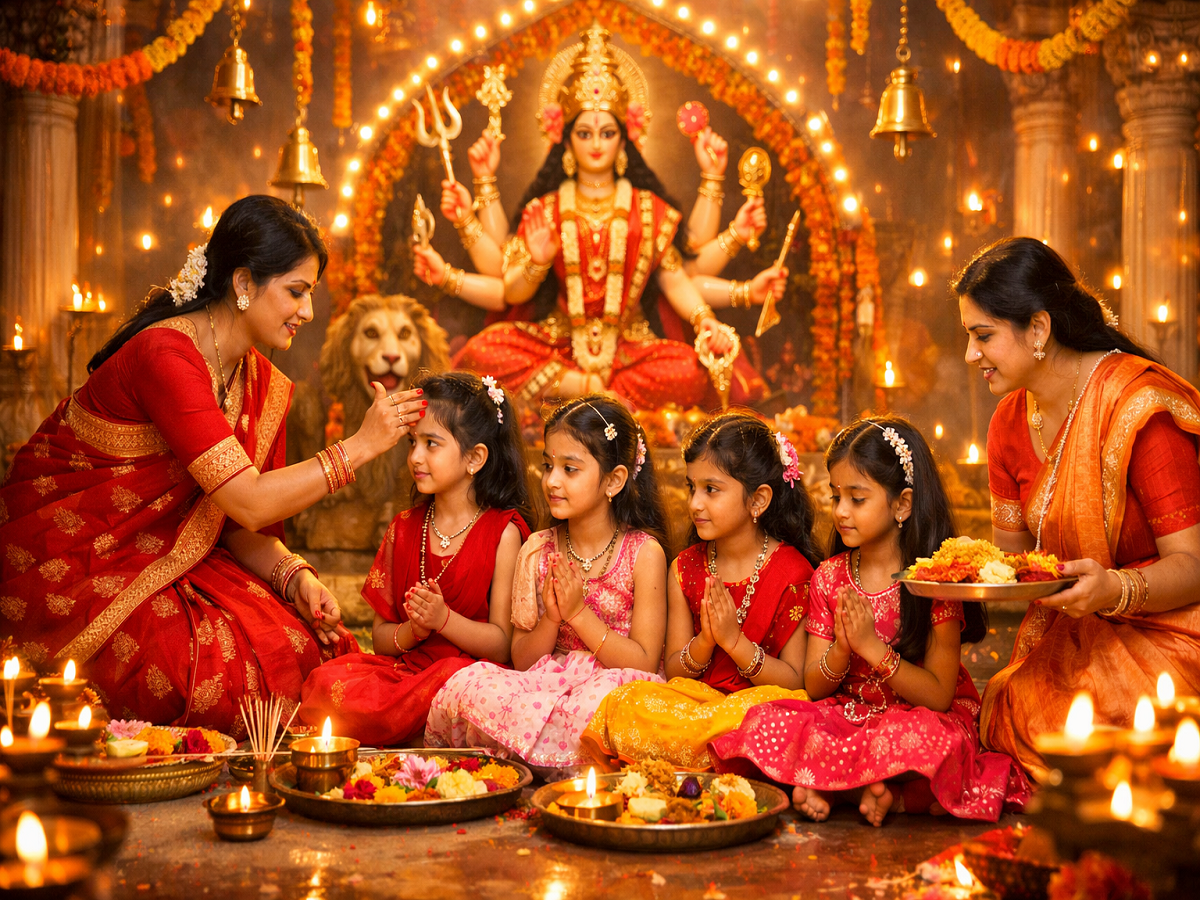
Kanya Pujan (also known as Kanjak Puja) is one of the most important rituals performed on Ashtami or Navami. In this ritual, young girls are worshipped as the embodiment of Goddess Durga.
How Kanya Pujan is Performed:
- Invite young girls (usually 9 or more) into your home
- Wash their feet as a mark of respect
- Offer them food such as puri, halwa, and chana
- Give gifts, clothes, or money as dakshina
- Seek their blessings
This ritual symbolizes devotion, respect, and gratitude towards feminine energy.
Fasting Practices on Ashtami
Different devotees follow different fasting traditions:
- Some people break their fast on Ashtami after Kanya Pujan
- Others continue fasting on Ashtami and break it on Navami
Both practices are considered valid and depend on family traditions and personal beliefs.
What Is Done on Ashtami Day
Apart from fasting and Kanya Pujan, devotees also:
- Perform special Durga puja
- Conduct havan (holy fire ritual)
- Offer flowers, fruits, and sweets to the Goddess
- Recite Durga Saptashati or other sacred texts
The day is considered extremely powerful for spiritual growth and seeking blessings.
Final Takeaway
Navratri Ashtami 2026 will be observed on March 26, as per the Panchang. While the Tithi begins on March 25, sunrise-based calculation makes March 26 the correct day for fasting and rituals.
By following the right timings and performing Kanya Pujan with devotion, devotees can seek the blessings of Goddess Durga for prosperity, happiness, and protection.
Understanding the correct date and rituals ensures that your Navratri celebrations are both meaningful and spiritually rewarding.