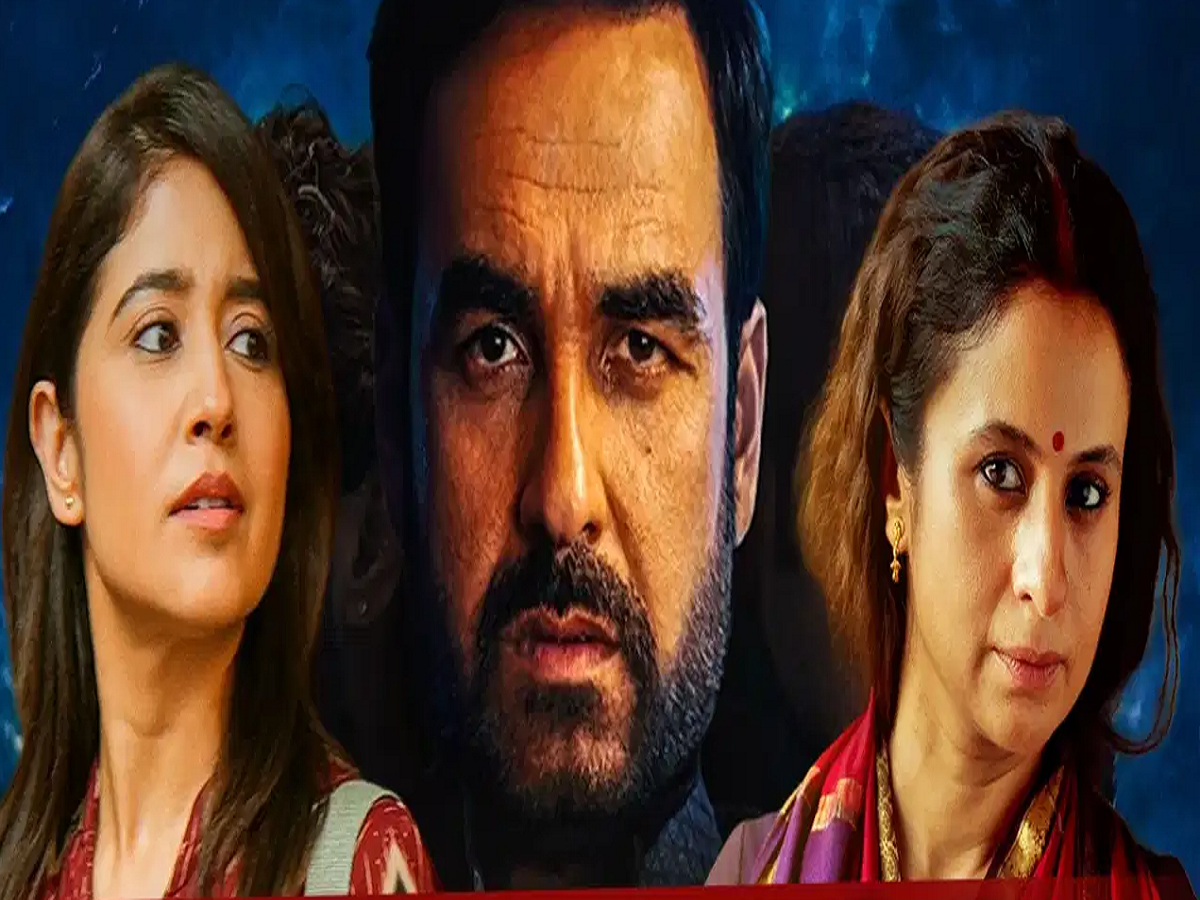
The real strength of Mirzapur was never limited to guns, violence or larger-than-life men fighting for the throne. What made the series stand out was the way its female characters challenged the same power structures that tried to control them. Characters like Beena Tripathi and Golu Gupta were not merely supporting figures—they influenced the direction of the story and often played the game more intelligently than the men around them.
However, Mirzapur: The Movie appears to have shifted that balance. The big-screen version puts greater emphasis on male rivalry, action, violence and power struggles, while several of the women who once had substantial narrative importance are given comparatively little to do.
Beena Tripathi remains the strongest female presence
Beena Tripathi, played by Rasika Dugal, continues to receive some attention in the film. Her character has a backstory, personal motivations and an emotional layer that gives her presence more weight than the other female characters.
In the original series, Beena was one of the most fascinating characters because she understood the power dynamics inside the Tripathi household. Despite living under a deeply patriarchal system, she learned how to manipulate circumstances in her favor.
Her strength was never simply physical. It came from her ability to observe, calculate and wait for the right opportunity.
What happened to Golu Gupta?
Golu Gupta, played by Shweta Tripathi Sharma, was another character who underwent a major transformation in the series. She began as an intellectual and relatively quiet character before becoming deeply involved in the violent struggle for power.
Her anger, determination and desire for revenge eventually made her one of the central forces of Mirzapur. She wasn't simply following Guddu—she had her own motivations and ambitions.
That makes her limited role in the movie particularly noticeable. Instead of being at the heart of the conflict, she is largely pushed into the background, appearing in scenes where her presence doesn't carry the same narrative weight as it did in the series.
Other female characters also lose their impact
The same problem extends beyond Beena and Golu. Characters such as Dimpy and Sweety once had their own personalities, opinions and emotional journeys.
In the series, these women were more than romantic interests or family members. Their decisions had consequences, and their relationships influenced the direction of the story.
In the movie, however, the screenplay focuses much more heavily on Guddu, Munna, Babban Yadav and the other male characters competing for power.
The story becomes dominated by male rivalry
The movie's world is filled with confrontations, weapons, threats and displays of strength. Guddu Pandit, Munna Bhaiya and the other powerful men dominate the narrative.
That isn't necessarily surprising for a Mirzapur story, but the contrast with the original series is significant.
One of the most interesting aspects of the series was that power didn't always come from the person holding the gun. Sometimes it came from the person standing quietly in the background and making the right move at the right time.
That layer feels much weaker in the film.
Why this matters for the Mirzapur universe
The female characters were one of the elements that separated Mirzapur from a conventional gangster drama. The series showed that women living within a violent, patriarchal world could also become players in the same dangerous game.
Beena's manipulation, Golu's transformation and the choices made by other women gave the story additional depth.
By reducing their roles, the film risks becoming more like a conventional action-driven gangster movie, where men fight for territory while women primarily observe the consequences.
Guns are bigger, but the characters are smaller
There is certainly no shortage of violence, swagger and larger-than-life moments in Mirzapur: The Movie. But spectacle alone cannot recreate what made the original series special.
The franchise's most compelling women had the potential to become its biggest strength on the big screen. Instead, much of that potential appears to have been left unexplored.
Mirzapur was at its best when power could come from anywhere—not just from the person with the biggest gun. The movie may have expanded the scale of the violence, but in doing so, it appears to have reduced the space given to the women who once helped make this world so unpredictable.