BUSINESS
ITR Filing 2026: Made a Mistake in Your Tax Return? Here's How You Can Revise It Without a Penalty
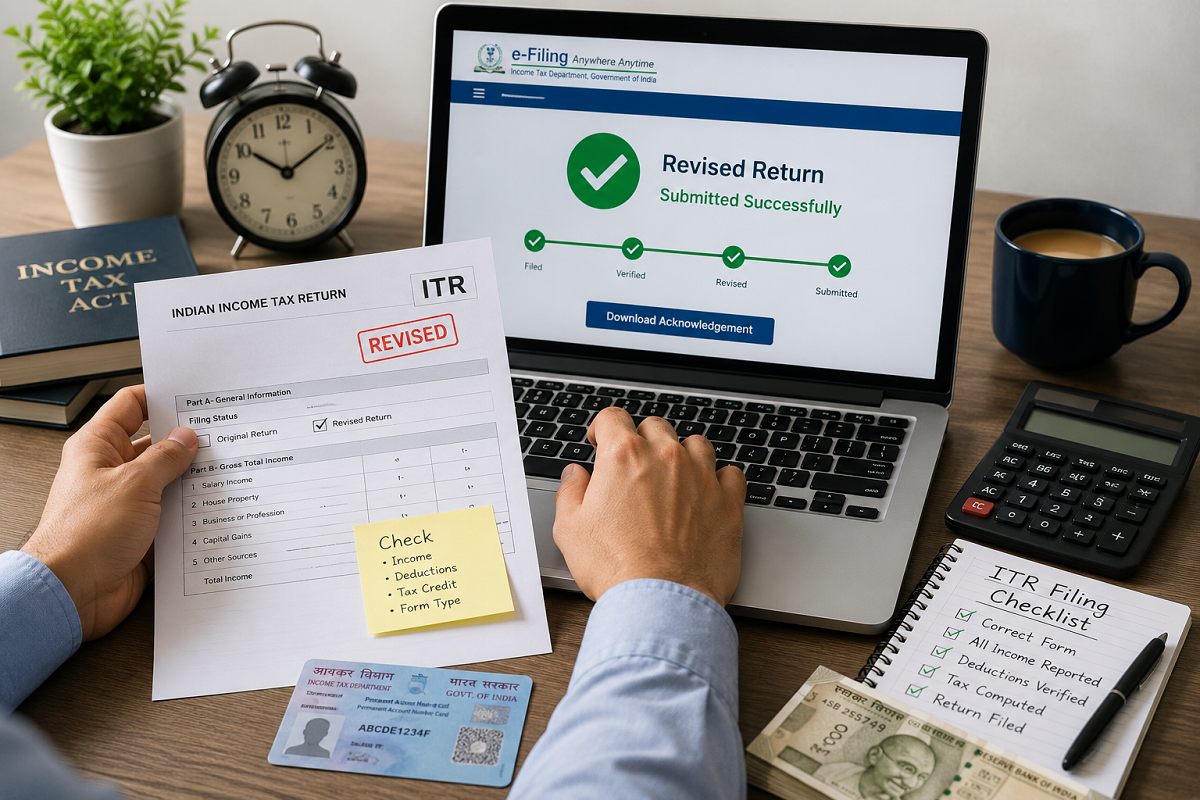
Filing an Income Tax Return (ITR) accurately is essential to avoid delays in refunds, notices from the tax department, or other compliance issues. One of the most common mistakes taxpayers make is selecting the wrong ITR form while filing their return.
The good news is that such errors can usually be corrected by filing a revised return, provided the correction is made within the applicable time limit. Tax experts advise taxpayers not to wait for a notice from the Income Tax Department if they discover a mistake on their own.
Here's everything you need to know about revising an ITR, changing the return form, the number of revisions allowed, and the revised deadlines introduced for Assessment Year 2026-27.
Can You Change the ITR Form After Filing?
Yes. If you have already filed and verified your original Income Tax Return but later realize that the wrong ITR form was used, the Income Tax Act allows you to rectify the mistake.
Under Section 139(5) of the Income Tax Act, taxpayers can submit a Revised Return to replace the original return with corrected information.
A revised return completely supersedes the earlier return, meaning the latest version becomes the valid return on record.
For example, if a taxpayer had capital gains income that required filing ITR-2 but mistakenly submitted ITR-1, the error can generally be corrected by filing a revised return using the appropriate form.
Why Choosing the Correct ITR Form Matters
Selecting the wrong return form may result in the Income Tax Department treating the return as defective or invalid.
Such errors can lead to:
-
Delay in processing income tax refunds.
-
Notices from the Income Tax Department.
-
Additional compliance requirements.
-
Possible complications if the error is not corrected within the prescribed period.
Tax professionals recommend reviewing all income sources and eligibility criteria carefully before selecting an ITR form.
What Happens If the Department Finds the Mistake First?
If the Income Tax Department detects an error before the taxpayer corrects it, a notice may be issued under Section 139(9) for filing a defective return.
Taxpayers are required to respond within the specified timeline mentioned in the notice.
Failure to comply may result in the return being treated as invalid, which effectively means the taxpayer is considered not to have filed the return at all, potentially leading to further legal and financial consequences.
How Many Times Can You Revise an ITR?
One of the biggest advantages of the revised return facility is that there is no statutory limit on the number of times a taxpayer can revise an Income Tax Return.
As long as the revision is made within the permitted deadline, taxpayers may file multiple revised returns if additional mistakes are discovered.
However, tax experts generally advise against repeated revisions.
Instead, taxpayers should carefully verify all corrections and submit a single comprehensive revised return whenever possible. Frequent revisions may invite additional scrutiny from the tax authorities, although there is no prohibition under the law.
Revised Return Deadline Extended for AY 2026-27
Budget 2026 introduced an important change by extending the deadline for filing revised returns.
For Assessment Year 2026-27, taxpayers can now submit a revised return up to 31 March 2027, instead of the earlier deadline of 31 December 2026.
The extension provides an additional three months for taxpayers to identify and correct genuine mistakes.
Penalty Rules for Revised Returns
Although the revision window has been extended, the timing of the correction determines whether any additional fee is payable.
Revision Filed Up to 31 December 2026
Taxpayers who file a revised return on or before 31 December 2026 generally will not be required to pay any additional fee solely for revising the return, subject to the applicable provisions of the Income Tax Act.
Revision Between 1 January and 31 March 2027
If the revised return is filed during the extended window from 1 January 2027 to 31 March 2027, a fee of ₹5,000 may become applicable, depending on the taxpayer's eligibility and the prevailing legal provisions.
Taxpayers should verify the latest official rules before filing.
Key Takeaways for Taxpayers
To avoid unnecessary complications, taxpayers should:
-
Select the correct ITR form based on their income sources.
-
Review all financial details carefully before submitting the return.
-
File a revised return immediately after discovering any mistake.
-
Avoid waiting for a notice from the Income Tax Department.
-
Complete all corrections within the prescribed deadlines to minimize compliance issues and additional costs.
Conclusion
Making an error while filing an Income Tax Return is not uncommon, but delaying its correction can create unnecessary complications. The revised return facility provides taxpayers with an opportunity to rectify mistakes, including selecting the wrong ITR form, without losing the validity of their original filing.
With the extended revision deadline available for Assessment Year 2026-27, taxpayers have additional time to make corrections. However, filing an accurate revised return as early as possible remains the best approach to ensure timely processing, avoid notices, and facilitate smooth issuance of refunds.