BUSINESS
India’s New AI Initiative for Students: Colleges and Universities Can Now Access AI Tools, Datasets and Training
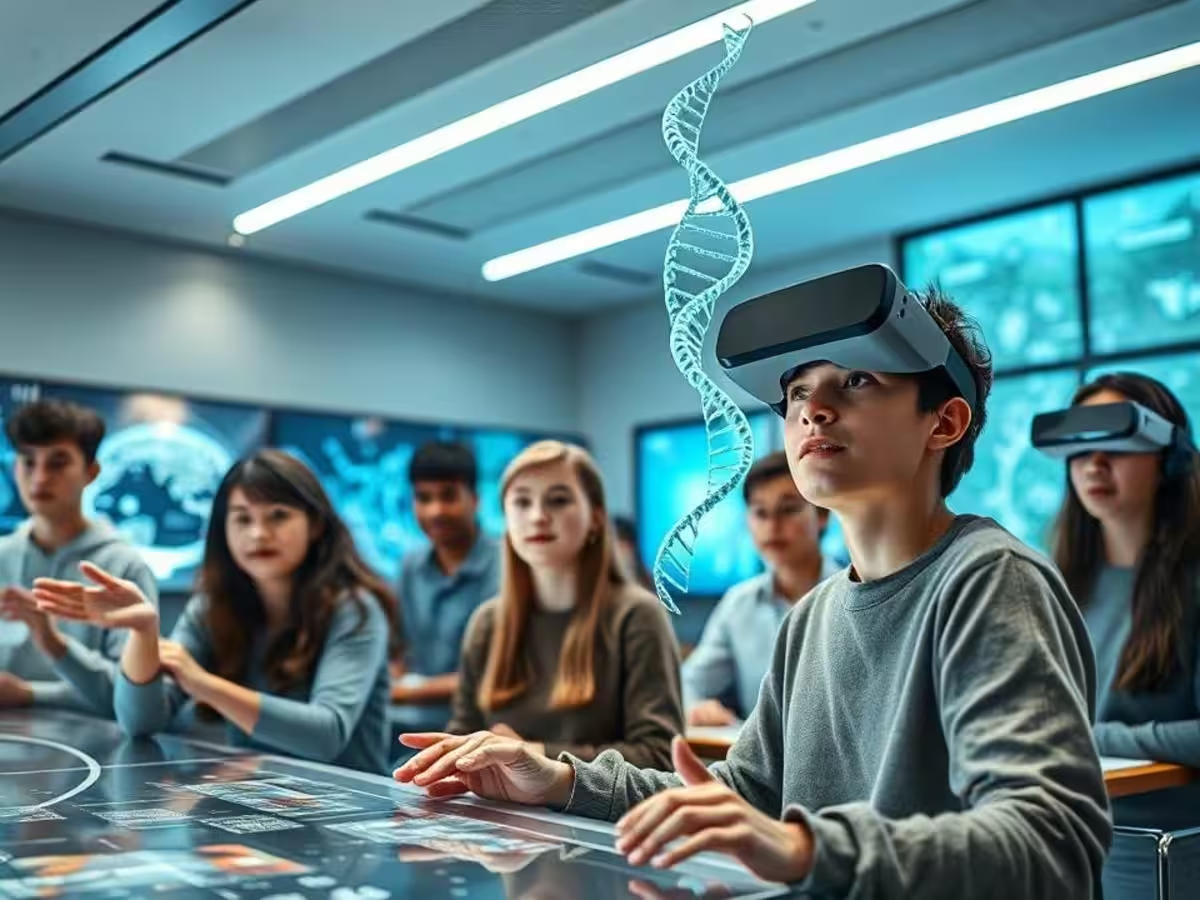
India is expanding its push to build an AI-ready workforce, with the government’s IndiaAI Mission opening new opportunities for students, researchers and faculty members at higher educational institutions.
The initiative is aimed at strengthening access to AI models, datasets, computing resources and training, while encouraging colleges and universities to participate in India's growing artificial intelligence ecosystem. The IndiaAI Mission identifies capacity-building, indigenous AI, future skills and safe AI as key priorities.
What Is the New AI Initiative?
The AIKosh University Engagement Programme has been designed to connect higher educational institutions with resources available through the IndiaAI ecosystem.
Students, researchers and faculty members can benefit from greater access to AI-related resources for learning, experimentation and research.
The move is part of the government's broader effort to ensure that AI development is not limited to large technology companies and specialised research organisations.
AIKosh Will Play an Important Role
A major component of the IndiaAI Mission is AIKosh, a national platform intended to make datasets and AI models more discoverable and accessible.
For students and researchers, access to quality datasets and models can be particularly useful when developing AI projects, conducting research or learning how real-world AI systems work.
India Is Building AI Skills Across Colleges
The government has also been integrating artificial intelligence into its national skilling ecosystem.
Through the Skill India Digital Hub, the government has introduced the Skilling for AI Readiness (SOAR) programme. It began with online foundational courses designed to improve AI literacy and has since expanded to cover 50 AI and AI-application-oriented qualifications.
These programmes cover areas such as AI for jobs, workplace productivity, sector-specific applications and AI use in the unorganised sector.
More Than 700 AI Use Cases Identified
The government's AI push is also extending beyond education.
According to the Ministry of Electronics and Information Technology, the IndiaAI Mission has identified 762 AI use cases across 62 ministries. The government has also approved 58 AI Centres of Excellence and 543 Data & AI Labs.
This indicates that AI is increasingly being considered for applications across government departments and public services.
What Does This Mean for Students?
For students pursuing technology, engineering, data science or other AI-related fields, the expansion of India's AI infrastructure could create more opportunities to gain practical experience.
Instead of learning AI only through theoretical courses, students could increasingly work with datasets, models and real-world applications as part of their academic projects and research.
The initiative could also help colleges outside major technology hubs participate in India's AI ecosystem.
India Is Also Focusing on Safe AI
The government's AI strategy is not limited to developing increasingly powerful systems. AI safety and responsible use are also key parts of the IndiaAI Mission.
An IndiaAI Safety Institute is being established to support research into AI safety, standards, testing and emerging risks.
The government has also outlined a risk-based AI governance framework addressing issues such as algorithmic bias, misinformation, deepfakes and potential societal harms.
Why This Matters
AI is expected to play an increasingly important role in India's technology and employment landscape. By expanding access to AI resources across universities and strengthening AI-focused training, the government is attempting to create a larger pool of students and professionals capable of working with the technology.
For college students and researchers, the biggest takeaway is simple: AI learning in India is moving beyond classrooms, with government-backed platforms increasingly providing access to real AI tools, datasets and research opportunities.