BUSINESS
Government’s New Solar Scheme Will Provide Up to ₹50,000 Assistance for Electricity: Check Who Can Benefit
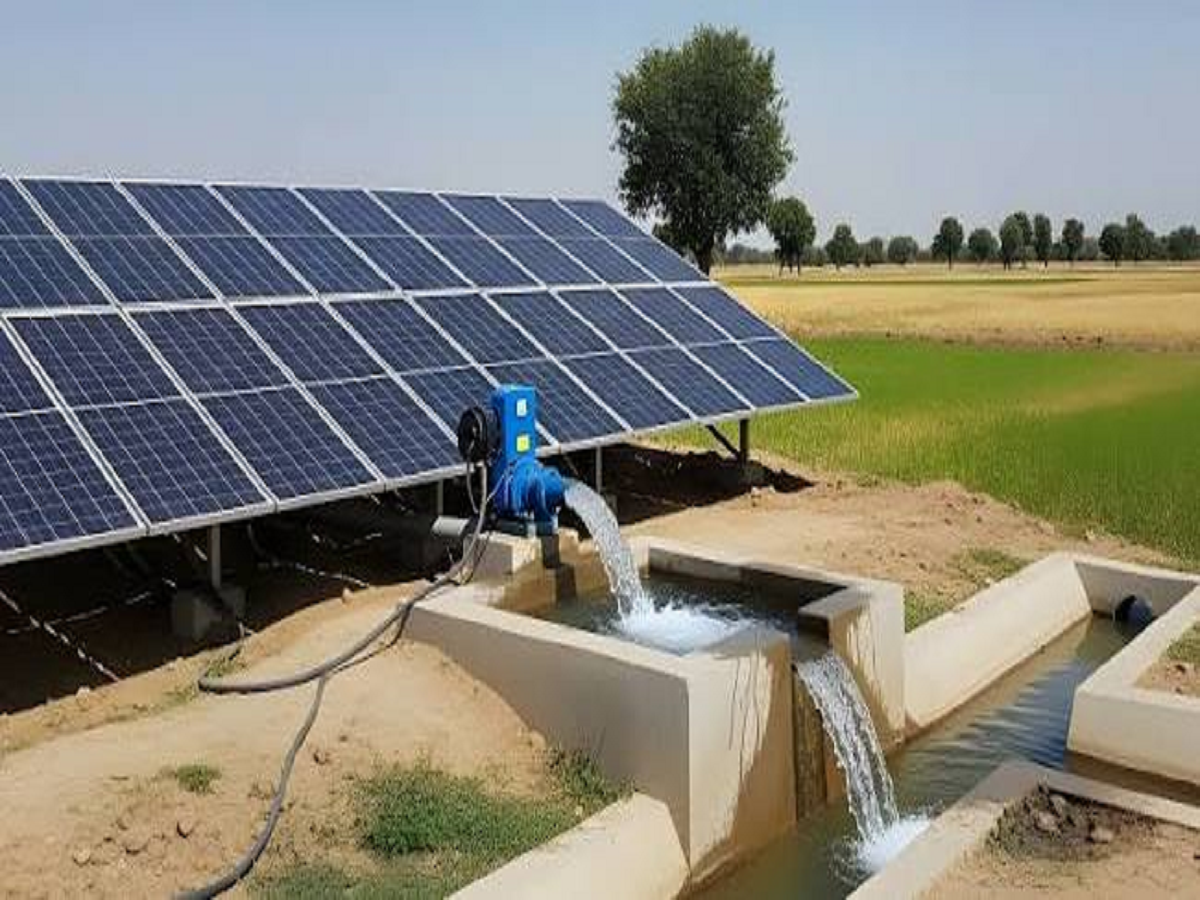
The central government is taking several steps to expand access to electricity in remote and underserved areas. One of the latest initiatives is the New Solar Power Scheme for PVTG and Tribal Habitations/Villages, being implemented by the Ministry of New and Renewable Energy.
The scheme is being implemented under the Pradhan Mantri Janjati Adivasi Nyaya Maha Abhiyan (PM-JANMAN) and Dharti Aaba Janjatiya Gram Utkarsh Abhiyan (DAJGUA). Its main objective is to provide electricity through off-grid solar systems in tribal areas where conventional grid connectivity is not technically or economically feasible.
What is the New Solar Power Scheme?
Under the scheme, eligible tribal households that do not have electricity can receive support for installing small off-grid solar systems.
The government has provided 100% Central Financial Assistance for the specified components of the programme. For an eligible tribal or PVTG household, the scheme provides for a 0.3 kW off-grid solar system, with central assistance of up to ₹50,000 per household or the actual cost, whichever is lower.
This means eligible families in remote areas can get access to basic solar-powered electricity without having to depend entirely on conventional grid infrastructure.
Who is the scheme meant for?
The scheme primarily focuses on:
-
Particularly Vulnerable Tribal Group (PVTG) households
-
Tribal households in identified habitations and villages
-
Households that remain without electricity in areas where grid connectivity is not feasible
-
Identified tribal habitations covered under PM-JANMAN and DAJGUA
The government has planned to cover one lakh un-electrified households in tribal and PVTG areas through off-grid solar systems.
Solar lights will also be provided in public facilities
The benefits are not limited to individual homes. The scheme also includes solarisation of Multi-Purpose Centres (MPCs) in PVTG areas.
Under the PM-JANMAN component, financial assistance of up to ₹1 lakh per MPC is available for solar street lighting and lighting at these centres. Under the DAJGUA component, public institutions in identified tribal habitations can receive assistance of ₹1 lakh per kW, subject to a maximum capacity of 20 kW per institution.
Thousands of households have already received electricity
According to the Ministry of New and Renewable Energy, 11,838 households had been electrified through off-grid solar systems as of June 30, 2026.
The government had also released ₹57.10 crore in Central Financial Assistance under the New Solar Power Scheme by that date.
The initiative is particularly important for remote settlements where extending conventional electricity infrastructure can be difficult or expensive.
How will people get the benefit?
This is not a general solar subsidy available to anyone who wants to install panels at home. The scheme specifically targets identified tribal and PVTG households and habitations covered under the relevant government programmes.
Therefore, people should first check whether their household or village has been identified under PM-JANMAN or DAJGUA. Implementation is carried out through the concerned government departments and state-level agencies.
Why this scheme is important
Electricity access can make a major difference to households in remote areas. Solar systems can provide basic lighting and electricity without requiring a conventional grid connection.
The government is using the scheme to address last-mile electrification while also promoting renewable energy in areas where grid expansion may not be practical. The programme combines welfare support with clean-energy infrastructure, making it particularly relevant for remote tribal communities.
Important: The ₹50,000 assistance is a provision under the scheme for an eligible 0.3 kW off-grid solar system. It should not be interpreted as a universal ₹50,000 cash payment available to every citizen. Eligibility and implementation depend on identification under the applicable government programmes.