BUSINESS
Government’s ₹37,500 Crore Scheme Could Create 50,000 Jobs: Know What This New Initiative Means
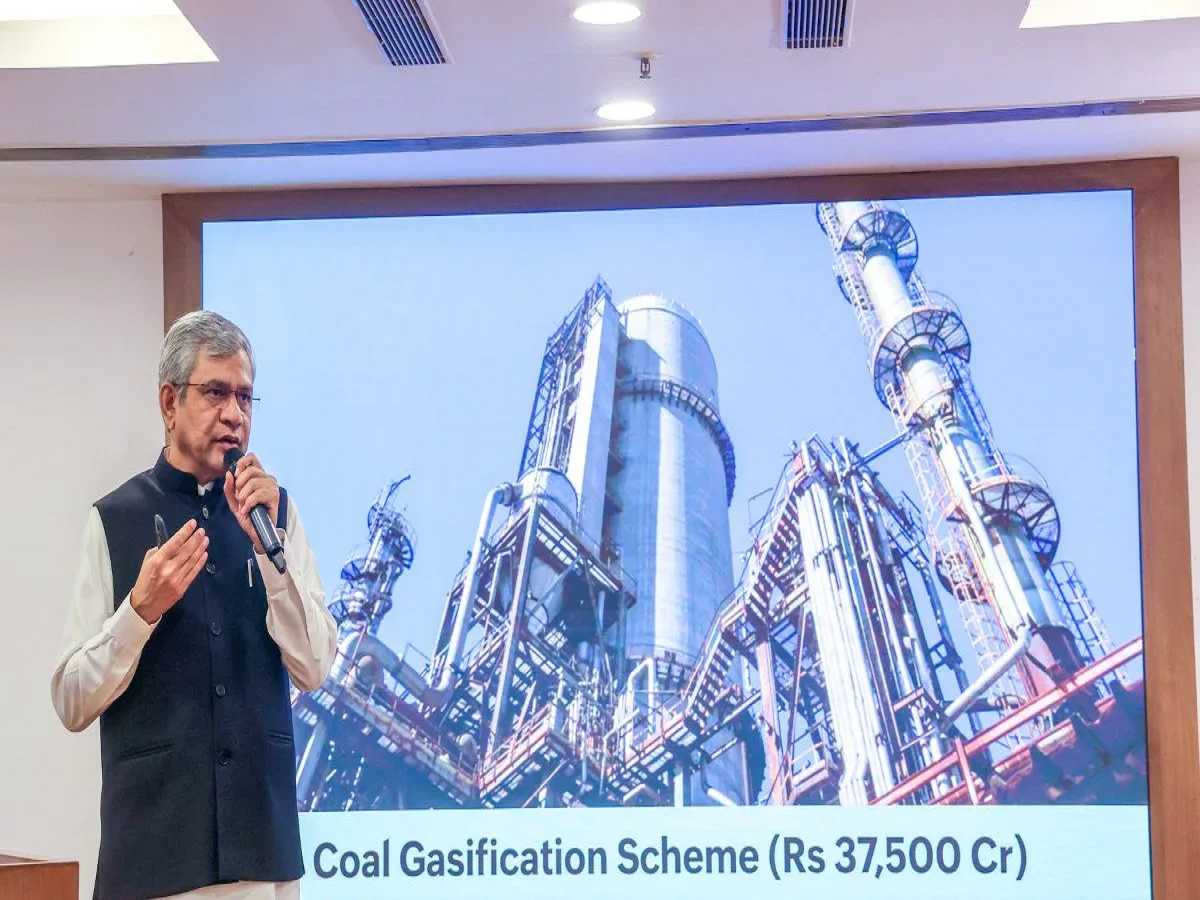
The central government has launched a major initiative to promote coal and lignite gasification in India, with a total financial outlay of ₹37,500 crore. The scheme aims to encourage companies to convert domestic coal and lignite into higher-value products such as syngas, methanol, ammonia and urea.
The initiative is expected to attract significant private and public-sector investment while creating employment opportunities and reducing India's dependence on imported feedstock.
What is the new coal gasification scheme?
The Scheme for Promotion of Surface Coal/Lignite Gasification Projects was approved by the Union Cabinet on May 13, 2026.
Its primary objective is to encourage large-scale projects that use domestic coal and lignite for producing valuable industrial products rather than relying mainly on conventional coal-based applications.
Through gasification, coal or lignite can be converted into syngas, which can then be used to manufacture products including methanol, ammonia and urea.
How much money has the government allocated?
The government has earmarked ₹37,500 crore for the scheme.
The initiative is expected to catalyse investments of approximately ₹2.5 lakh crore to ₹3 lakh crore across around 25 projects, according to the Ministry of Coal.
This means the government's financial support is intended to encourage substantially larger investments from project developers and other stakeholders.
Will this scheme create jobs?
Employment generation is another major objective.
According to the government, the initiative is expected to generate around 50,000 direct and indirect employment opportunities as projects are developed and operationalised.
Large gasification projects require workers and professionals across construction, engineering, technology, operations, maintenance, logistics and other supporting industries.
How can coal gasification help India?
India currently depends on imports for several industrial feedstocks and energy-related requirements.
The government believes that greater use of domestic coal and lignite for producing value-added products could help strengthen India's energy and economic security.
The scheme is also linked to India's broader target of achieving 100 million tonnes of coal gasification capacity by 2030.
Which products can be manufactured?
One of the key advantages of coal gasification is that the resulting syngas can be used as a feedstock for producing several industrial products.
These include:
-
Methanol
-
Ammonia
-
Urea
-
Other value-added chemicals and products
This could help expand domestic manufacturing capacity in sectors that currently depend partly on imported feedstock.
Who can benefit from the scheme?
The scheme is primarily aimed at project developers, public-sector companies, private companies and other eligible industry participants rather than individual citizens.
However, ordinary citizens could benefit indirectly through the investment and employment generated by new projects.
The development of gasification facilities could create opportunities for local businesses, contractors, skilled workers, engineers, transport operators and other service providers.
Applications are being accepted in multiple rounds
The Ministry of Coal has clarified that the application process is not limited to a single opportunity.
The first application window opened after the Request for Proposal was issued on July 7, 2026. The first-round deadline is September 7, 2026.
The government has also designed the application process with rolling rounds, meaning another application window will open after the current round closes. Each subsequent round is scheduled to remain open for two months.
Government says reports of 'no takers' are premature
The Ministry of Coal recently clarified that reports claiming the scheme had received no applications were premature because the first application window had not yet closed.
The ministry said that Talcher Fertilisers Limited (TFL) and NTPC Limited had already submitted applications through the online portal. Other potential applicants were also reportedly preparing their proposals.
What does the scheme mean for the common person?
This is not a direct cash-benefit scheme like a scholarship, pension or household subsidy. Individual citizens cannot simply apply to receive money under the programme.
Its impact is expected to come through new industrial projects, investment and employment generation.
If the planned projects are successfully developed, they could create new jobs and business opportunities while helping India make greater use of its domestic resources.
Why is the government pushing coal gasification?
The initiative is part of a broader effort to increase the value obtained from India's domestic coal and lignite resources.
Instead of using these resources only in their conventional form, gasification can help convert them into feedstock for chemicals, fertilisers and other industrial products.
The government expects the programme to strengthen domestic manufacturing, encourage investment and contribute to India's long-term energy-security objectives.
Important: The ₹37,500 crore figure represents the government's total financial outlay for the scheme. It is not a ₹37,500 crore payment to citizens or individual applicants. The direct beneficiaries are eligible project developers, while the wider public may benefit through investment, industrial development and employment opportunities.