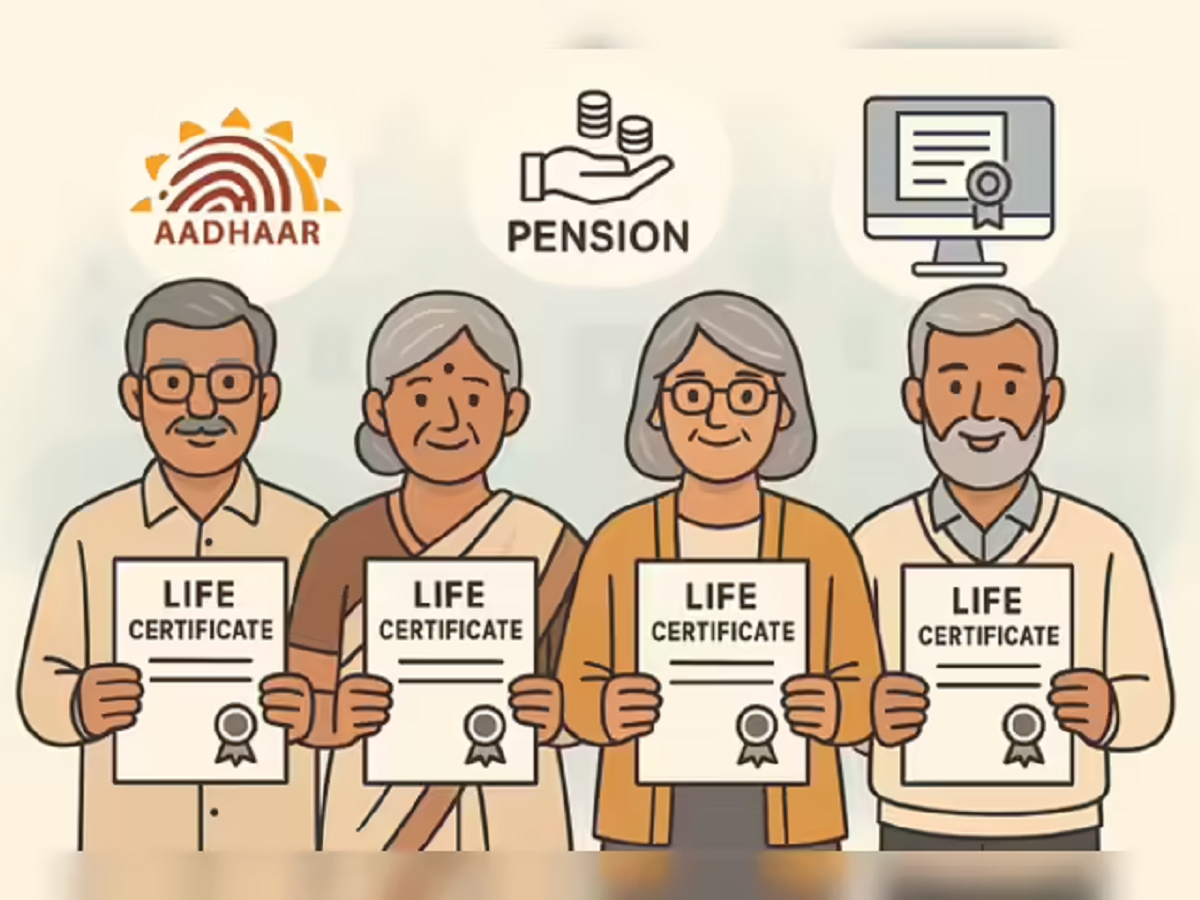
In a move aimed at simplifying identity verification across departments, the government has announced a proposed policy that would allow citizens to submit proof that they are “still actively existing” only once every five years.
The draft framework, informally referred to as the Unified Life Proof Update (ULPU), is expected to link documents such as PAN and Aadhaar to a single confirmation process overseen by Unique Identification Authority of India and the Income Tax Department.
Officials say the initiative is designed to reduce redundancy, confusion, and the growing public frustration of repeatedly proving the same facts to different offices.
Why the Policy Is Being Considered
According to internal notes, citizens are currently required to confirm their identity, address, income, mobile number, biometric data, and intent to exist multiple times a year across platforms.
“From our records, one individual confirmed their address six times without moving even once,” said a senior official. “At some point, the system must accept that the person is committed to staying put.”
Under the proposal, a citizen who successfully completes a Life Proof Update would not be asked to re-verify basic details for a fixed period, unless they change their name, face, fingerprints, or general life direction.
What Counts as Life Proof
The draft lists acceptable forms of confirmation, including:
-
Logging into a government portal and clicking “Yes, I Am Still Here”
-
Appearing briefly on camera and blinking twice
-
Successfully remembering their own date of birth
-
Submitting biometric data without looking surprised
Officials clarified that citizens would not be required to smile, as that would be “culturally excessive.”
Impact on PAN and Aadhaar Services
If implemented, PAN-related services handled by the Income Tax Department and Aadhaar-based authentication systems would pull verification status from the same source, reducing the need for repeated KYC updates.
“This will save time for citizens and government employees alike,” the note reads, “and allow everyone to focus on newer problems.”
Experts say the policy could significantly reduce the number of emails beginning with ‘Your KYC is incomplete’ despite having completed KYC multiple times.
Public Response
Early reactions have been cautiously optimistic.
“I don’t mind proving who I am,” said one resident. “I just want the government to remember it longer than I do.”
The proposal is currently open for consultation, though officials admit feedback may be delayed as the portal requires login verification to submit comments.