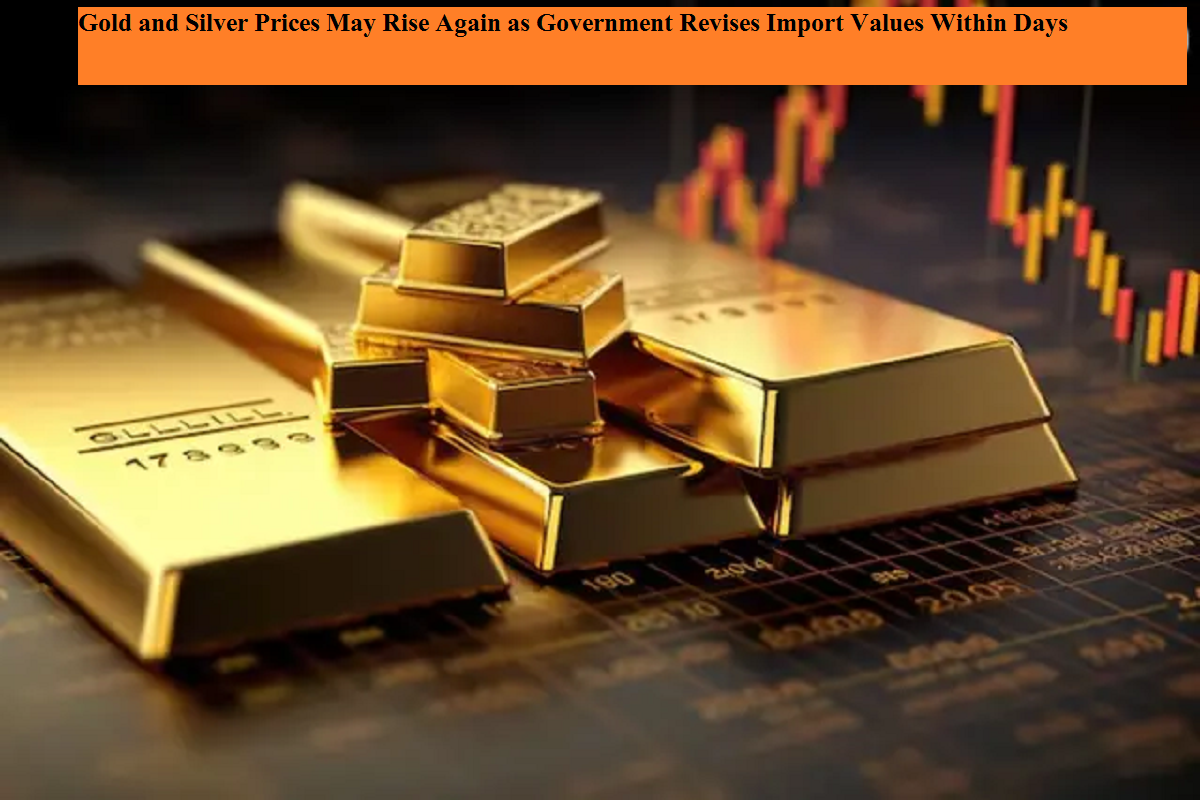
The Indian government has once again revised the import valuation of gold and silver, triggering fresh discussions about the future direction of precious metal prices. The latest move comes just days after a previous adjustment, raising concerns among investors, jewellers, and consumers about the possibility of higher domestic rates in the coming weeks.
According to a new notification issued by the government, the benchmark import value used for calculating customs duties on gold and silver has been increased. The revision is expected to influence import costs and could eventually impact retail prices in the Indian market.
Government Raises Import Valuation for Gold and Silver
The Central Board of Indirect Taxes and Customs (CBIC) has increased the base import price for both precious metals.
Under the revised rates:
-
The import value of gold has been raised by $5 to $1,348 per 10 grams.
-
The import value of silver has witnessed a much sharper increase, climbing by $83 to $2,175 per kilogram.
The adjustment represents a modest rise in gold valuation but a significant jump for silver. What has caught market attention is the timing of the move, as the government had revised these values downward only a few days earlier before reversing course.
Why Has the Government Changed the Import Values?
Experts believe the decision is linked to broader economic considerations, particularly concerns surrounding India's foreign exchange reserves and rising global uncertainties.
Ongoing geopolitical tensions in West Asia have created volatility in global markets, affecting trade flows, energy prices, and investor sentiment. Policymakers are closely monitoring the impact of these developments on India's external finances.
By adjusting import-related costs for non-essential commodities such as gold and silver, authorities aim to discourage excessive imports and help manage pressure on foreign exchange reserves.
Recent financial data indicates that while the value of India's gold holdings has increased, overall foreign exchange reserves have faced some decline due to fluctuations in foreign currency assets.
How Higher Import Costs Could Affect Consumers
When import valuations increase, the customs duty calculation changes accordingly, potentially raising the overall cost of bringing gold and silver into the country.
If international prices remain firm and import costs continue to rise, domestic bullion rates may also move higher. This could affect:
-
Jewellery buyers planning purchases for weddings and festivals.
-
Investors looking to buy physical gold or silver.
-
Businesses involved in bullion trading and jewellery manufacturing.
However, the final retail impact will depend on several factors, including global precious metal prices, currency movements, and domestic demand conditions.
Government Tightens Rules for Silver Imports
In addition to revising import values, authorities have also introduced stricter controls on silver imports.
The Directorate General of Foreign Trade (DGFT) has shifted silver imports from the "Free" category to the "Restricted" category. This means importers will now face additional compliance requirements before bringing silver into India.
The move is aimed at improving oversight of silver imports and ensuring tighter regulatory control over bullion inflows.
Key Changes in Silver Import Regulations
Under the revised framework:
Import License Now Mandatory
Businesses can no longer import silver without obtaining the required government authorization. Regulatory approvals will play a crucial role in the import process.
Imports Limited to Authorized Channels
Silver imports will be permitted only through banks and agencies authorized by the Reserve Bank of India (RBI), reducing the scope for unrestricted procurement.
DGFT Approval Required
Importers must secure clearance from the DGFT before shipments can enter the country.
Rules Extend to Bullion Exchange Imports
The restrictions will also apply to silver imported through the India International Bullion Exchange, ensuring a uniform regulatory approach across channels.
What This Means for the Precious Metals Market
The combination of higher import valuations and tighter import controls suggests that the government is taking a cautious approach toward precious metal inflows. While the measures are primarily aimed at safeguarding external financial stability, they could also influence domestic bullion prices if supply costs increase.
Market participants will now closely monitor international developments, foreign exchange trends, and further government announcements to assess the likely impact on gold and silver rates in the coming months.
For consumers and investors, the latest changes serve as a reminder that global economic conditions and policy decisions continue to play a major role in shaping precious metal prices in India.