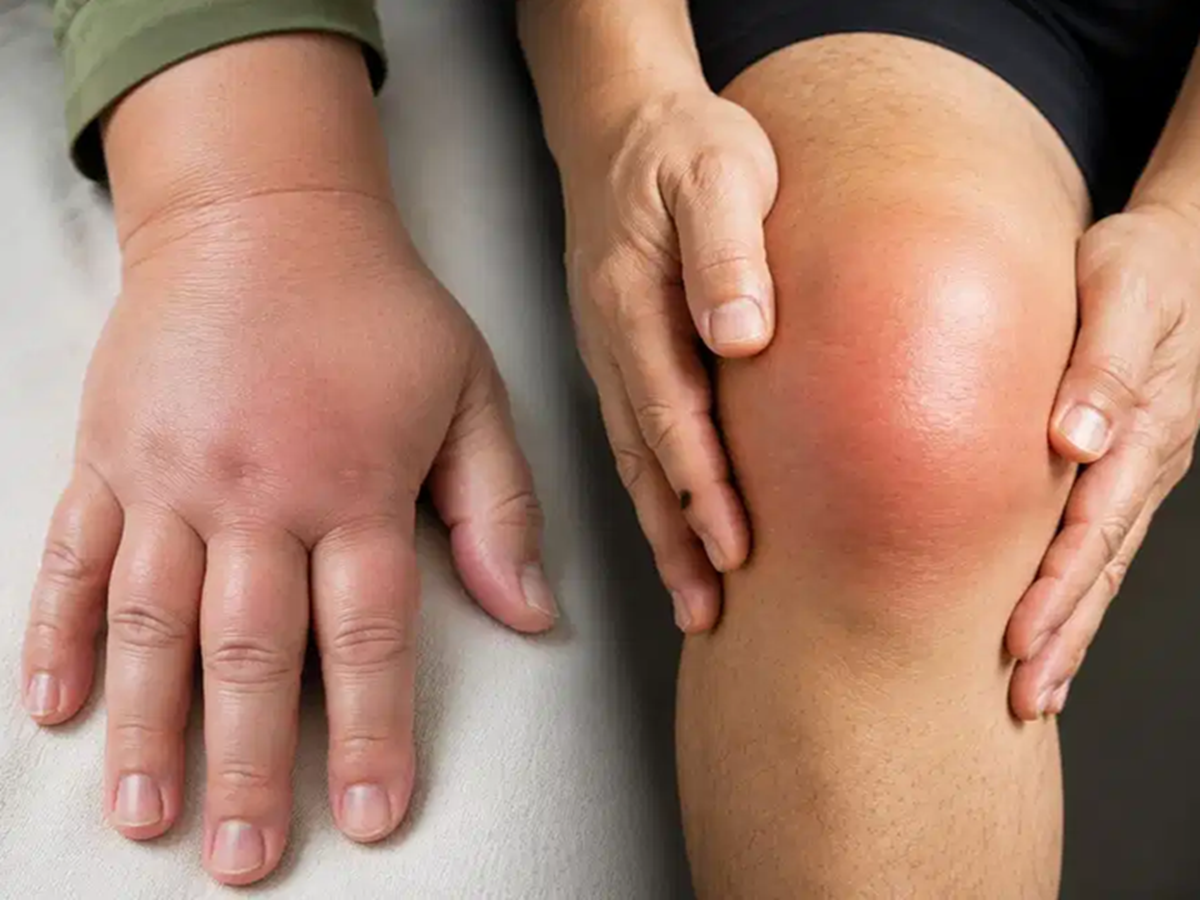
Swelling in areas like the hands, feet, ankles, face, or fingers is quite common and can sometimes happen due to long standing, sitting, minor injuries, or weather changes. However, when swelling occurs repeatedly, lasts longer, or appears without a clear reason, it may indicate an underlying health issue that should not be ignored.
Early diagnosis is important, especially if swelling is accompanied by symptoms like chest pain, breathing difficulty, or sudden weight gain.
1. Heart-related problems
Conditions like heart failure can reduce the heart’s ability to pump blood efficiently. This leads to fluid buildup, especially in the legs, ankles, and feet. Other symptoms may include fatigue, breathlessness, and unexplained weight gain.
2. Kidney disease
When the kidneys are not functioning properly, excess fluid and salt remain in the body. This can cause swelling in the face, hands, feet, or ankles. Persistent swelling is often one of the early warning signs.
3. Liver problems (cirrhosis)
Liver damage affects the body’s fluid balance, leading to swelling in the abdomen and lower limbs. If swelling is combined with bloating or digestive issues, medical attention is necessary.
4. Deep Vein Thrombosis (DVT)
DVT occurs when a blood clot forms in a deep vein, usually in the leg. It can cause sudden swelling, pain, redness, and warmth in one leg. This is a serious condition that requires immediate medical care.
5. Chronic venous insufficiency
This condition occurs when leg veins struggle to send blood back to the heart efficiently. It results in swelling, heaviness, pain, and sometimes skin changes, especially after long periods of standing.
Warning signs you should never ignore
Seek medical help immediately if swelling comes with:
- Shortness of breath
- Chest pain
- Sudden swelling in one leg
- Severe pain or redness
- Abdominal swelling
- Rapid weight gain
Healthy habits to reduce swelling
- Avoid sitting or standing for long periods
- Reduce salt intake
- Stay physically active
- Drink enough water
- Elevate legs while resting
- Maintain a healthy body weight