When you hear the words "royal heritage," Rajasthan is probably the first place that comes to mind. From magnificent forts and grand palaces to colourful streets and centuries-old stories, the state attracts travellers from across India and beyond.
But what if you want the same feeling of stepping into India's royal past without the overwhelming crowds?
Tucked away in the Vindhya Hills of Madhya Pradesh, Mandu offers exactly that.
Known for its magnificent monuments, romantic legends, dramatic landscapes and peaceful surroundings, this historic town is a fascinating destination for anyone who enjoys history, architecture, photography or simply travelling somewhere less crowded.
Why Does Mandu Feel Different From Rajasthan?
Mandu has its own distinct character.
Unlike some of India's busiest heritage destinations, its monuments are spread across large open landscapes. This allows visitors to explore at a slower pace, walk between historical structures and enjoy the surrounding scenery without constantly feeling surrounded by crowds.
The combination of ancient architecture, green hills, lakes and ruins gives Mandu a unique atmosphere.
It is not just a place to see monuments. It is a destination where history and nature exist side by side.
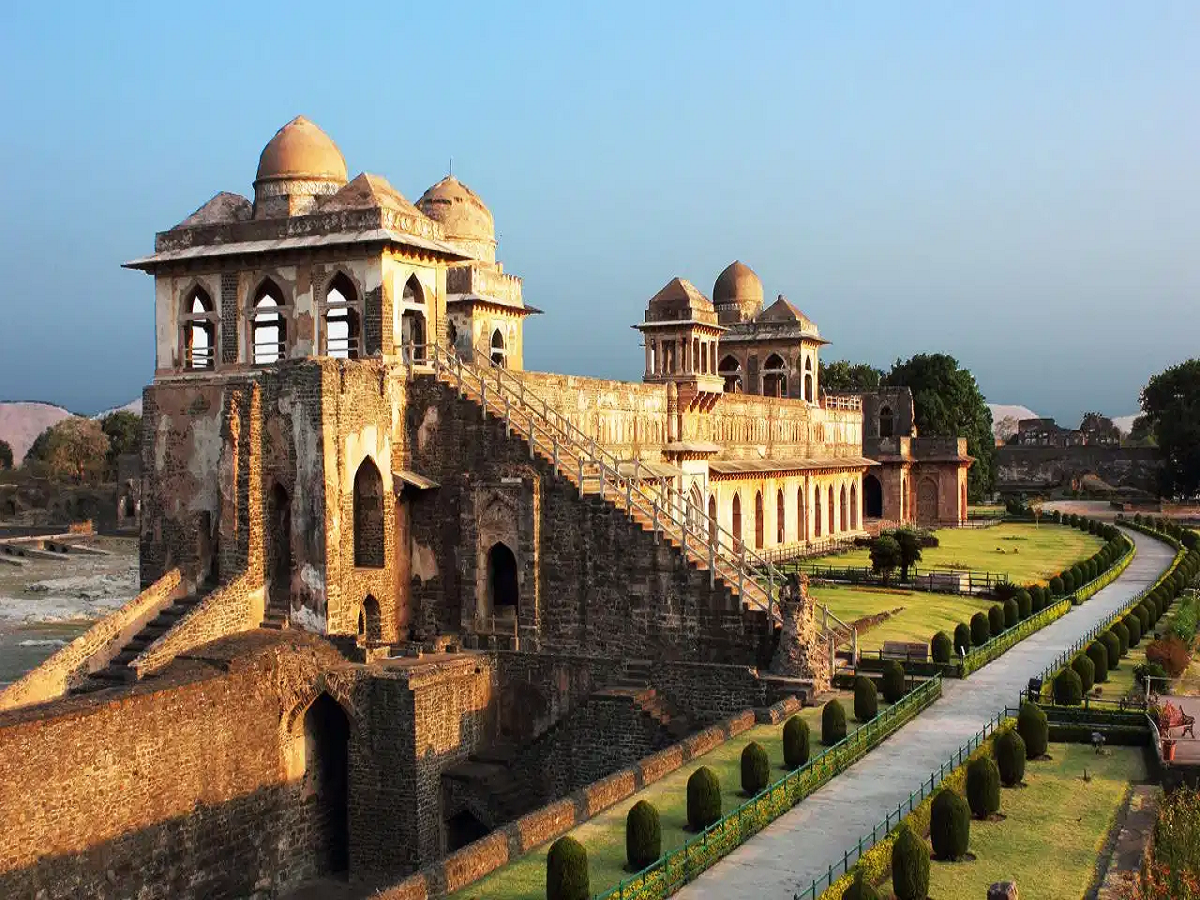
Jahaz Mahal: A Palace That Looks Like a Ship
One of Mandu's most iconic landmarks is Jahaz Mahal.
Built between two water bodies, the long and narrow palace creates the illusion of a ship floating on water. Its architecture and location make it one of the most photographed monuments in Mandu.
The palace looks particularly striking when the surrounding reservoirs are filled with water.
For photography enthusiasts, the combination of reflections, architecture and open landscapes provides plenty of opportunities for memorable photographs.
Roopmati Pavilion and the Famous Love Story
Perched high on the edge of the plateau, Roopmati Pavilion is another must-visit location.
The pavilion is closely associated with the legendary love story of Queen Roopmati and Sultan Baz Bahadur.
From the elevated location, visitors can enjoy sweeping views of the surrounding countryside. The landscape itself is one of the major attractions, especially around sunrise and sunset.
Whether you are interested in the legend or simply want a beautiful viewpoint, this is one spot you shouldn't miss.
Baz Bahadur's Palace
Located close to Roopmati Pavilion, Baz Bahadur's Palace reflects the architectural style of the period.
The palace features spacious courtyards, arches and open areas surrounded by Mandu's natural landscape.
Its relatively open design makes it easy to imagine how the complex may have looked during its historical period.
Hindola Mahal Has a Unique Design
Hindola Mahal gets its name from its distinctive sloping walls, which give the monument the appearance of a giant swing.
The structure is a fascinating example of medieval architecture and is particularly interesting for visitors who enjoy exploring historical buildings beyond conventional forts and palaces.
Its simple but unusual design makes it one of Mandu's most recognisable monuments.
Jami Masjid: Grand and Impressive
Jami Masjid is among Mandu's most prominent architectural landmarks.
The mosque features a large courtyard, imposing arches and architectural influences associated with Afghan-style design.
Its scale and symmetry give it an impressive appearance, while the surrounding complex provides another glimpse into Mandu's rich medieval history.
When Is the Best Time to Visit Mandu?
Mandu can be visited during much of the year, but the period from July to March is particularly appealing.
Monsoon
During the monsoon, the landscape around Mandu becomes dramatically greener.
Water fills the reservoirs, clouds gather around the hills and the monuments take on a completely different appearance.
For photographers, this can be one of the most visually rewarding times to visit.
Winter
Winter brings cooler and more comfortable weather, making it easier to spend an entire day exploring the monuments.
The pleasant temperatures are ideal for walking through Mandu's expansive heritage areas.
How to Reach Mandu
By Air
The nearest major airport is Devi Ahilyabai Holkar Airport in Indore, roughly 100 kilometres from Mandu.
From Indore, travellers can hire a taxi or use road transport to reach the historic town.
By Train
Indore is also the nearest major railway hub.
Visitors arriving at Indore Junction can continue their journey to Mandu by taxi or other road transport.
By Road
Mandu is connected by road with Indore, Dhar and other parts of Madhya Pradesh.
The road journey itself can be enjoyable, particularly during the monsoon when the surrounding countryside becomes lush and green.
A Great Destination for Slow Travel
Mandu isn't necessarily a destination where you need to rush from one attraction to another.
Its monuments are spread across the landscape, and part of the experience comes from simply walking around, stopping at viewpoints and taking in the atmosphere.
That makes it particularly appealing for travellers who prefer slow, relaxed trips over crowded tourist itineraries.
Why Mandu Deserves a Place on Your Travel List
Mandu combines several experiences in one destination: medieval architecture, fascinating legends, beautiful landscapes and a relatively peaceful atmosphere.
You can explore a centuries-old palace in the morning, admire panoramic views from a hilltop and end the day surrounded by historic ruins and greenery.
For history lovers, photographers, couples, families or solo travellers looking for something different, Mandu offers a fascinating glimpse into another chapter of India's royal past.
Bottom Line
If Rajasthan's grand forts and palaces are on your travel list but you want a quieter heritage experience, don't overlook Mandu.
With its ship-like palace, hilltop pavilion, historic mosques, distinctive architecture and scenic surroundings, this Madhya Pradesh destination offers a royal experience of its own—without needing to follow the usual tourist trail.
Sometimes, the most memorable historical journeys are found away from the most crowded destinations.