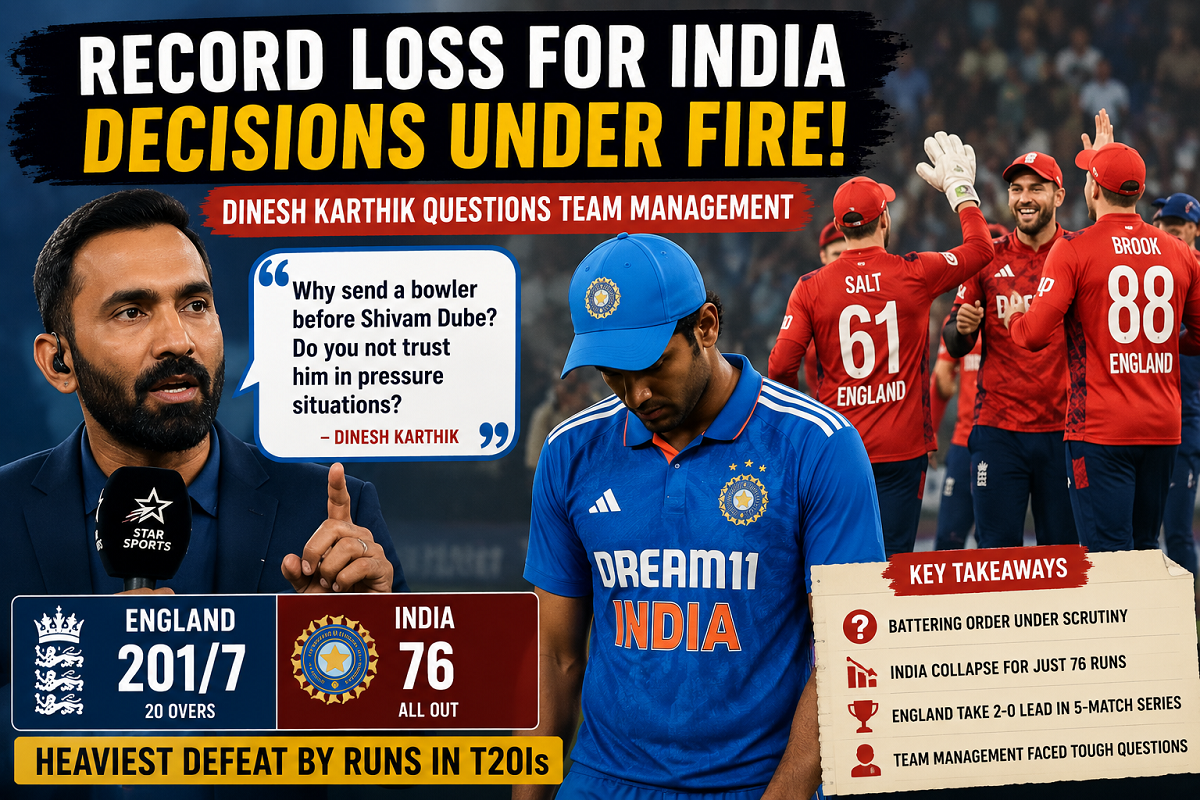
India's crushing defeat to England in the third T20 International has triggered criticism of the team's tactical decisions, with former India wicketkeeper-batter Dinesh Karthik openly questioning the batting order used during the match.
The debate intensified after India promoted fast bowler Harshit Rana ahead of all-rounder Shivam Dube during a dramatic batting collapse. Karthik, who was on commentary duty, expressed surprise at the move and suggested it reflected a lack of confidence in one of India's more experienced middle-order batters.
Karthik Questions the Team Management's Strategy
India found themselves in serious trouble after losing five wickets for just 52 runs during the chase. At that stage, the team management decided to send Harshit Rana to the crease before Shivam Dube.
Reacting during the live broadcast, Karthik questioned the tactical decision, arguing that experienced batters should be trusted in pressure situations rather than experimenting with the batting order. His comments quickly became a major talking point following the match.
Although Shivam Dube eventually came out to bat later in the innings, he managed only two runs before being dismissed, leaving India unable to recover from the early collapse. (
England Dominate as India Collapse
After being invited to bat, England posted an imposing 201/7 in 20 overs, with Phil Salt leading the charge through an impressive 70 off 44 deliveries. Useful contributions from the middle order helped England cross the 200-run mark despite losing wickets at regular intervals.
India's response never gathered momentum.
The visitors lost wickets throughout the powerplay and struggled against England's disciplined pace attack. The batting lineup failed to build meaningful partnerships, and the innings folded for just 76 runs, handing England a commanding 125-run victory.
The defeat became India's heaviest loss by runs in Men's T20 International cricket, highlighting one of the team's poorest batting performances in the format.
Tactical Decisions Come Under the Spotlight
Beyond the disappointing batting display, the team's strategic choices have become a major point of discussion.
Many observers believe batting order decisions are especially important when a team is under pressure. Promoting a lower-order fast bowler ahead of an established batting all-rounder raised questions about the management's approach during a difficult chase.
While team managements often use flexible batting orders based on match situations, Karthik indicated that difficult conditions usually call for experienced batters who are better equipped to stabilize an innings.
India Face Pressure Ahead of the Remaining Matches
The defeat leaves India trailing 2-0 in the ongoing five-match T20I series, placing significant pressure on the team ahead of the remaining fixtures. England have capitalized on India's batting struggles and now hold a strong advantage in the contest.
With the series slipping away, attention is expected to turn toward:
-
Possible changes to the playing XI
-
Adjustments in the batting order
-
Tactical improvements against England's pace attack
-
Better partnerships in the top and middle order
India will now need a strong response in the remaining matches to stay competitive and restore confidence after suffering one of the most difficult defeats in the team's T20I history.
What Lies Ahead?
Following consecutive setbacks, the Indian team and coaching staff are likely to review both selection and tactical decisions before the next fixture.
While one defeat does not define a series, the magnitude of the loss and the questions surrounding key decisions have increased scrutiny on the team's strategy. How India responds in the upcoming matches could play a crucial role in determining both the outcome of the series and the confidence of the squad moving forward.