INTERNATIONAL
Did Iran drop a bomb on Israel that could cause destruction up to 8 km? 111 countries have vowed not to drop the bomb
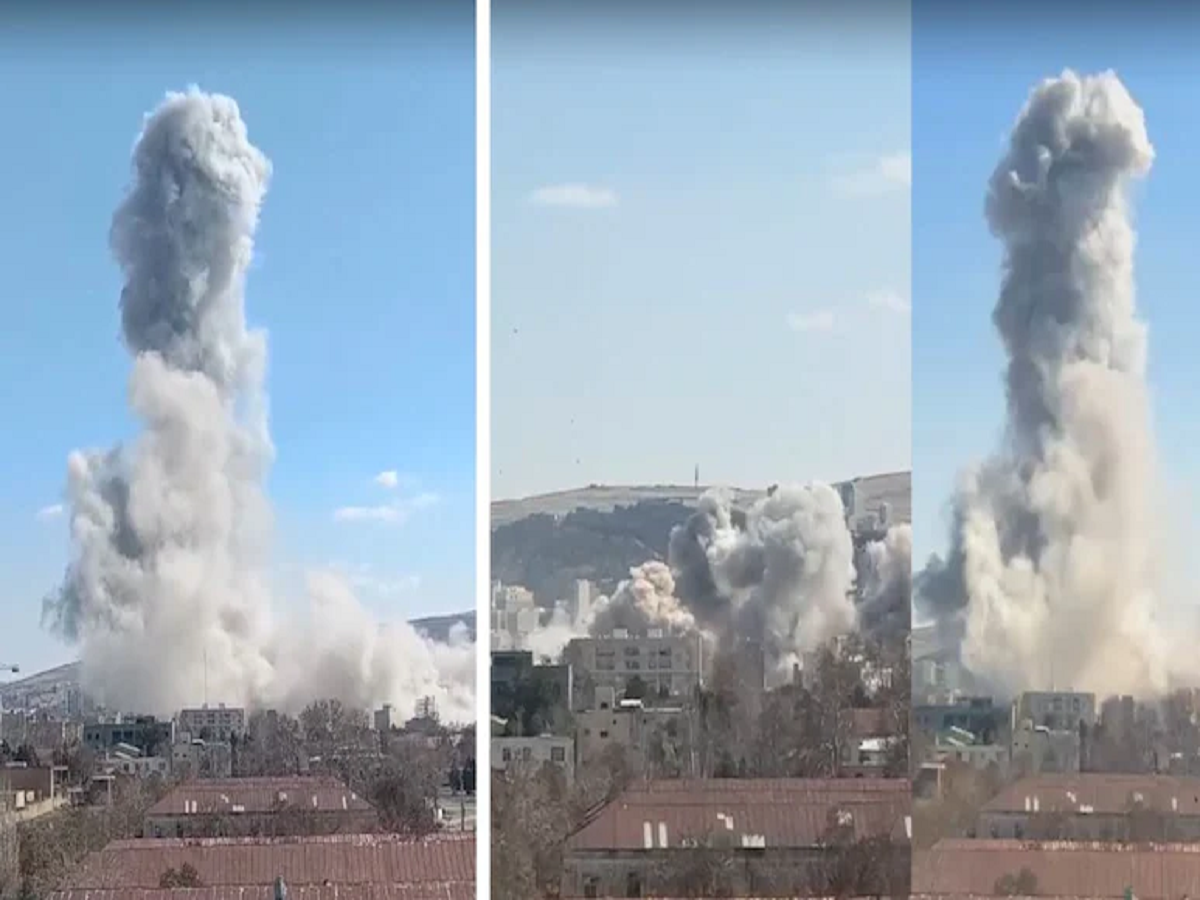
Iran does not openly discuss the development of cluster bombs, but there are indications that it develops such weapons for both ballistic missiles and rockets. According to Iranian state media, the Qadr S missile has a range of approximately 2,000 kilometers and carries a cluster warhead.
Israeli military officials have claimed that Iran fired ballistic missiles equipped with cluster bombs towards Israel. This is said to be the first reported use of such weapons in the current conflict. Cluster bombs are considered among the most controversial modern weapons. Their unique feature is that they disperse numerous small bombs over a large area. Israeli defense officials say that the warhead of some Iranian cluster missiles can explode in mid-air and release up to 80 small bombs, causing massive destruction over an area of several kilometers. Military experts say that these weapons change the course of warfare. Instead of a single large explosion, many small explosions occur in different locations, increasing the risk to civilians. Sometimes, small bombs do not explode and remain lethal even after the fighting is over.
How did Iran get this technology?
Now, the question isn't just about the immediate threat. There's also debate about how Iran developed this technology, especially given its past targeting of scientists involved in its weapons programs. Israeli experts suggest external assistance may have been involved. There's speculation that Russia or China may have provided military intelligence.
Attack near Tel Aviv
The Israeli military claims that at least one Iranian ballistic missile, equipped with cluster bombs, landed in central Israel in recent attacks.
Reports indicate that the missile's warhead exploded at an altitude of approximately seven kilometers, releasing approximately 20 smaller bombs that spread over an area of approximately eight kilometers. One small bomb struck a home in the town of Azor, south of Tel Aviv. Buildings were damaged, but there were no fatalities. Other attacks injured several people.
At least 12 people were injured by a missile that landed near Tel Aviv. Reports indicate that Iranian ballistic missile attacks in Israel since February 28 have killed at least 11 people and injured more than 1,000. Military spokesman Brigadier General Efi Defrin said Iran has used such weapons to inflict greater harm on civilians. He said the Iranian government is seeking to target civilians and is using weapons with greater dispersion to inflict greater damage.
Changes in the method of attacks
Iran's missile attacks continued throughout the week, although the number of attacks varied. On March 3, Iran fired at least six missiles. The same number occurred the day before. On February 28, at least 20 missile attacks were recorded in a single day. This number is lower than that. Nevertheless, Israeli officials say cluster warheads pose a new challenge. They drop numerous small bombs over cities, making them difficult to intercept and increasing the threat on the ground. Officials believe Iran has fired at least five cluster missiles since Saturday, all aimed at densely populated areas. On Tuesday, two such missiles were fired toward central Israel, causing damage and injuries at various locations.
How Cluster Warheads Work
A conventional ballistic missile typically carries a large warhead weighing 500 to 1,000 kilograms. Cluster warheads operate differently. The missile explodes mid-air and releases several smaller bombs. Each small bomb can contain up to seven kilograms of explosives. This power is considered comparable to that of small rockets launched by groups like Hamas and Hezbollah. Each explosion is small, but when the fragments spread over a large area, the total damage can be significant. Officials say that in the recent attack, the missile broke up at an altitude of about seven kilometers, and its fragments spread over an eight kilometer radius.
Experts say that if such a missile is intercepted mid-air, the danger increases further. If the missile reaches the ground completely, its small bombs explode upon impact. However, if it is intercepted mid-air, the small bombs fall in different places. Some explode immediately, while others do not. Small bombs that do not explode can explode later if touched or shaken. This poses a long-term threat to civilians and rescue workers. The greatest danger from cluster munitions are these unexploded bombs. Many small bombs do not explode upon falling to the ground. These can remain active for years and act as landmines.
It has already been used before
Israeli officials say Iran first used cluster missiles during the 12-day war in June last year. At that time, three cluster missiles were fired at Israel, targeting seven cities. Israeli analysts believe Iran has developed at least three types of missiles capable of carrying cluster bombs. These include the short-range Zolfaghar missile, the longer-range Qadr series, and the larger Khorramshahr missile. The Khorramshahr is considered the most powerful. Iran claims it has a range of approximately 2,000 kilometers and can carry 80 cluster bombs.
Iran's potential
Iran does not openly discuss the production of cluster bombs, but there are indications that it produces such weapons for both ballistic missiles and rockets. According to Iranian state media, the Qadr S missile has a range of approximately 2,000 kilometers and carries cluster warheads. However, the number of smaller warheads is unclear. Western reports indicate that the Zolfaghar missile can also carry cluster bombs. In 2015, Iran demonstrated a variant of the Fateh missile carrying 30 smaller warheads, each weighing approximately 20 pounds. Other missiles may also have been modified for such use. Some reports suggest that a Qiam series missile or the larger Khorramshahr missile may have been used in the June 19, 2025, attack. Iran also produces various types of rockets, including 122 mm, 240 mm, and 333 mm. It is unclear whether these can be fitted with cluster bombs.
Foreign weapons and reserves
According to open source information, Iran also possesses some foreign cluster bomb systems. These include KMGU dispensers, PROSAB-250 cluster bombs, and British-made BL755 cluster bombs. Iran has never disclosed the number of such bombs it possesses. Cluster munitions have been a topic of long-standing debate globally. In 2008, more than 100 countries signed a treaty banning cluster munitions. This treaty prohibits their use, production, purchase, sale, and stockpiling. To date, 111 countries and 12 other entities have joined the treaty. Israel and Iran have not signed the treaty.
America also did not participate in this
The issue came back into focus in 2023 when the US supplied Ukraine with cluster bombs for use against Russia. Ukraine claims Russia also used cluster munitions during the war.
PC:NDTVINDIA