NATIONAL
Delhi’s LNJP Hospital to Get Advanced CT Scan and 3-Tesla MRI Machines: Faster Diagnosis of Cancer, Stroke and Heart Diseases
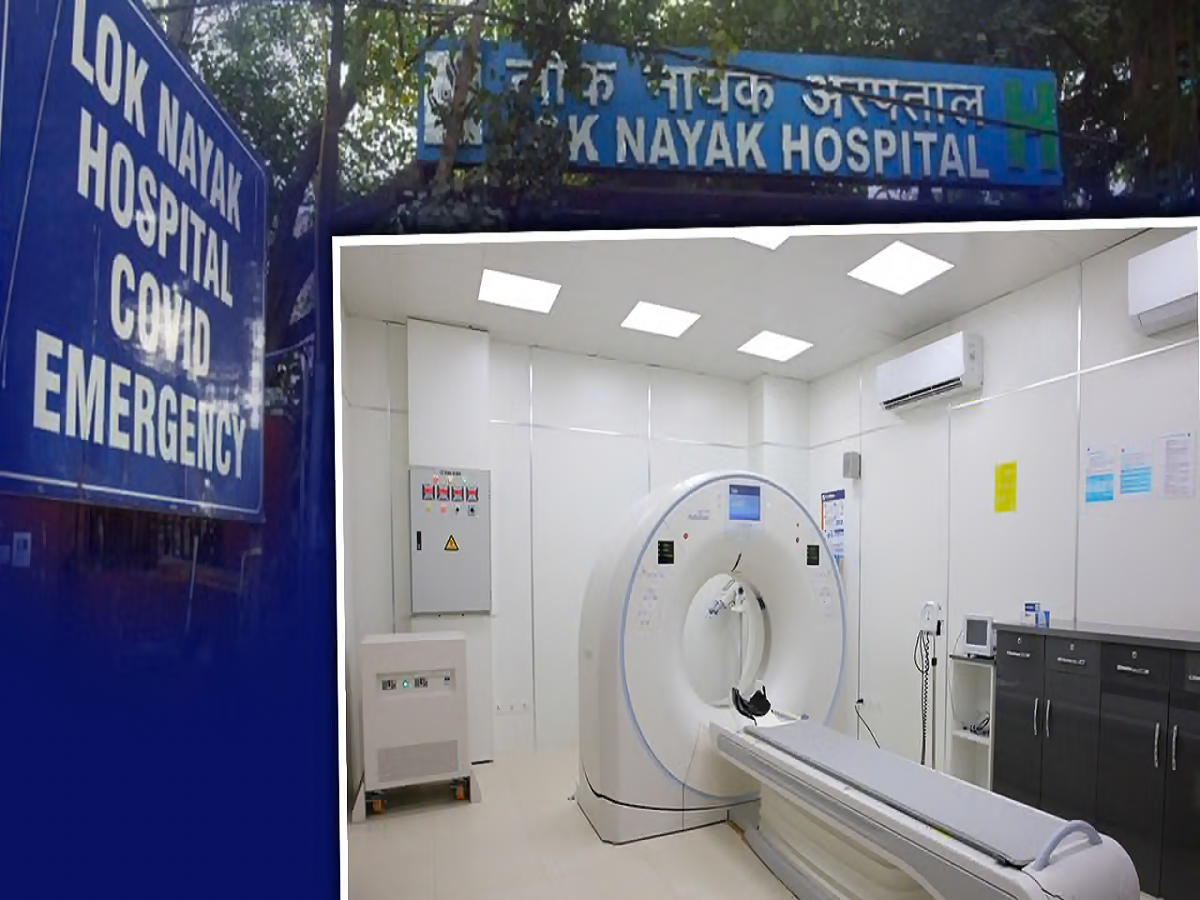
Delhi's healthcare infrastructure is set to receive a major technological boost with the installation of advanced diagnostic equipment at Lok Nayak Jai Prakash (LNJP) Hospital. The Delhi government is introducing a third-generation dual-source CT scanner and a powerful 3-Tesla MRI system to improve the speed and accuracy of medical diagnosis.
These advanced machines are expected to strengthen diagnostic services for patients suffering from serious medical conditions, including heart diseases, cancer, neurological disorders and injuries caused by accidents. The new facilities will be particularly valuable in emergency situations, where timely diagnosis can play a crucial role in treatment decisions.
Delhi Health Minister Dr. Pankaj Kumar Singh said the initiative would strengthen the hospital's medical infrastructure and improve access to modern diagnostic facilities for patients visiting government hospitals.
CT Scan in Less Than a Second: A Major Advancement for Emergency Care
One of the most significant features of the new equipment is the third-generation dual-source CT scanner. Designed to capture high-quality images at exceptional speeds, the machine will be capable of completing a chest scan in less than a second under suitable conditions.
This technology could prove particularly useful for patients arriving with severe injuries, suspected internal bleeding or other critical conditions requiring immediate assessment.
The scanner can produce image slices as thin as 0.5 millimetres, enabling doctors to examine internal organs and anatomical structures in considerable detail. Such precision can assist in identifying abnormalities that require urgent medical attention.
Another important feature is its radiation-dose management technology, which helps optimise radiation exposure according to the patient's examination requirements.
The system will also offer specialised imaging capabilities to help identify the composition of kidney stones and detect uric acid crystal deposits associated with gout. These features could provide doctors with additional information when deciding on appropriate treatment.
Advanced 3-Tesla MRI to Strengthen Cancer, Stroke and Heart Disease Diagnosis
The proposed 3-Tesla MRI system is expected to significantly enhance the hospital's ability to examine soft tissues, organs and other structures inside the body.
MRI scanners use powerful magnetic fields and radio waves to produce detailed images without using ionising radiation. A 3-Tesla system offers a stronger magnetic field than conventional 1.5-Tesla MRI equipment, potentially enabling improved image detail for many examinations.
The new system will feature a wide 70-centimetre bore designed to improve patient comfort during scans. Its digital imaging technology and high-performance gradients are also intended to support detailed examinations and efficient scanning.
The equipment is expected to benefit several medical specialities, including:
-
Neurology, for evaluating conditions such as stroke and certain brain disorders.
-
Oncology, for examining tumours and supporting cancer assessment.
-
Cardiology, for detailed imaging of the heart and its structures.
-
Angiography, for evaluating blood vessels through appropriate imaging protocols.
-
Orthopaedics, for examining joints, muscles and other musculoskeletal structures.
-
Urology and breast imaging, for investigating a range of medical conditions.
-
Paediatric care, for supporting diagnostic examinations in children.
Although these technologies can significantly improve medical imaging, the final diagnosis will continue to depend on the patient's symptoms, clinical examination and other relevant investigations.
Better Emergency Services and Faster Medical Decisions
In hospitals, delays in obtaining diagnostic scans can complicate the management of patients with serious illnesses. Faster imaging can help doctors assess injuries, identify abnormalities and decide on the next steps in treatment more efficiently.
The proposed CT scanner could be particularly beneficial in trauma care, where rapid imaging is often essential. Similarly, advanced MRI facilities could help specialists investigate complex neurological, cardiac and musculoskeletal conditions.
However, the actual improvement in waiting times will depend on factors such as equipment availability, staffing, patient demand and the hospital's diagnostic workflow.
For patients receiving treatment at a major government hospital such as LNJP, expanding advanced diagnostic capacity could improve access to specialised medical investigations.
Doctors, Medical Students and Researchers to Benefit
The installation of modern diagnostic systems is expected to benefit not only patients but also doctors, medical students and researchers.
Access to advanced imaging equipment can support practical medical training, help clinicians understand complex cases and create opportunities for clinical research. These facilities may also contribute to improved diagnostic practices and the development of specialised medical expertise.
For a large public hospital, stronger diagnostic infrastructure can be an important step towards improving the overall quality of healthcare delivery.
Delhi Government's Push to Modernise Public Healthcare
The initiative reflects the Delhi government's broader focus on upgrading medical facilities in government hospitals. Under Chief Minister Rekha Gupta's leadership, the government has emphasised the expansion of modern healthcare technology and the improvement of patient services.
Advanced diagnostic equipment can help public hospitals manage complex medical cases more effectively and strengthen their ability to provide specialised care.
The benefits, however, will ultimately depend on timely installation, operational readiness, trained medical personnel and affordable access for patients.
Conclusion
The planned installation of a third-generation dual-source CT scanner and a 3-Tesla MRI system at LNJP Hospital marks an important step towards strengthening Delhi's public healthcare infrastructure.
With the potential for extremely fast CT imaging, detailed MRI examinations and improved diagnostic capabilities across multiple specialities, the new equipment could help doctors make better-informed medical decisions.
For patients, the most important expected benefit is improved access to advanced diagnostic services, particularly when investigating serious or time-sensitive medical conditions. Once the machines become operational, their impact will depend on how effectively the hospital integrates them into its everyday patient-care services.