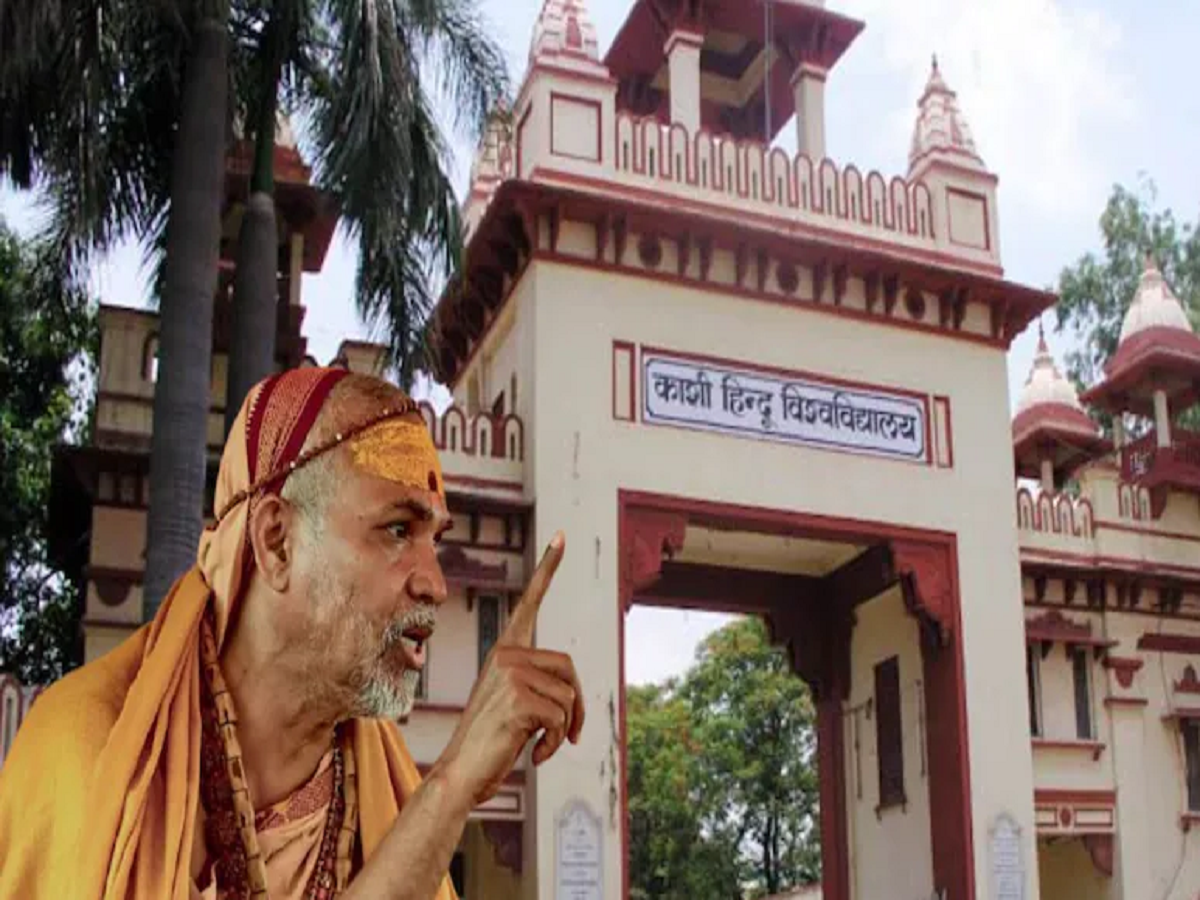
A question asked in a Master’s history examination at Banaras Hindu University has triggered a major political and academic controversy in Uttar Pradesh. The dispute began after students appearing for an MA History paper were asked to explain how “Brahmanical patriarchy” affected the progress of women in ancient India. The question quickly sparked reactions across social media, academic circles, political groups, and religious organizations.
The controversy has now expanded beyond the university campus, with professors, student groups, religious leaders, and public figures debating issues related to academic freedom, historical interpretation, caste sensitivity, and ideological influence in educational institutions.
What Was the Controversial Question?
According to reports, the disputed question appeared in the fourth paper of the MA History examination conducted at BHU.
Students were reportedly asked:
“How did Brahmanical patriarchy obstruct the progress of women in ancient India?”
The wording of the question immediately became a topic of heated discussion, with several students and professors objecting to both the language and framing of the question. Critics argued that it appeared to target a particular community and could hurt social and religious sentiments.
Students and Professors Raise Objections
Soon after the question paper surfaced online, reactions began pouring in from students and faculty members.
Several students claimed that the terminology used in the question was inappropriate and biased. Some argued that educational institutions should avoid framing questions in ways that may appear discriminatory or politically motivated.
Faculty members also expressed concerns regarding the academic basis of the question.
Professor Subhash Pandey from the university’s astrology department reportedly described the question as “baseless” and alleged that such questions reflect ideological influence from left-leaning academic thinking.
Debate Spreads Beyond Campus
The issue soon gained momentum on social media platforms, where users shared divided opinions.
While some defended the question as part of academic discourse and historical analysis, others argued that it unfairly portrayed an entire community negatively.
The controversy has also revived discussions surrounding previous caste-related debates in Uttar Pradesh and across India.
Reports referenced earlier incidents involving political remarks about Brahmins, controversies over entertainment content, and debates around educational guidelines related to caste discrimination.
Shankaracharya Avimukteshwaranand Reacts Strongly
The controversy intensified further after comments from Swami Avimukteshwaranand Saraswati, who strongly criticized the issue.
According to reports, the religious leader accused political forces of creating divisions within Hindu society and attempting to pit one caste against another. He stated that Brahmins, Kshatriyas, Vaishyas, and Shudras have traditionally been considered integral parts of Hindu society and warned against efforts to create internal conflict.
His remarks added a larger political and religious dimension to the ongoing academic controversy.
Kashi Vidvat Parishad Questions the Basis of the Paper
The Kashi Vidvat Parishad also reportedly raised objections regarding the examination question.
Professor Vinay Pandey, associated with the organization and BHU, questioned the academic basis and appropriateness of such content appearing in a university examination paper. He reportedly stated that the university does not support the creation of such controversial question papers.
BHU Vice Chancellor Responds Carefully
As the controversy continued to grow, attention also turned toward the university administration.
When questioned about the issue, BHU Vice Chancellor Professor Ajit Chaturvedi reportedly avoided giving a direct response immediately and stated that the matter would be discussed later.
The cautious response suggests the university may review the issue internally before making any official statement.
History Department Professor Also Questions the Paper
Interestingly, even a professor from BHU’s History Department reportedly expressed reservations regarding the question.
Professor Anuradha Singh stated that it was difficult to determine the exact historical context intended behind the question, but she personally did not support including such questions in examinations.
Her remarks indicate that concerns are not limited only to political or religious groups but also exist within academic circles themselves.
Larger Debate Over Academic Freedom and Sensitivity
The controversy has now evolved into a wider national debate involving:
- Academic freedom
- Interpretation of history
- Ideological influence in universities
- Religious and caste sensitivities
- Curriculum design
Some academics argue that concepts like “Brahmanical patriarchy” are part of established sociological and historical discussions within gender studies and history research. Others believe educational institutions must frame such topics carefully to avoid creating social tension or appearing biased toward any community.
Students Demand Greater Sensitivity
Several students reportedly stated that the issue is no longer limited to a single examination question.
According to some student voices, the debate now reflects broader concerns about syllabus content, historical narratives, and cultural sensitivity within higher education institutions.
The controversy is expected to continue as political groups, scholars, and social organizations weigh in on the matter in the coming days.
Disclaimer: This article is based on publicly reported claims, reactions, and statements related to the controversy. The views mentioned belong to the respective individuals and organizations quoted in reports.