TECH
Battle of the Flagships: OnePlus Pad 4 vs. Xiaomi Pad 8—Which Android Tablet Deserves a Place on Your Desk?
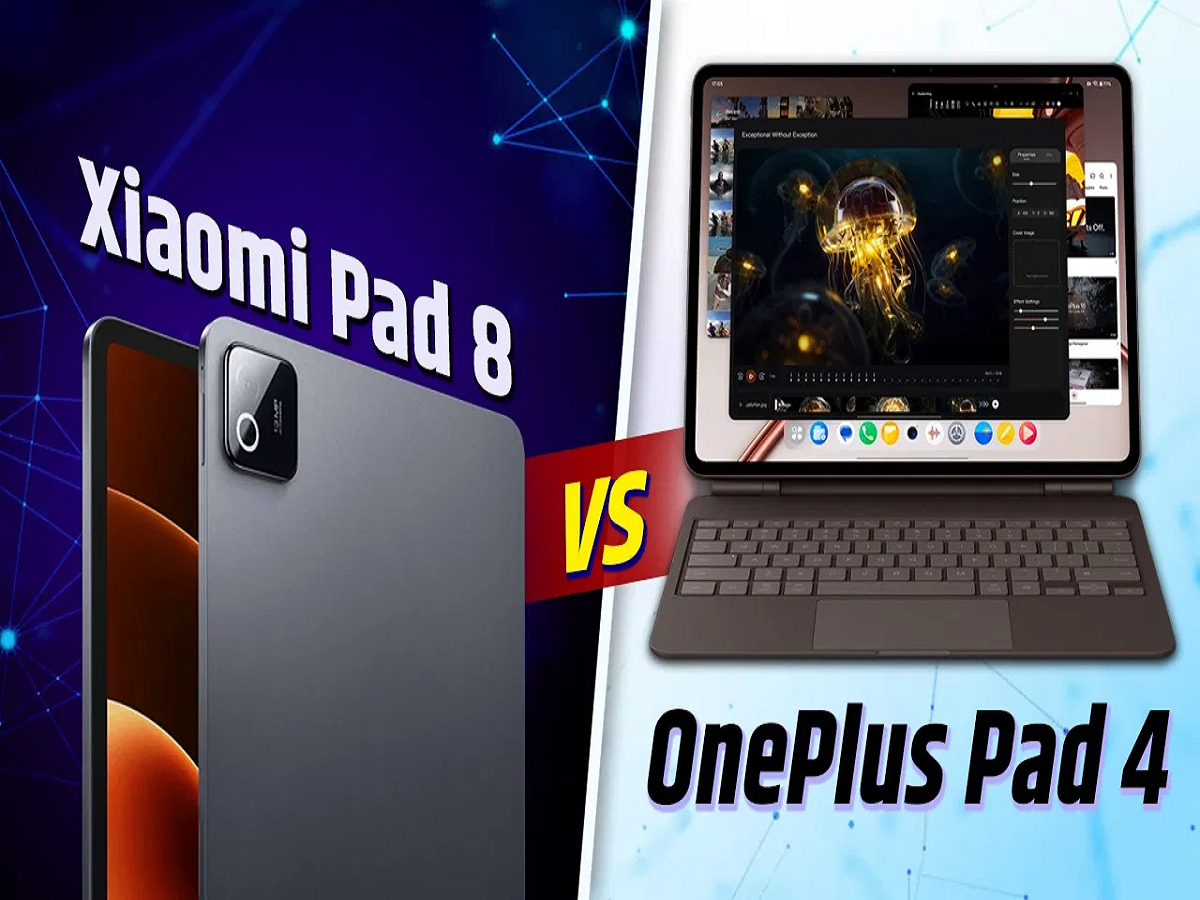
The Android tablet landscape is witnessing a massive resurgence, with manufacturers finally delivering powerhouse devices that can legitimately challenge traditional laptops. Two of the most talked-about entrants in this premium workspace segment are the newly launched OnePlus Pad 4 and the Xiaomi Pad 8.
While both tablets boast premium builds and sleek designs, they cater to vastly different users. OnePlus is aiming straight for the ultra-premium, laptop-replacement crown, while Xiaomi is maintaining its legendary focus on high-value, portable performance.
If you are torn between these two new powerhouses, here is a detailed, head-to-head breakdown to help you choose the perfect fit for your lifestyle.
1. Display & Ergonomics: Massive Workspace vs. Ultra-Portable
The first major difference hits you the moment you look at the screens. These devices are built for entirely different viewing experiences.
-
The OnePlus Pad 4 Experience: Features a massive 13.2-inch 3.4K display with an adaptive 144Hz refresh rate (which can dynamically drop down to 30Hz to conserve battery life). It hits a bright 1000 nits and uses a boxier 7:5 aspect ratio—making it the ultimate canvas for split-screen multitasking, reading textbooks, and editing documents side-by-side.
-
The Xiaomi Pad 8 Experience: Features a more compact 11.2-inch 3.2K LCD screen with a 144Hz refresh rate and 800 nits of peak brightness. It adopts a traditional 3:4 aspect ratio, making it incredibly comfortable to hold vertically for reading or throwing into a small backpack.
-
Size & Weight: Because of its massive screen, the OnePlus Pad 4 is significantly heavier at 672 grams but impressively slim at just 5.75mm. The Xiaomi Pad 8 is a featherweight by comparison, weighing only 485 grams with a sleek 5.94mm profile.
2. Performance: Absolute Ultimate vs. Upper Mid-Range
Under the hood, the performance gap explains the difference in their price tags.
-
OnePlus Pad 4 (The Powerhouse): Driven by the bleeding-edge Snapdragon 8 Elite processor—the exact same flagship chip powering ultra-premium smartphones. Backed by up to 12GB of LPDDR5X RAM and lightning-fast UFS 4.1 storage, this tablet is built to handle heavy video editing, 3D gaming, and massive desktop-class workflows without breaking a sweat.
-
Xiaomi Pad 8 (The Everyday Champ): Powered by the upper mid-range Snapdragon 8s Gen 3 processor. It is exceptionally fast for media consumption, everyday multitasking, and casual gaming. However, note that the entry-level 128GB model uses slightly slower UFS 3.1 storage, while the 256GB variant upgrades you to the faster UFS 4.1 standard.
3. Battery & Charging: Massive Capacity vs. Quick Top-Ups
-
OnePlus Pad 4: Houses a gargantuan 13,380mAh battery designed to easily breeze through multiple days of heavy productivity. It supports 67W SUPERVOOC fast charging to juice up that massive cell quickly.
-
Xiaomi Pad 8: Features a reliable 9,200mAh battery paired with 45W fast charging.
-
Bonus Feature: Both tablets support reverse wired charging, effectively turning your tablet into a giant power bank to rescue your phone or TWS earbuds in an emergency.
4. Audio: 8-Speaker Cinematic Immersion vs. Quad Setup
-
OnePlus Pad 4: Packs a class-leading eight-speaker array with Hi-Res certification. It delivers an incredibly wide, rich, and thunderous audio experience that fills a room effortlessly.
-
Xiaomi Pad 8: Implements a standard quad-speaker setup backed by Dolby Atmos. While it sounds crisp and clean for movies, it cannot quite match the pure acoustic depth of the OnePlus—even with its software-assisted 200% volume boost mode engaged.
Head-to-Head Specification Summary
| Feature | OnePlus Pad 4 | Xiaomi Pad 8 |
| Display | 13.2-inch 3.4K (7:5) | 11.2-inch 3.2K LCD (3:4) |
| Refresh Rate / Brightness | 144Hz (Adaptive) / 1000 Nits | 144Hz / 800 Nits |
| Processor | Snapdragon 8 Elite | Snapdragon 8s Gen 3 |
| RAM / Storage Tech | 12GB LPDDR5X / UFS 4.1 | 8GB or 12GB / UFS 3.1 (128GB) or UFS 4.1 (256GB) |
| Battery / Charging | 13,380mAh / 67W SuperVOOC | 9,200mAh / 45W Fast Charging |
| Speakers | 8-Speaker System (Hi-Res) | 4-Speaker System (Dolby Atmos) |
| Weight / Thickness | 672g / 5.75mm | 485g / 5.94mm |
| Cameras | 13MP Rear / 8MP Front | 13MP Rear / 8MP Front |
Price & Ultimate Verdict
-
OnePlus Pad 4 Price: Starts at ₹59,999 (8GB/256GB) and goes up to ₹64,999 (12GB/512GB).
-
Xiaomi Pad 8 Price: Starts at a highly aggressive ₹33,999 (8GB/128GB) and tops out at ₹36,999 (12GB/256GB).
Which one should you buy?
Buy the OnePlus Pad 4 if: You are looking for a genuine laptop replacement. If your priority is maximum screen estate for multitasking, elite flagship processing power for heavy creative apps, a massive battery, and a superior theatrical speaker setup, the premium price is entirely justified.
Buy the Xiaomi Pad 8 if: You want the absolute best value for your money. If you primarily use your tablet for watching movies, reading, attending online classes, and standard everyday productivity, the Xiaomi Pad 8 delivers 80% of the flagship experience at nearly half the cost.