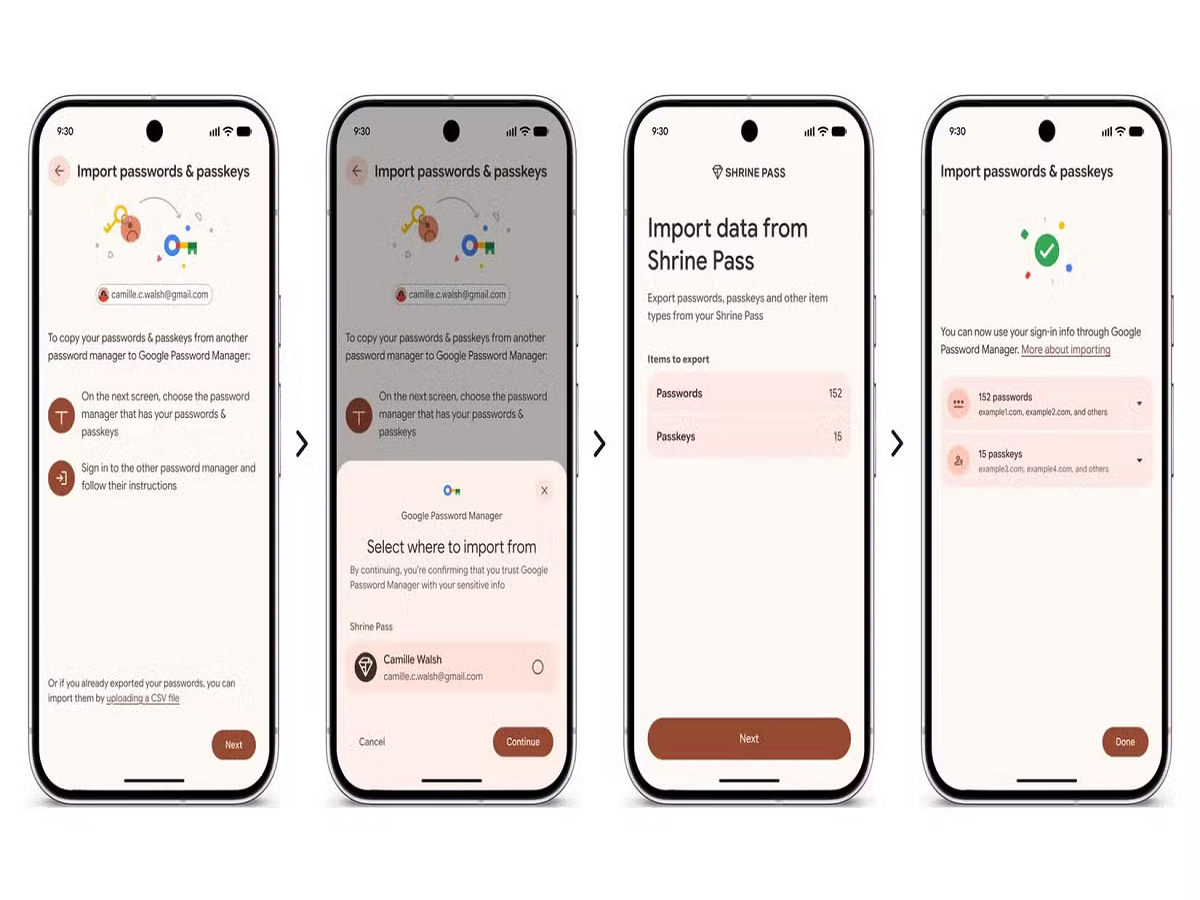
Changing your password manager can be frustrating. Users often have to export passwords, import them into another service and worry about whether sensitive login information will remain secure during the process.
Google is now making that process easier on Android with a new feature designed to securely transfer passwords and passkeys between supported password managers.
The new feature is particularly useful for people who want to switch from one password manager to another without manually recreating their entire collection of saved logins.
What is the new Android feature?
Android is introducing a more standardised way for password managers to exchange credentials.
Instead of treating passwords and passkeys as information that has to be manually moved between services, the new system is designed to allow compatible password managers to securely transfer this information.
This means users can potentially move their saved credentials to another password manager without having to individually copy every username and password.
Why are passkeys important?
Passwords are no longer the only way people sign in to websites and apps.
Passkeys are designed to provide passwordless authentication using cryptographic credentials associated with a user's device or account. They can allow users to sign in using methods such as a fingerprint, face authentication or device PIN, depending on the platform.
As more services adopt passkeys, being able to move them between password managers becomes increasingly important.
What happens when you change password managers?
Previously, switching password managers could involve several steps.
A user might have to export their existing passwords from the old service, create an import file and then transfer the information to the new service. The exact process could vary significantly between providers.
Android's new approach is intended to make the process more straightforward and secure.
However, support will depend on whether the password managers involved have implemented the relevant transfer functionality.
Is the transfer safe?
Security is one of the most important considerations when moving passwords.
Password databases contain extremely sensitive information, so users should avoid transferring them through unsecured files, messaging apps or unknown websites.
Google says the Android feature is designed specifically to provide a secure way to transfer passwords and passkeys between password managers.
Users should still make sure they are using the official versions of their password-management apps and carefully verify the destination before starting a transfer.
Who will find this feature useful?
The feature could be particularly useful for people who:
-
Want to switch to a different password manager
-
Use multiple devices and password-management services
-
Have hundreds of saved website and app credentials
-
Are moving from passwords towards passkeys
-
Want to avoid manually recreating their saved logins
The biggest advantage is convenience without requiring users to compromise on security.
What should Android users do?
If you are planning to switch password managers, check whether both your existing and new password managers support Android's new transfer functionality.
Before making any major change, it is also sensible to keep your existing password manager available until you have confirmed that your passwords and passkeys have transferred successfully.
Do not delete your old password manager immediately after starting the transfer.
Why this update matters
Password managers are becoming increasingly important as people maintain dozens or even hundreds of online accounts. At the same time, passkeys are gradually becoming a more common alternative to traditional passwords.
Making credentials easier to transfer could therefore remove one of the biggest inconveniences of switching password-management services.
For Android users, this is a relatively small software change, but it could make managing digital identities considerably easier.