South India is home to some of India's most extraordinary temples, where centuries-old traditions meet breathtaking architecture. From towering gopurams adorned with colourful sculptures to intricately carved pillars and sacred coastal shrines, these destinations offer a fascinating glimpse into India's religious and cultural heritage.
Spread across Tamil Nadu, Kerala, Andhra Pradesh, and Karnataka, these temples attract pilgrims, history enthusiasts, architecture lovers, and travellers seeking a deeper cultural experience.
Whether you want to witness elaborate rituals, admire ancient craftsmanship, or explore the stories behind India's sacred landmarks, these eight temples deserve a place on your South India travel itinerary.
1. Meenakshi Amman Temple, Madurai, Tamil Nadu
The magnificent Meenakshi Amman Temple is one of the most recognisable landmarks in Tamil Nadu. Dedicated to Goddess Meenakshi, a form of Parvati, and Lord Sundareswarar, a form of Shiva, the temple holds immense religious and cultural significance.
Its towering gopurams are covered with colourful sculptures depicting deities, mythological characters, and celestial figures. Inside, visitors can explore elaborate pillared halls and admire the craftsmanship that reflects the region's rich Dravidian architectural tradition.
The temple is also associated with the divine marriage of Meenakshi and Sundareswarar, celebrated through important religious festivals.
Why visit: To experience traditional temple rituals, explore spectacular sculptures, and discover Madurai's vibrant cultural heritage.
2. Ramanathaswamy Temple, Rameswaram, Tamil Nadu
Located on Rameswaram Island, Ramanathaswamy Temple is one of the twelve sacred Jyotirlingas dedicated to Lord Shiva. It is also an important destination on the Char Dham pilgrimage circuit.
The temple is particularly famous for its exceptionally long corridors, lined with intricately decorated pillars. Its architectural scale and detailed craftsmanship make it a remarkable destination for anyone interested in India's temple heritage.
The temple's sacred wells, known as theerthams, are central to traditional pilgrimage practices. Many devotees undertake ritual bathing before offering prayers.
Why visit: For its spiritual importance, remarkable corridors, and connection to India's major pilgrimage traditions.
3. Brihadeeswarar Temple, Thanjavur, Tamil Nadu
Built during the reign of Chola king Rajaraja I in the early 11th century, Brihadeeswarar Temple is a masterpiece of South Indian architecture.
Dedicated to Lord Shiva, the temple is renowned for its enormous vimana, the towering structure above the main shrine, and its impressive stone construction. The scale, symmetry, and engineering of the complex demonstrate the architectural achievements of the Chola dynasty.
The temple forms part of the UNESCO World Heritage property known as the Great Living Chola Temples, recognised for its outstanding cultural and architectural significance.
Why visit: To admire exceptional Chola craftsmanship and discover one of India's most important surviving medieval temple complexes.
4. Sri Venkateswara Temple, Tirumala, Andhra Pradesh
Situated in the Tirumala Hills near Tirupati, Sri Venkateswara Temple is among India's most prominent pilgrimage destinations.
Dedicated to Lord Venkateswara, a form of Vishnu, the temple receives devotees from across the country and abroad. Its religious traditions, elaborate rituals, and distinctive temple architecture make it an important centre of Vaishnavite worship.
The pilgrimage experience also includes the surrounding hills, which form part of the wider Tirumala landscape.
Because of the temple's immense popularity, visitors should plan their darshan in advance and check official arrangements for booking, entry, and accommodation.
Why visit: To experience one of India's most significant Vishnu temples and explore the spiritual traditions of Tirumala.
5. Sree Padmanabhaswamy Temple, Thiruvananthapuram, Kerala
Sree Padmanabhaswamy Temple is one of Kerala's most celebrated religious landmarks. Dedicated to Lord Vishnu, it is particularly famous for its distinctive depiction of the deity reclining on the serpent Ananta, also known as Sheshanaga.
The temple combines elements of Kerala and Dravidian architectural traditions. Its imposing entrance tower, detailed carvings, and elaborate religious practices reflect the region's rich cultural history.
The shrine has also attracted international attention because of the historical treasures discovered in its underground vaults.
Visitors should note that the temple follows specific dress codes and entry rules, which should be checked before planning a visit.
Why visit: To appreciate its distinctive architecture, sacred traditions, and remarkable historical significance.
6. Guruvayur Sri Krishna Temple, Guruvayur, Kerala
Known as an important centre of Krishna worship, Guruvayur Sri Krishna Temple is among Kerala's most revered pilgrimage sites.
The temple is dedicated to Lord Krishna and is associated with traditions that describe the deity as a manifestation of the divine child. Devotees visit throughout the year, while festivals bring particularly vibrant celebrations to the town.
The temple's traditional Kerala architectural style, daily rituals, and devotional atmosphere make it an important destination for understanding the state's religious culture.
The surrounding town also has a strong connection with Hindu pilgrimage traditions.
Why visit: For its deep-rooted Krishna devotion, traditional rituals, and distinctive Kerala temple culture.
7. Virupaksha Temple, Hampi, Karnataka
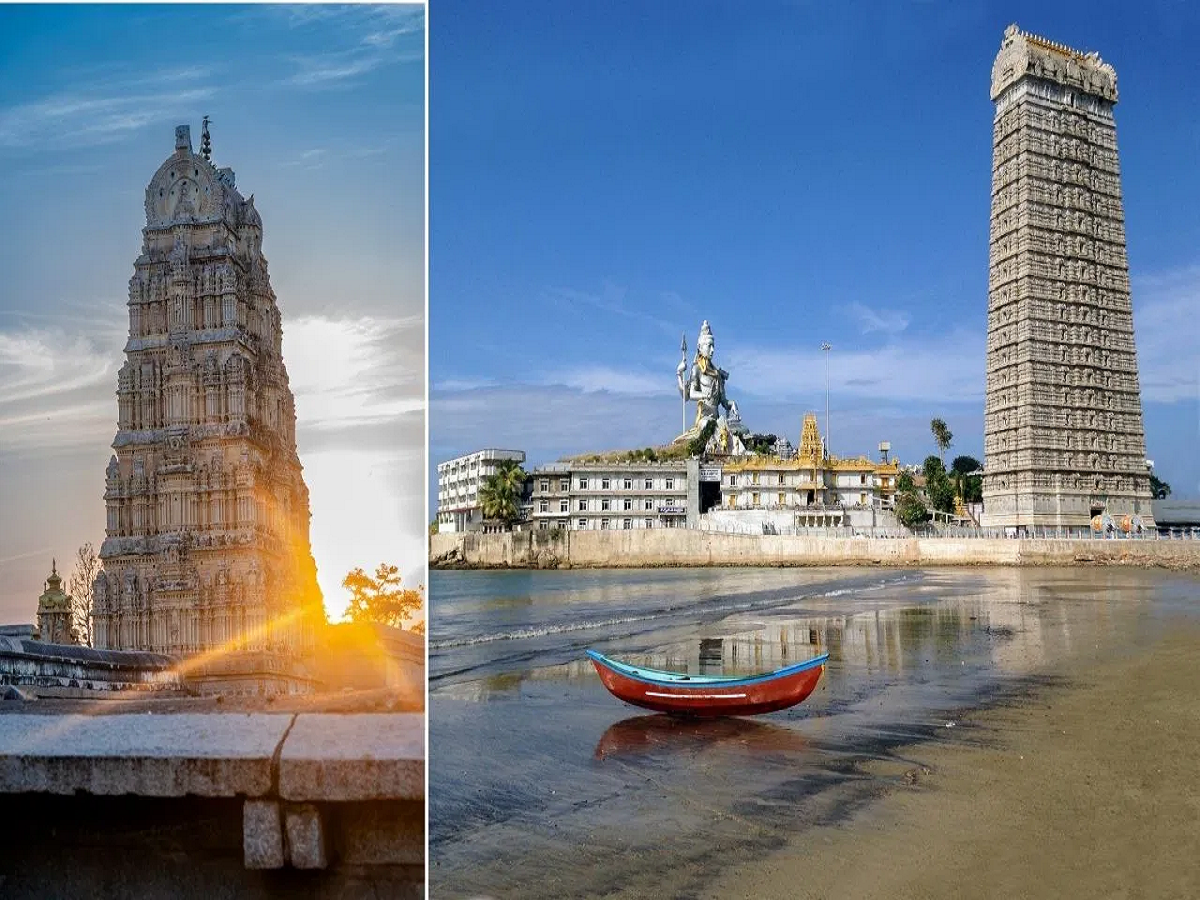
Set amid the historic ruins of Hampi, Virupaksha Temple offers a remarkable combination of living religious traditions and architectural heritage.
Dedicated to Lord Shiva, the temple has origins predating the height of the Vijayanagara Empire and developed into a major religious centre during the empire's rule.
Its imposing entrance tower, sculpted pillars, and temple complex stand out against Hampi's dramatic landscape of boulder-strewn hills and historic monuments.
Virupaksha Temple is also part of the UNESCO-listed Group of Monuments at Hampi, making it an especially rewarding destination for history enthusiasts.
Why visit: To explore a functioning historic temple while discovering the architectural legacy of the Vijayanagara Empire.
8. Murudeshwar Temple, Karnataka
Located beside the Arabian Sea on Karnataka's coast, Murudeshwar Temple is famous for its enormous statue of Lord Shiva and its spectacular coastal setting.
The towering Shiva statue overlooks the surrounding landscape, creating one of the region's most recognisable religious and tourist attractions. The nearby temple complex features a tall gopura, while the surrounding coastline offers beautiful views of the sea.
Murudeshwar combines religious significance with scenic appeal, making it popular among pilgrims, families, and travellers exploring Karnataka's coastal destinations.
Why visit: For the impressive Shiva statue, coastal scenery, and opportunity to combine a temple visit with a seaside excursion.
How to Plan Your South India Temple Tour
Visiting all eight temples can be a rewarding journey, but they are spread across several states. Planning the route carefully can help reduce travel time.
-
Tamil Nadu: Begin with Meenakshi Amman Temple in Madurai, continue to Ramanathaswamy Temple in Rameswaram, and visit Brihadeeswarar Temple in Thanjavur.
-
Andhra Pradesh: Plan a separate visit to Sri Venkateswara Temple in Tirumala, allowing time for darshan arrangements.
-
Kerala: Explore Sree Padmanabhaswamy Temple in Thiruvananthapuram and Guruvayur Sri Krishna Temple in Guruvayur.
-
Karnataka: Visit Virupaksha Temple in Hampi and Murudeshwar Temple on the coast.
Before travelling, check temple opening hours, dress codes, photography restrictions, and festival schedules. Some shrines have strict entry requirements, and popular temples may require advance arrangements for darshan.
Final Thoughts
South India's temples are far more than places of worship. They preserve centuries of artistic achievement, engineering knowledge, mythology, and cultural traditions.
From the monumental architecture of Brihadeeswarar Temple to the coastal beauty of Murudeshwar and the historic surroundings of Virupaksha Temple, each destination offers a different perspective on India's heritage.
For travellers interested in spirituality, architecture, history, or cultural exploration, these eight temples provide an excellent introduction to the remarkable diversity of South India.