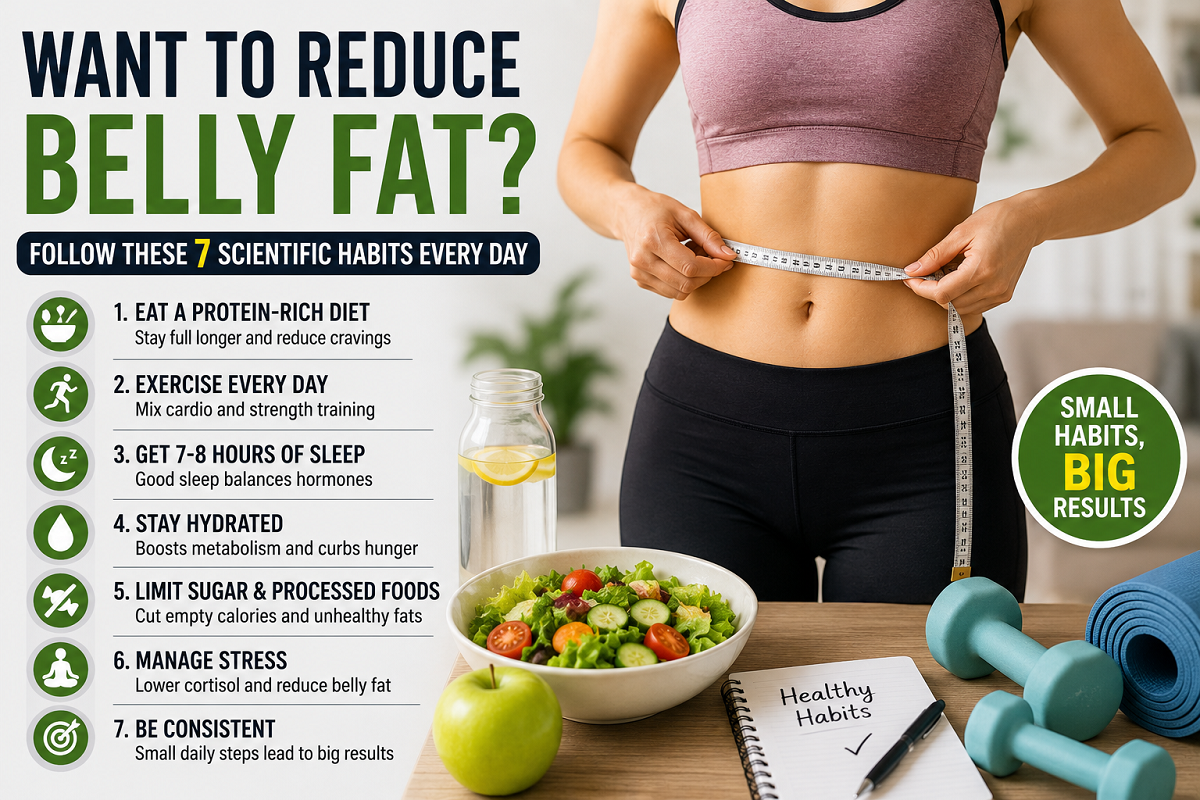
Excess belly fat is more than just a cosmetic concern—it is also associated with several long-term health risks. Fat stored around the abdominal area has been linked to conditions such as high blood pressure, type 2 diabetes, heart disease, and metabolic disorders. While many people look for quick fixes through crash diets or intense workout plans, sustainable lifestyle changes are generally considered more effective for long-term weight management.
Health experts suggest that combining a balanced diet, regular physical activity, quality sleep, and other healthy habits can support overall fitness and help reduce abdominal fat over time. Here are seven science-backed habits that may help you work toward a healthier waistline.
1. Include Protein in Every Meal
Protein plays an important role in weight management because it helps keep you feeling full for longer. A protein-rich meal may reduce unnecessary snacking and help maintain muscle mass during weight loss.
Some healthy protein sources include:
-
Lentils and pulses
-
Paneer
-
Eggs
-
Greek yogurt or curd
-
Sprouts
-
Soy products
-
Lean poultry or fish
Adding adequate protein to breakfast, lunch, and dinner can make your meals more satisfying and nutritionally balanced.
2. Exercise Consistently
No single workout can specifically target belly fat, but regular physical activity helps burn calories and improve overall body composition.
Experts often recommend combining different forms of exercise, including:
-
Brisk walking
-
Cycling
-
Jogging
-
Swimming
-
Strength training
-
Bodyweight exercises
Aim for at least 150 minutes of moderate-intensity exercise each week, along with two or more sessions of muscle-strengthening activities for better overall fitness.
3. Prioritize Quality Sleep
Sleep is closely connected to weight management. Inadequate sleep may disrupt hormones that regulate hunger and appetite, increasing cravings and making it harder to maintain a healthy weight.
Most adults should aim for 7 to 9 hours of quality sleep each night. Maintaining a consistent sleep schedule and limiting screen time before bed may also improve sleep quality.
4. Stay Hydrated Throughout the Day
Drinking enough water supports digestion, metabolism, and overall health. Sometimes thirst can also be mistaken for hunger, leading to unnecessary calorie intake.
Keeping a water bottle nearby and drinking water regularly throughout the day may help maintain hydration and support healthy eating habits.
5. Limit Added Sugar and Processed Foods
Foods high in added sugars, refined carbohydrates, and unhealthy fats can contribute to excess calorie intake and weight gain. Replacing sugary beverages, packaged snacks, and ultra-processed foods with whole foods may support better weight management.
Focus on meals that include vegetables, fruits, whole grains, lean proteins, and healthy fats.
6. Manage Daily Stress
Chronic stress may increase the production of cortisol, a hormone that has been associated with increased appetite and fat storage around the abdomen.
Simple stress-management techniques include:
-
Deep breathing exercises
-
Meditation
-
Yoga
-
Spending time outdoors
-
Practicing hobbies
-
Taking short breaks during work
Reducing stress can benefit both mental well-being and overall health.
7. Be Consistent Instead of Looking for Quick Results
Healthy weight loss is usually gradual. Rather than following restrictive diets or extreme workout routines, focus on habits you can maintain over the long term.
Small, consistent improvements in eating patterns, physical activity, sleep, and hydration are more likely to produce lasting results than temporary solutions.
Final Thoughts
Reducing belly fat requires a combination of healthy lifestyle habits rather than a single solution. Eating enough protein, staying physically active, sleeping well, managing stress, and making nutritious food choices can all contribute to better overall health and support healthy weight management.
If you have obesity, diabetes, heart disease, or any other medical condition, consult a qualified healthcare professional or registered dietitian before making significant changes to your diet or exercise routine. Sustainable habits, combined with professional guidance when needed, remain the safest approach to achieving long-term fitness goals.