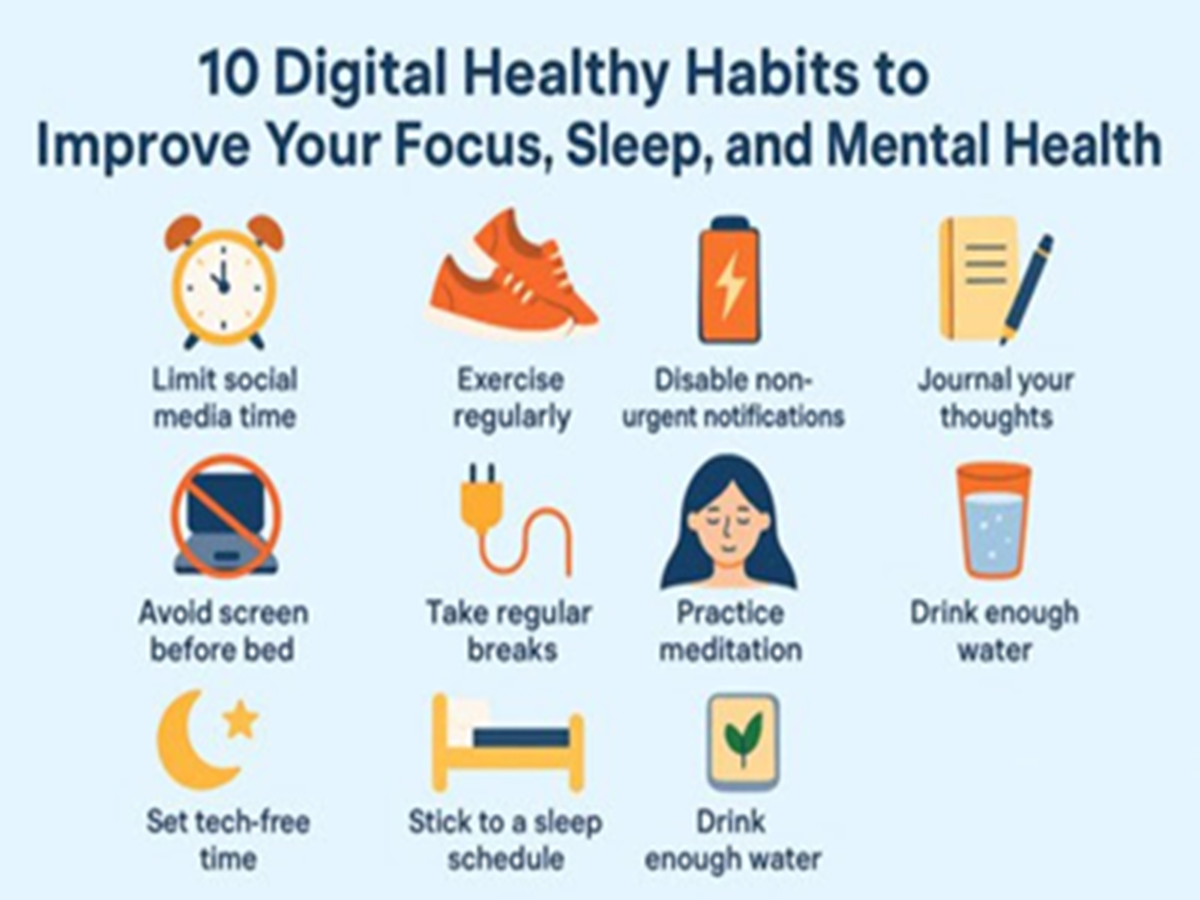
Being productive isn't about working longer hours—it's about using technology wisely. Small digital habits can reduce distractions, improve focus, and help you accomplish more without feeling overwhelmed. Here are ten simple habits that can make a noticeable difference in your daily routine.
1. Start the Day Without Social Media
Instead of checking social media immediately after waking up, spend the first 20–30 minutes planning your day. Beginning with your priorities rather than notifications helps you stay focused.
2. Keep Your Desktop Organized
A cluttered desktop makes it harder to find important files. Create folders for work, personal documents, and downloads so everything is easy to locate.
3. Turn Off Unnecessary Notifications
Every notification interrupts your concentration. Disable alerts from apps you don't need during work or study sessions to maintain your focus.
4. Follow the Two-Minute Rule
If a digital task—such as replying to an email or organizing a file—takes less than two minutes, do it immediately instead of letting it pile up.
5. Use Cloud Storage Wisely
Store important documents in the cloud so they're available across your devices. Keeping files synced also reduces the risk of losing valuable data.
6. Create Strong File Names
Instead of saving documents as "Final" or "New Document," use descriptive names with dates or project titles. You'll find files much faster later.
7. Limit Open Browser Tabs
Keeping dozens of tabs open slows your browser and makes it difficult to stay organized. Bookmark pages you'll need later instead of leaving everything open.
8. Schedule Time for Email
Checking email every few minutes breaks your workflow. Set specific times during the day to read and respond to messages.
9. Learn One New Tech Skill Every Month
Technology evolves quickly. Whether it's mastering a spreadsheet shortcut, learning photo editing, or understanding AI tools, continuous learning keeps your skills up to date.
10. End the Day with a Digital Cleanup
Before shutting down your computer, close unnecessary programs, organize downloaded files, and prepare your to-do list for tomorrow. Starting the next day with a clean workspace saves time and reduces stress.
Why Small Habits Matter
Major improvements often come from small, consistent actions rather than dramatic changes. A few minutes spent organizing files, reducing distractions, or learning a new shortcut can save hours over the course of a month.