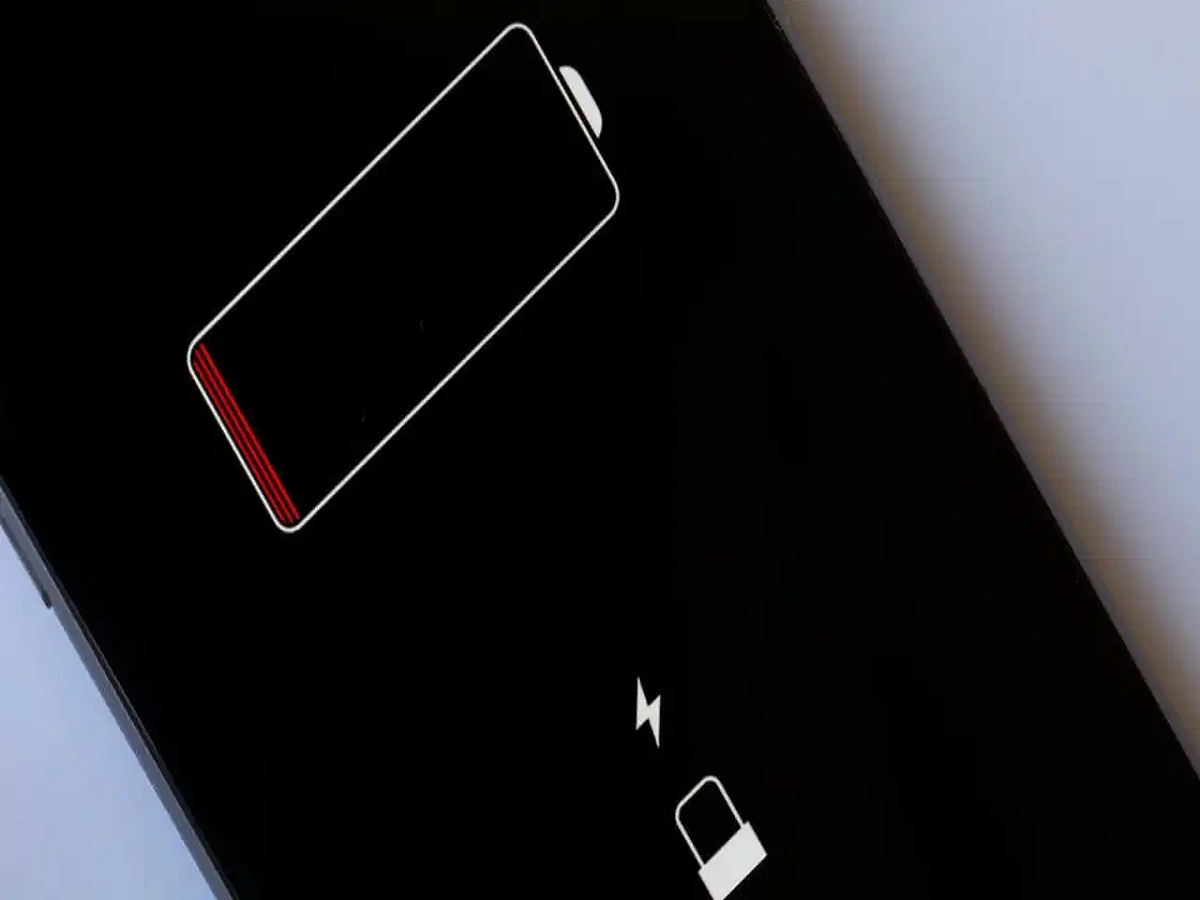
Seeing your smartphone display "1% battery remaining" can make you reach for a charger immediately. But sometimes the phone continues working for several minutes even after reaching that final percentage.
So, if 1% means almost empty, why doesn't the phone switch off instantly? The answer lies in how smartphones estimate battery levels and manage the final amount of available power.
1% Doesn't Mean the Battery Is Completely Empty
The percentage displayed on your smartphone isn't a direct measurement of the exact amount of energy remaining inside the battery.
Instead, the phone estimates the remaining charge using information such as battery voltage, temperature, charging history, current power consumption and other battery-management data.
As a result, when the screen shows 1%, the battery may still have some usable energy available. The phone simply considers itself to be at the final stage of its usable battery range.
Phones Keep a Safety Buffer
Smartphones aren't designed to use every last bit of energy stored in a lithium-ion battery.
The battery-management system maintains certain operating limits to protect the battery and the phone. If the voltage falls too low, continuing to operate can become unsafe or potentially harmful to the battery.
This is why the phone can shut down even though there may technically be a small amount of energy remaining.
The amount of time a phone can operate at 1% varies significantly between models and individual batteries.
Your Phone May Reduce Power Consumption
When the battery becomes critically low, the phone's power-management system may take steps to conserve energy.
Depending on the device, background activity, synchronization and other power-hungry processes may be restricted. Power-saving features can also become more aggressive.
This reduces the rate at which the remaining energy is consumed, allowing the phone to continue running for a little longer.
Why Does an Older Phone Sometimes Die at 20%?
Battery ageing can make the situation less predictable.
Lithium-ion batteries gradually lose their ability to hold as much charge after repeated charging and discharging cycles. An older battery may therefore have significantly less usable capacity than when it was new.
Battery percentage estimates can also become less reliable when the battery's condition has deteriorated. This can sometimes result in a phone unexpectedly shutting down even when the display still shows a relatively high percentage.
Why Does 1% Last Longer on Standby?
The amount of power your phone consumes depends heavily on what you're doing.
Watching videos, playing games, using GPS or recording video can drain the remaining charge very quickly. Simply keeping the phone locked with minimal background activity requires far less energy.
That's why a phone showing 1% might remain alive for several minutes—or potentially longer in low-power standby—while intensive use can make that final percentage disappear rapidly.
How to Make 1% Battery Last Longer
If you're stuck with 1% battery and can't find a charger immediately, reduce the phone's workload as much as possible.
Lower the screen brightness, turn off unnecessary mobile data, Wi-Fi, Bluetooth and location services, and close power-hungry apps.
If you don't need calls or internet access temporarily, enabling airplane mode can conserve even more energy.
Avoid using demanding applications, games or the camera until you can charge the phone.
So, How Much Time Does 1% Actually Give You?
There is no universal answer. A phone's remaining runtime depends on its battery health, model, temperature, network conditions, screen usage and the apps running in the background.
The important thing to remember is that the "1%" displayed on your screen is an estimate, not a precise measurement of every remaining unit of energy. Your phone's battery-management system deliberately keeps operating within safe limits, which is why that final 1% can sometimes last longer than you might expect.