INTERNATIONAL
Why Iran Matters So Much to the US: What America Has Been Trying to Control for 47 Years
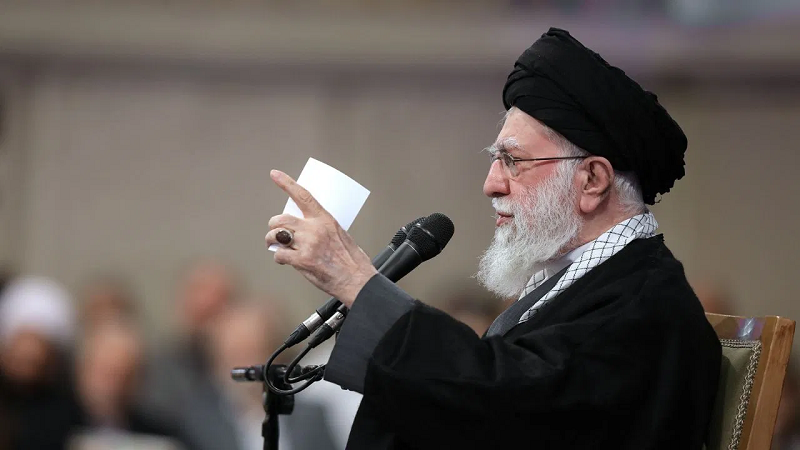
For nearly five decades, the United States has kept a close watch on Iran. Since the 1979 Islamic Revolution, relations between Washington and Tehran have remained tense, marked by sanctions, proxy conflicts, and diplomatic standoffs. Despite its strong influence across much of the Middle East, the US has never regained leverage over Iran—and that is no coincidence.
So what does Iran have that America has been trying to get for the past 47 years? The answer lies in a powerful mix of geography, energy resources, and political influence.
Control over the Strait of Hormuz and the Persian Gulf
One of Iran’s greatest strategic assets is its control over the Strait of Hormuz, the world’s most critical maritime chokepoint. This narrow waterway is the only sea route connecting the Persian Gulf to the open ocean.
Around 25% of global seaborne oil trade and nearly 20% of liquefied natural gas (LNG) shipments pass through this strait every year. An estimated 20 million barrels of oil per day—roughly one-fifth of global oil consumption—move through Hormuz. Iran controls the northern shoreline of the strait, giving it enormous leverage over global energy markets.
Because of this, any escalation involving Iran immediately raises fears of disruptions to oil supplies, something the US and its allies are keen to prevent.
A long history of US involvement in Iran
America’s interest in Iran is not new. In 1953, US intelligence agencies helped overthrow Iran’s elected prime minister Mohammad Mossadegh, leading to the restoration of the Shah’s monarchy. For the next 26 years, Iran remained closely aligned with US interests.
This ended with the 1979 Islamic Revolution, led by Ayatollah Ruhollah Khomeini, which transformed Iran into an Islamic republic and sharply reduced Western influence. After Khomeini’s death, power passed to Ayatollah Ali Khamenei, under whom Iran has continued its independent and often confrontational stance toward the US.
Iran’s massive oil reserves
Another key reason Iran remains in Washington’s focus is its vast energy wealth. Iran holds about 12% of the world’s proven oil reserves, amounting to more than 200 billion barrels. This places it among the top oil-rich nations globally.
Iran continues to export oil despite sanctions, particularly to China, often at discounted rates. This not only strengthens Iran’s economy but also gives China access to cheaper energy—something the US views as a strategic setback.
More than oil: ideology and influence
From the US perspective, Iran is also central to the broader ideological struggle in the Middle East. Washington believes that reducing Iran’s influence would weaken Islamist movements and limit Tehran’s reach across the region, from Iraq and Syria to Lebanon and Yemen.
At the same time, US policymakers are cautious. Any direct intervention risks destabilising global energy supplies and triggering wider conflict.