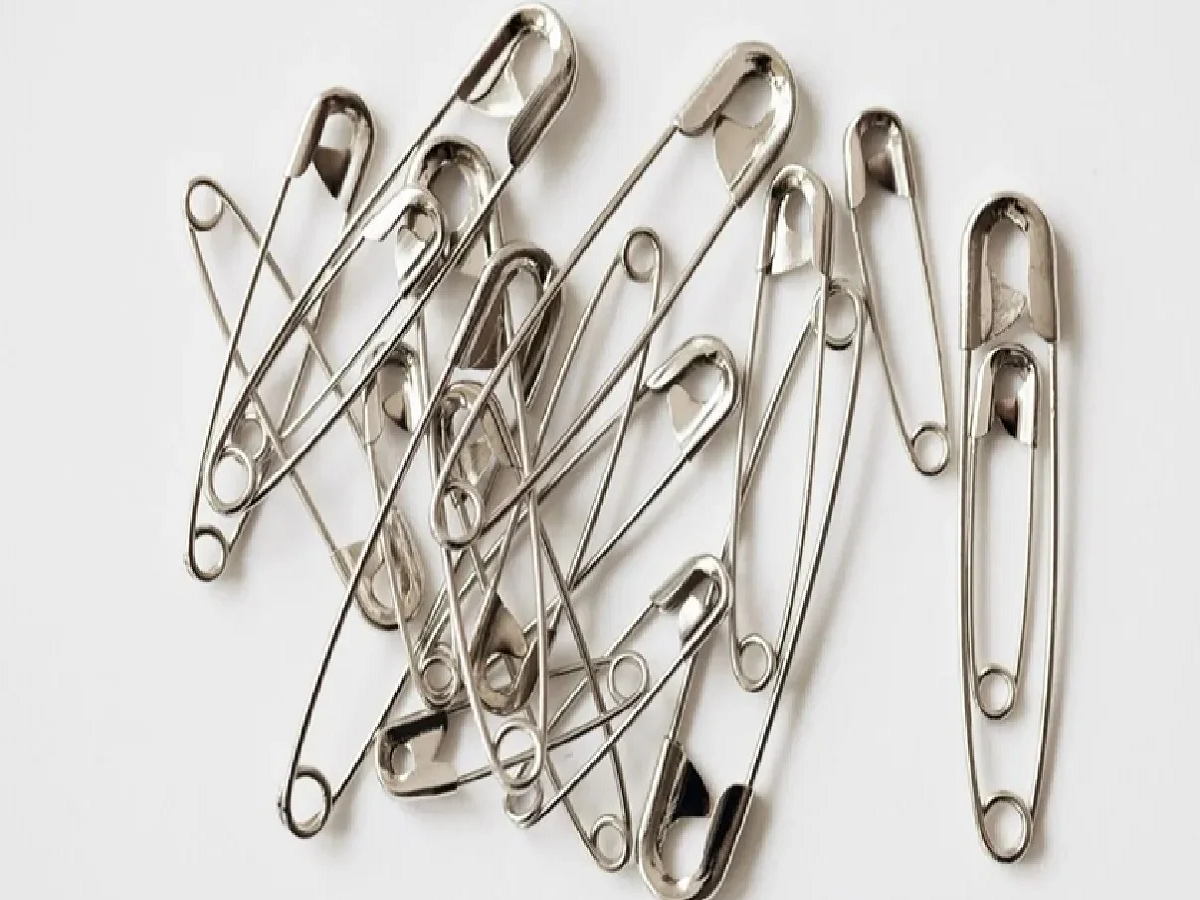
There are some small things in our lives that can be incredibly useful. From tying clothes to handling emergencies, every household should have a safety pin. This seemingly small pin is useful in many ways. We've all used it; but have you ever wondered what the small round hole at the bottom of a safety pin is for, or why it's designed? We'll tell you that this hole isn't just a design element, but there's a significant scientific reason behind it. Let's find out in detail.
What is the reason?
Safety pins are made by wrapping a wire around the bottom to form a coil. This hole acts as a spring. This spring provides the correct angle and tension to the pin's tip. This tension helps keep the pin's pointed end firmly in the lock. This hole in the safety pin was created for safety reasons, to prevent the pin from opening.
What does history say?
The use of safety pins is nothing new. In ancient times, they were called "fibula" in Latin. It is believed that they were used in Bronze Age Europe to hold clothing tightly to the body, but the design of pins at that time was different and more complex than today's.
The spring safety pin we use today was invented by Walter Hunt in 1849. He bent a single wire in such a way that it created a spring mechanism. Previously, in Northern Europe, pins were made from two separate parts, without a spring.
Hunt's design made pins easier and safer to use. In Northern Europe, pins did not have a spring, but simply had a second eyelet inserted into one hole. In Central Europe, pins were made from a single wire, similar to today's pins.
PC: Navarastra