NATIONAL
What will happen to Sheikh Hasina's death sentence? Delhi now has the decision, learn the rules
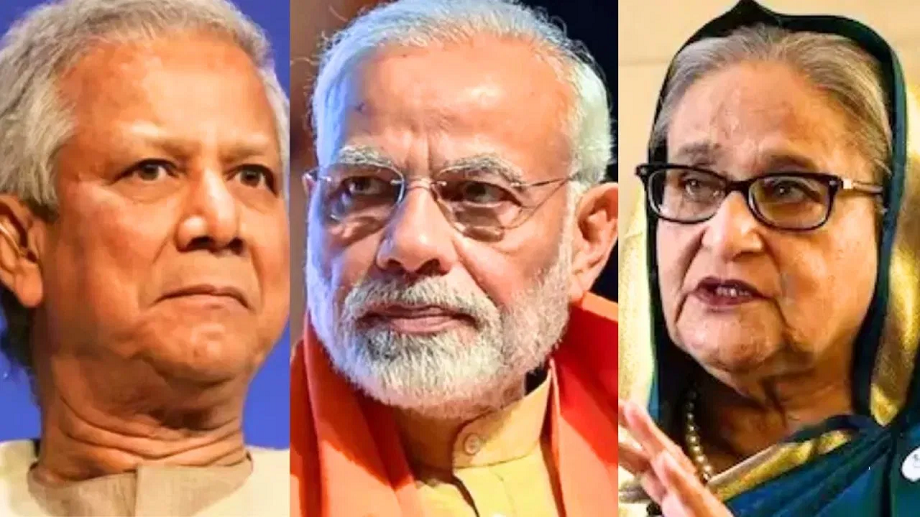
Bangladesh's interim government on Monday urged India to immediately extradite ousted Prime Minister Sheikh Hasina and former Home Minister Asaduzzaman Khan Kamal, following the latter's death sentence.
Gunfire erupted in Dhaka, killing hundreds of students and injuring thousands. The government collapsed. Prime Minister Sheikh Hasina fled Bangladesh and took refuge in India. Sheikh Hasina, now living in India, has been sentenced to death on charges of crimes against humanity. The International Criminal Tribunal (ICT) in Dhaka has sentenced Sheikh Hasina. But the question now is: will India hand her over to Bangladesh? Does this sentence have any legal effect in India? Does the UN recognize this decision? And does Sheikh Hasina's life now depend on India's decision? Let's understand the entire matter…
The 2024 Student Movement: The Fall of Power
The movement, which began last year as a protest against the Bangladesh government's reservation policy reforms in 2024, escalated into a nationwide uprising within just 48 hours. According to some reports, the movement resulted in the deaths of between 1,200 and 1,400 people, injuries to 20,000, the arrest of over 8,000 students, and a 23-day social media blackout.
International media called it Bangladesh's largest civilian uprising. Following the government's repression, the military was neutralized and Parliament dissolved. Seeing the situation worsen, Sheikh Hasina fled the country and arrived in India in August 2024. Indian security agencies provided her with a negative security shield—meaning her whereabouts are kept confidential, but she receives government protection.
ICT-1 trial and death sentence
In handing down the sentence on November 17, Bangladesh's International Crimes Tribunal-1 (ICT-1) cited three indictments:
- Authorization for airstrikes on protesters
- Orders air-targeting operations in urban areas
- Massive violations of human rights
The court concluded – 'The security forces of the state were used in a war-like operation, targeting the urban civilian population as the enemy.'
The prosecution presented an alleged call recording in which Hasina is heard saying: "The cases against me give me license to kill." The ICT-1 classed these as "crimes against humanity" and awarded the death penalty.
"This is a political ouster campaign, not justice."
Sheikh Hasina has given a statement on this - 'This is a political ouster campaign, not justice.' She has given this reaction after the death sentence was passed against her, according to major reports and statements: Sheikh Hasina, who is currently living in India, has called the International Crimes Tribunal-1, established by the interim administration of Bangladesh, 'biased and politically motivated'.
He has called it a "kangaroo court" and part of a "political campaign" to prevent his Awami League party from participating in the national elections. Hasina has refused to recognize the case. This response reflects her and her party's stance that the verdict is not based on justice, but rather on political vendetta.
Is Bangladesh's death penalty applicable in India?
The legal position in India is clear:
The sentence of a foreign court is not enforceable in India unless it is reviewed and accepted by an Indian court.
Meaning: The death sentence of ICT-1 has no effect on Sheikh Hasina sitting in India.
Can the UN enforce this punishment?
ICT-1 is a domestic court. The UN can enforce the decisions of only two courts:
- ICC – International Criminal Court
- ICJ – International Court of Justice
The jurisdiction of ICT-1 is not UN-enforced. Therefore, the UN cannot force India to hand over Sheikh Hasina.
Can India legally extradite?
The India-Bangladesh Extradition Treaty exists. However, Indian law imposes three security filters on extradition, each with different conditions:
- Extradition may be stopped if there is a risk of political retaliation.
- If a fair trial is not given, extradition can be completely blocked.
- If there is a threat of human rights violations or fear of death penalty, political asylum will be given priority.
India's Extradition Act says: Death Penalty + Political Reasons = Extradition legally deniable i.e. – If India wants, it can stop extradition on completely legal grounds.
What can Bangladesh do if India refuses?
- In this condition, Bangladesh can exert diplomatic pressure.
- Can complain to international organizations like SAARC / OIC / Commonwealth.
- The issue can also be raised in UNHRC.
But in this situation, India also has legal protection walls:
- Human Rights Shield
- Political Persecution Clause
- Fair Trial Doctrine
Therefore Bangladesh cannot legally bind India.
The impact of handing Sheikh Hasina back to Bangladesh
Rising anti-India sentiments in Bangladesh: Supporters and sympathisers of Hasina's Awami League party could develop widespread anger against India, straining bilateral relations.
"India regime change" accusations: The opposition and other groups could use this incident to claim that India directly interferes in the internal politics and regime changes of its neighbors. Security and political threat: There could be violent reactions from the Awami League, and India could be accused of "handing over a former prime minister," which could impact India's image and security in the region.
The impact of not handing back Sheikh Hasina
Impact on border commerce: The decision not to extradite could impact trade, cross-border cooperation, and economic relations between the two countries, potentially slowing down trade.
Decreased security cooperation: Cooperation from Bangladesh in national security and counter-terrorism operations may be affected.
Bangladesh's shift toward China: This poses the biggest geopolitical risk. If India doesn't cooperate, Bangladesh could move closer to China, which would be against India's strategic interests and increase China's influence in the region.
In short, this situation is actually a complex geopolitical conundrum, in which India will have to balance its long-term strategy and security interests, no matter what decision it takes.
India's potential path
According to Indian foreign strategy experts, there could be three possible options:
- Silent Asylum Model – Continue asylum, while remaining silent on extradition. Delay the process by stating the case is still under review.
- Human Rights Shield Model – To be clear: Extradition is not possible due to death penalty/political vendetta.
- Conditional Extradition – India can say: 'Abolish the hanging and give a fair international trial, only then extradition is possible.
All three approaches have one thing in common: Hasina's life is tied to Delhi's diplomatic strategy. Indeed, the world is driven by power, and the law bends to that power. The verdict has been made in Dhaka, but Sheikh Hasina's life will now be decided not by the court but by India's foreign policy. Will India choose principle or relations with its neighbor? Will political asylum become a diplomatic firestorm? The next chapter is yet to be written.
PC:TV9Bharatvarsh