TECH
What Is PHP? The Programming Flaw That Put Government Websites at Risk and Powers Millions of Websites
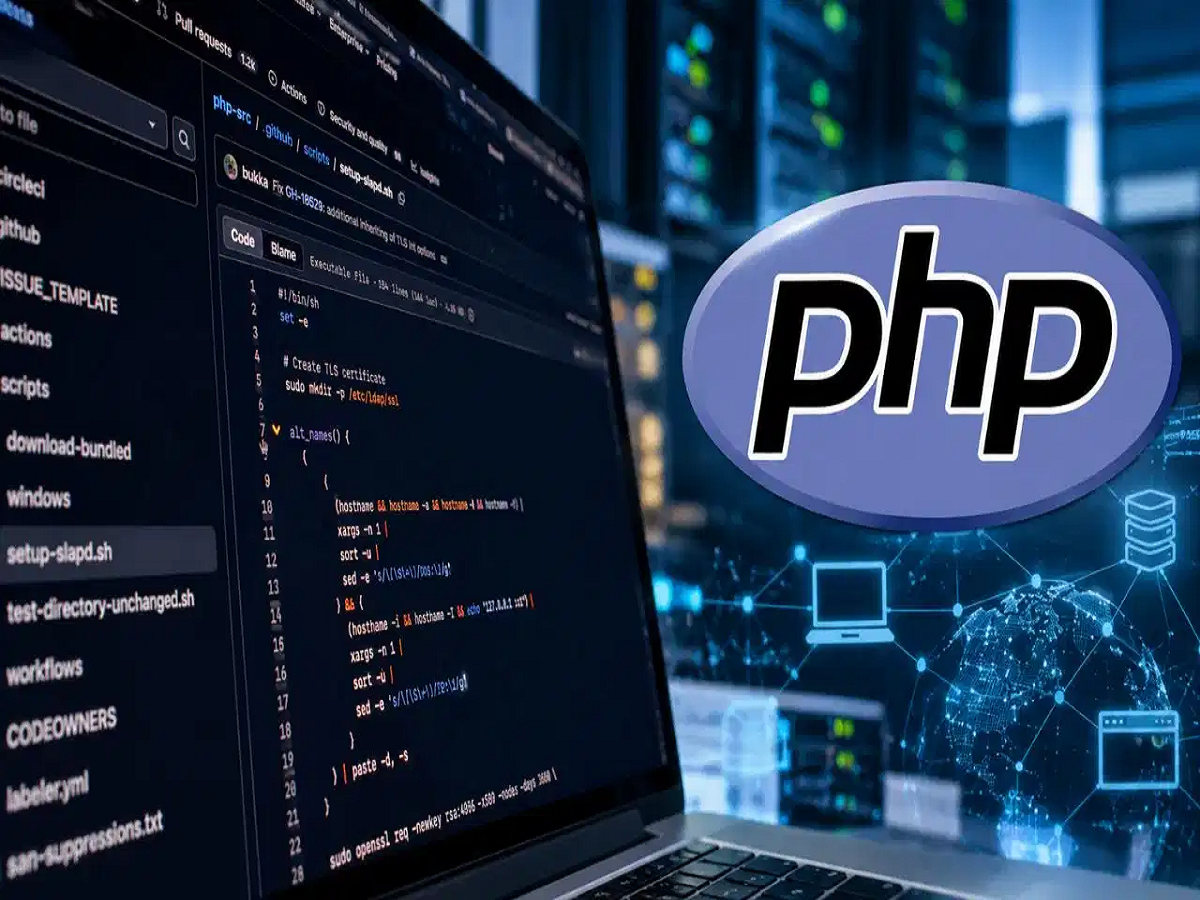
Every time you open a news website, shop online, log in to an account, or submit a form on a government portal, several technologies work behind the scenes to deliver the information you need. One of the most widely used is PHP, a programming language that has powered websites for decades.
Recently, reports about serious security vulnerabilities in PHP have raised concerns about the safety of websites and online services. The incident has highlighted an important fact: when a widely used technology contains a security flaw, the consequences can extend far beyond a single website.
But what exactly is PHP, how does it work, and why can a vulnerability in it become a major cybersecurity concern?
What Is PHP and How Does It Work?
PHP stands for PHP: Hypertext Preprocessor. It is an open-source programming language primarily used for server-side web development. In simple terms, it helps websites perform tasks that cannot be handled by displaying static text and images alone.
Imagine visiting a restaurant. The menu represents the information you see, while the kitchen prepares your order using ingredients stored behind the scenes. PHP works somewhat like that kitchen: it processes requests, interacts with databases, applies website rules, and helps generate the content delivered to your browser.
For example, when you log in to a website, PHP may help verify your credentials, retrieve your account information, and generate a personalised page. When you visit a news portal, it can retrieve articles from a database and arrange them into a webpage.
Your browser typically receives the resulting HTML, along with any necessary CSS, JavaScript, images, and other resources. The PHP code itself generally runs on the server rather than directly on your phone or computer.
Why Do So Many Websites Use PHP?
PHP has remained popular because it is free to use, open source, widely supported by hosting providers, and compatible with many databases and web technologies.
One of its biggest advantages is its role in WordPress, a widely used content management system that allows people to build and manage websites without developing every feature from scratch.
Businesses, bloggers, online stores, publishers, and organisations can use PHP-based platforms to manage content, process requests, and maintain dynamic websites.
According to the figures cited in the supplied report, PHP accounts for approximately 70% of websites whose server-side programming language can be identified. However, such figures depend on the measurement date and methodology, and they should not be interpreted as meaning that 70% of every website on the internet runs exclusively on PHP.
Its widespread adoption explains why maintaining PHP's security is important for website owners and hosting providers.
How Can a PHP Security Flaw Put Websites at Risk?
Programming languages and their associated software components can contain vulnerabilities. If attackers discover a way to exploit one of these weaknesses, they may be able to interfere with websites that use affected versions or configurations.
One particularly serious category is remote code execution, commonly abbreviated as RCE. Depending on the vulnerability and the permissions available to an attacker, successful exploitation may allow malicious code to run on a remote server.
Potential consequences include:
-
Unauthorised access to sensitive information.
-
Changes to website content or the insertion of malicious material.
-
Installation of harmful software.
-
Theft of credentials or other confidential data.
-
Compromise of connected systems, depending on the server's configuration and access privileges.
However, not every vulnerability allows all these activities. The actual risk depends on the affected component, software version, server configuration, and the attacker's ability to exploit the weakness.
The supplied report describes two serious PHP vulnerabilities and mentions a CVSS score of 9.2. That specific score, the affected versions, and the reported impact should be verified against official security advisories before being treated as confirmed facts.
Why Could Government Websites Be Affected?
Government portals often provide essential services, including applications, tax-related information, public records, registrations, and access to official documents.
If a vulnerable component is used on a government website, attackers may attempt to exploit it to disrupt services, access data, or alter website content. A successful attack could affect public confidence and, in some cases, interrupt access to important services.
However, a vulnerability in PHP does not automatically mean that every government website using PHP is compromised. Exposure depends on whether the site uses an affected version or component, whether the vulnerable functionality is reachable, and whether effective security controls are in place.
Organisations may temporarily restrict access to a website while investigating a threat or applying security updates. Such a shutdown can be a precautionary measure and does not, by itself, prove that hackers successfully breached the system.
Why Are Small Websites Particularly Vulnerable?
Many smaller websites operate through shared hosting services. In this arrangement, multiple websites use resources on the same physical server, while the hosting provider manages much of the underlying infrastructure.
This arrangement makes website hosting affordable, but it can also mean that individual website owners have limited control over server software.
If a security vulnerability requires a server-level update, installing a normal WordPress plugin update may not be enough. The hosting provider or server administrator may need to update the relevant PHP runtime or affected component.
Shared hosting is not inherently insecure, but its safety depends on proper isolation, timely patching, access controls, and responsible server management.
Website owners should therefore choose reputable hosting providers, keep their applications and plugins updated, use strong authentication, maintain backups, and monitor security alerts.
Can Artificial Intelligence Find Hidden Software Vulnerabilities?
Artificial intelligence is increasingly being explored as a tool for cybersecurity research. AI systems can assist researchers in analysing large codebases, identifying suspicious patterns, generating test cases, and investigating complex programming behaviour.
These capabilities can help researchers discover weaknesses that might otherwise take considerable time to identify. However, AI-generated findings still require careful verification, testing, and responsible disclosure.
The supplied report attributes the discovery of the alleged PHP vulnerabilities to AI-assisted security research. The specific model names and discovery claims should be checked against primary statements from the researchers and relevant security organisations before publication.
AI can strengthen cybersecurity, but it can also help attackers develop and refine malicious techniques. This makes responsible research, secure development practices, and prompt patching increasingly important.
What Should Website Owners Do to Stay Safe?
Website owners and administrators can reduce the risk of exploitation by following a few essential practices:
-
Update server software: Install security patches for PHP and other affected components according to official advisories.
-
Check compatibility: Confirm that websites, themes, plugins, and applications work with supported software versions before and after upgrades.
-
Use reputable hosting: Choose providers that maintain server software, apply security patches, and provide appropriate isolation between customer accounts.
-
Protect administrative accounts: Use strong, unique passwords and multifactor authentication wherever available.
-
Maintain backups: Keep recent backups in a location separate from the production server and test restoration procedures.
-
Monitor suspicious activity: Review server logs, security alerts, and unexpected changes to website files or accounts.
-
Follow official advisories: Consult the PHP project's security announcements and relevant national or industry cybersecurity guidance for verified information about vulnerabilities.
Ordinary internet users should also keep their devices and browsers updated, use unique passwords, and be cautious about suspicious links and unexpected requests for personal information.
Conclusion
PHP remains an important part of the modern internet, helping websites process information, communicate with databases, and deliver personalised content. Its widespread use makes security maintenance particularly important.
A serious vulnerability can create risks for websites that use affected software, but the consequences depend on the specific flaw and the systems involved. Claims about widespread outages or successful attacks must therefore be distinguished from the discovery of a vulnerability itself.
The larger lesson is that internet security depends not only on the programming languages used to build websites, but also on regular updates, responsible system administration, effective monitoring, and timely action when security weaknesses are discovered.