INTERNATIONAL
Venezuela's Recovery Derailed: Earthquake Causes Billions in Damage, Economy Faces Fresh Crisis
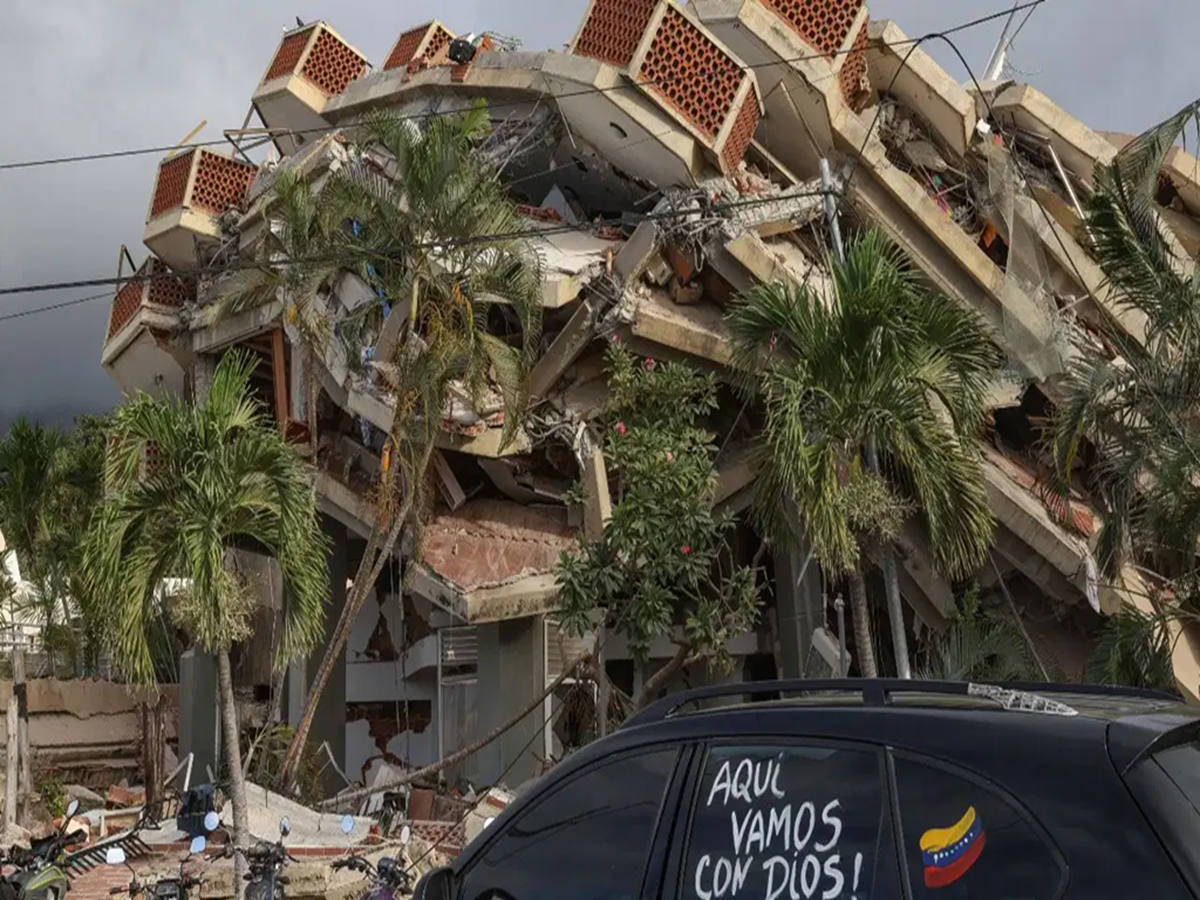
Just as Venezuela was beginning to show signs of economic recovery after years of instability, the country has been hit by a devastating natural disaster. Two powerful earthquakes that struck within seconds of each other have caused widespread destruction, raising concerns that the nation's fragile recovery could be set back by years.
The disaster has inflicted billions of dollars in losses, placing additional pressure on an economy already struggling with debt, sanctions, and limited access to international financing.
Powerful Earthquakes Trigger Widespread Destruction
On the evening of June 24, Venezuela's northern coast was struck by two major earthquakes. The first measured 7.2 magnitude, followed just 39 seconds later by a stronger 7.5 magnitude quake.
The tremors originated near the San Sebastian Fault System close to Yumaré and were felt across several regions, including Caracas, La Guaira, Carabobo, Miranda, Yaracuy, and Aragua. Reports describe it as the country's strongest earthquake in more than a century.
According to available reports, more than 1,400 people have been confirmed dead, while rescue teams continue searching through collapsed buildings. Independent organizations tracking missing persons believe the actual death toll could be higher.
Estimated Damage Reaches $6.7 Billion
The United Nations Development Programme (UNDP) began a rapid damage assessment shortly after the disaster using its RAPIDA system, which combines satellite imagery, seismic data, and population information to estimate losses.
Initial findings estimate direct physical damage at around $6.7 billion, with preliminary assessments placing the overall damage between $4.7 billion and $8.7 billion. This represents roughly 6% of Venezuela's annual economic output lost in less than a minute.
The assessment also indicates:
-
Around 1.7 million buildings were affected.
-
Nearly 8.6 million people experienced moderate to strong shaking.
-
About 2.1 million people were exposed to the most severe ground motion.
-
Large-scale power outages were reported across several affected regions.
Total Economic Impact Could Be Much Higher
Experts caution that the current estimate reflects only direct physical damage, including destroyed homes, commercial buildings, and other structures.
It does not include losses related to:
-
Roads, bridges, and transport infrastructure
-
Airports and public utilities
-
Business interruptions
-
Employment losses
-
Long-term reconstruction costs
Based on previous global disasters, economists estimate the total financial impact could eventually rise to $13 billion to $20 billion, or even higher if rebuilding efforts become prolonged.
Earlier projections from US Geological Survey (USGS) models suggested total losses could range from under $10 billion to as much as $100 billion, highlighting the uncertainty surrounding the full scale of the disaster.
Existing Financial Challenges Make Recovery Difficult
The earthquake comes at a particularly difficult time for Venezuela.
Before the disaster, the country was already dealing with an estimated $240 billion in debt, much of it linked to unpaid government obligations and international legal disputes involving nationalized assets.
Unlike many countries affected by natural disasters, Venezuela has limited access to international borrowing due to years of economic isolation and strained relations with global financial institutions.
Formal discussions with the International Monetary Fund (IMF) reportedly resumed only after recent political developments earlier this year.
International Aid Falls Short of Expected Needs
International assistance has begun arriving, but analysts say it remains far below the estimated reconstruction costs.
According to reports:
-
The IMF has approved an initial $200 million in reconstruction assistance.
-
The United States has announced an additional $150 million in humanitarian aid.
-
Search-and-rescue teams, emergency supplies, and military transport aircraft have also been deployed.
-
Some US sanctions have been temporarily eased to facilitate earthquake-related financial transactions, while broader sanctions remain in place.
Despite these measures, the available funding is only a fraction of the billions expected to be needed for long-term recovery.
Oil Sector Offers a Ray of Hope
One positive development is that Venezuela's oil industry appears to have escaped major damage.
The country's largest refining complex on the Paraguaná Peninsula is reportedly operating normally, while Chevron, which accounts for a significant share of Venezuela's oil production, has stated that its facilities were not affected.
Continued oil production could provide an important source of revenue for rebuilding efforts in the coming months.
Reconstruction May Boost GDP, But Challenges Remain
Before the earthquake, economists expected Venezuela's economy to expand as oil production and exports recovered. Some forecasts projected economic growth of up to 8% this year.
Reconstruction spending on homes, hospitals, roads, and public infrastructure may increase measured economic activity and support GDP growth. However, economists caution that stronger growth figures cannot fully capture the human cost of the disaster, including loss of life, displacement of families, and the long-term social and economic impact on affected communities.
While rebuilding may stimulate economic activity, Venezuela now faces the difficult task of balancing reconstruction with an already fragile financial situation.