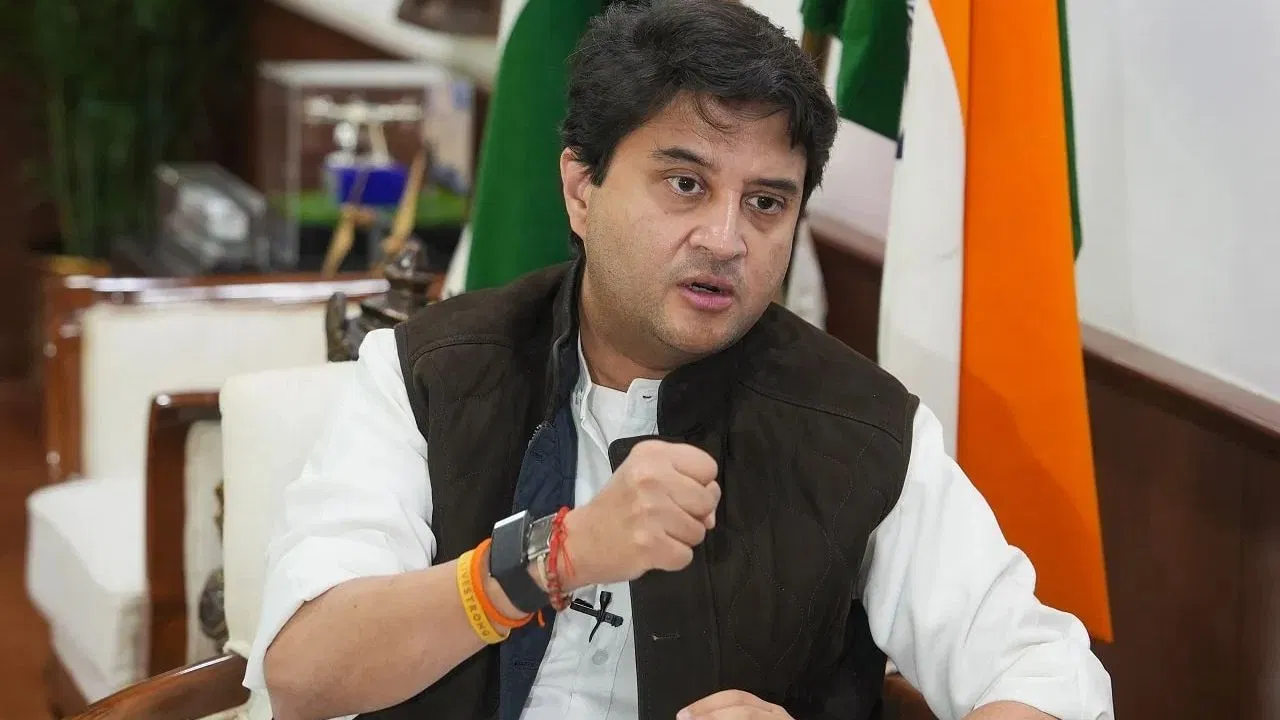
A short video of Union Minister Jyotiraditya Scindia has sparked political discussion and public reaction in Gwalior, Madhya Pradesh. The 14-second clip, now viral on social media, shows Scindia acknowledging the dilapidated condition of Sikandar Kampu Road, a long-standing issue for local residents.
In the video, as Scindia’s convoy passes through the area, he stops to interact with a group of supporters gathered by the roadside. Observing the crumbling condition of the road, Scindia comments, “Bahut kharab haalat hai” (the condition is very bad). One of his supporters responds by saying, “Maharaj sahab, ye sadak to bohot samay se kharab hai” — confirming that the road has been in disrepair for a long time.
The video was reportedly shot during Scindia’s visit to Sikandar Kampu Road, and it has since become a talking point across Gwalior. Citizens and political commentators alike are weighing in, with many expressing frustration that such poor infrastructure has persisted for years despite repeated complaints.
Scindia is currently on an extended visit to Gwalior, now in its seventh consecutive day. During his tour, he has been meeting residents across various localities, receiving both warm receptions and a host of grievances — particularly around civic issues like poor roads and inadequate infrastructure. While his engagement with the public is being appreciated, the viral video has also put pressure on local and state authorities to respond to the concerns highlighted by their own Union Minister.
The people of Gwalior have long voiced their dissatisfaction with road conditions, especially in areas like Sikandar Kampu, where daily travel has become difficult due to potholes and poor maintenance. Now that Scindia himself has publicly acknowledged the issue, expectations are rising for swift action.
However, the situation also raises a critical question: why have such problems been allowed to persist for so long? With elections nearing and public scrutiny intensifying, the pressure is now on local governance bodies to act — not just with promises, but with visible repairs and lasting improvements.