BUSINESS
The Zero-Bill Revolution: How "PM Surya Ghar" is Erasing Electricity Bills for Indian Homes
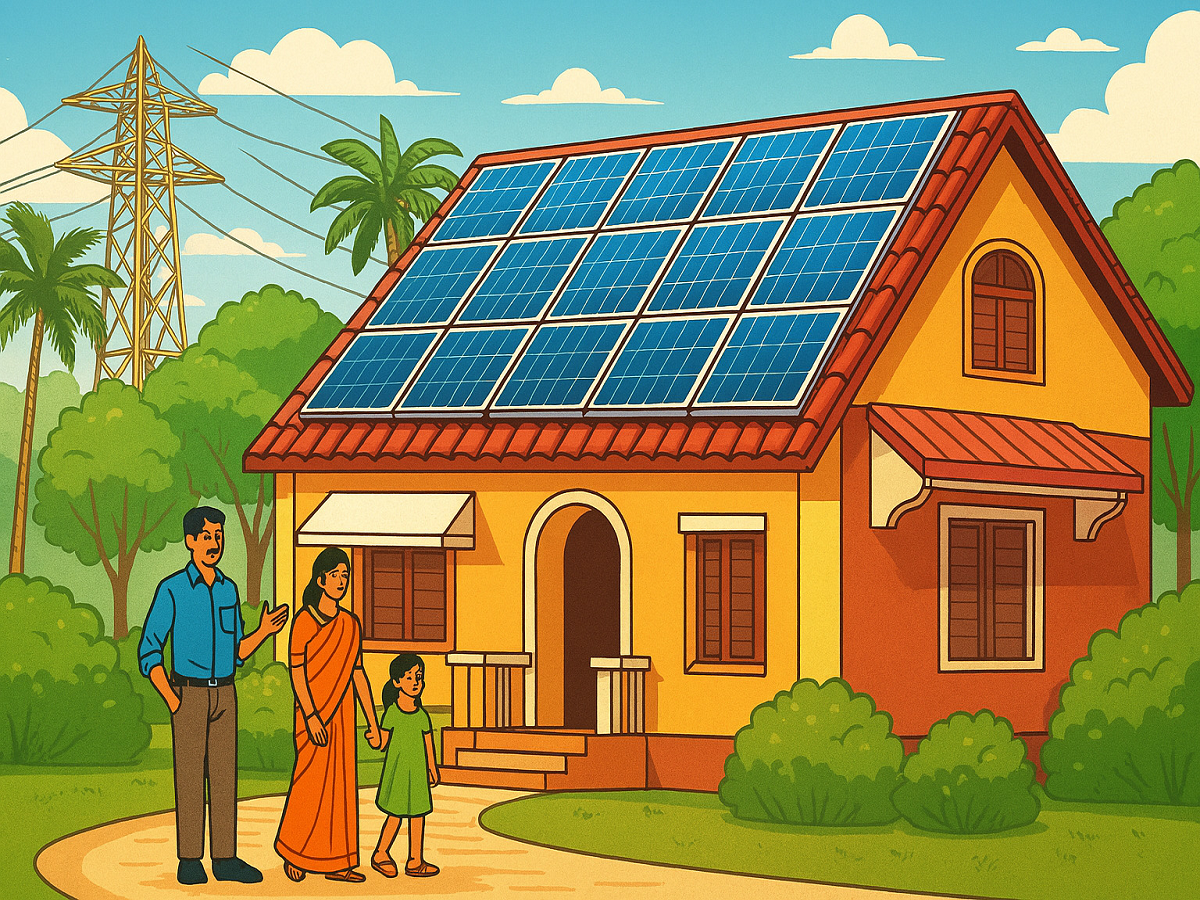
Imagine flicking on your air conditioner, running your washing machine, charging your devices, and watching your monthly electricity bill drop to exactly zero rupees.
That is no longer a pipe dream. Under the central government’s massively scaled PM Surya Ghar: Muft Bijli Yojana, the focus has officially shifted from large industrial solar farms straight to residential rooftops. Backed by a massive ₹75,000 crore budget, the scheme aims to completely wipe out power bills for 1 crore households across India.
Here is everything you need to know about how the scheme functions, the updated financial subsidies, and how to get your own home on the grid.
1. How the "Free Electricity" Math Works
The scheme operates on a very simple formula: 300 units of free power every single month.
For the average middle-class Indian household, monthly consumption hovers between 200 to 300 units. By installing a residential solar setup, your home generates its own power during the day.
-
Direct Consumption: Your home runs directly on solar energy while the sun is out.
-
Net Metering: Any excess electricity your panels produce that you don't use is automatically fed back into the main government power grid.
-
The Deduction: At the end of the month, your electricity distribution company (DISCOM) subtracts the units you gave to the grid from the units you consumed at night. If you generate more than you use, you pay nothing.
2. The Subsidy Structure (Direct Bank Transfers)
To eliminate the steep upfront cost of solar panels, the central government provides massive, fixed subsidies that are transferred straight into your bank account within 30 days of installation.
The financial support varies depending on the capacity your roof can support:
| Sanctioned Load / House Size | Recommended Solar Capacity | Government Subsidy Amount |
| Basic Home (Fans, Lights, TV) | 1 kW (Kilowatt) | ₹30,000 |
| Medium Home (Fridge, Water Pump) | 2 kW | ₹60,000 |
| Large Home (Air Conditioners, EV Charging) | 3 kW or higher | ₹78,000 (Maximum Cap) |
The Income Bonus: Beyond saving money on your bill, any net surplus electricity your roof feeds back into the grid is purchased by the government, turning your roof into a small, steady source of passive income.
3. Prerequisite Checklist: Can Your Home Qualify?
Before you apply, ensure your household meets the basic structural and legal requirements:
-
Roof Ownership: You must own a concrete roof or terrace with clear, unshaded access to sunlight.
-
Active Connection: You must have a valid consumer number with your local electricity DISCOM.
-
The Link Factor: Your electricity connection and bank account must be mapped to your Aadhaar card to receive the Direct Benefit Transfer (DBT).
Step-by-Step: Getting Solar on Your Roof
The entire process has been unified into a single digital window to prevent local vendors or middlemen from overcharging you.