BIZARRE
The Real-Life ‘Lilliput’: The Fascinating Story of Iran’s Makhunik, Once Known as the Village of Dwarfs
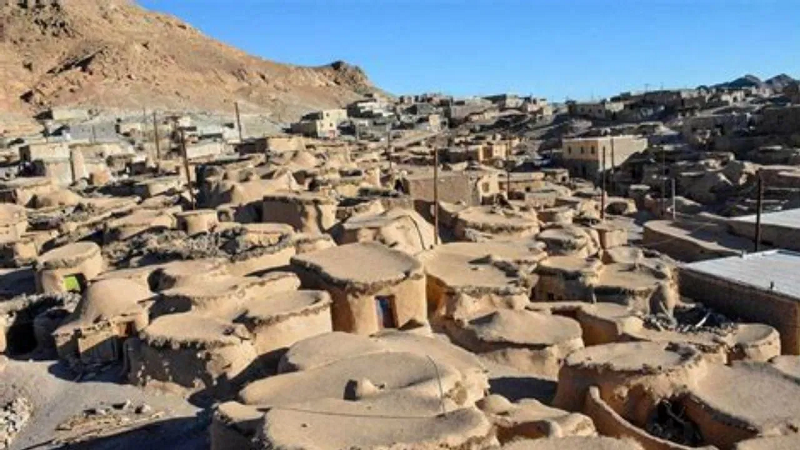
Jonathan Swift’s famous novel Gulliver’s Travels introduced readers to Lilliput, a fictional land inhabited by tiny people. While that world existed only in imagination, a real village on the eastern edge of Iran has long intrigued historians and travelers for a very similar reason.
This village, known as Makhunik, is located around 75 kilometers from the Afghanistan border and is believed to be nearly 1,500 years old. According to historical accounts and local belief, the inhabitants of Makhunik were once significantly shorter than modern Iranians—by nearly half a meter. Many residents were reportedly no taller than one meter, earning the village the nickname “the land of dwarfs.”
The mystery surrounding Makhunik deepened in 2005, when archaeologists discovered a tiny mummified body nearby, measuring just 25 centimeters in length. This discovery fueled widespread claims that the area had once been inhabited by a race of dwarfs. However, further scientific examination later revealed that the mummy belonged to a child who had died roughly 400 years ago. Despite this clarification, the legend of Makhunik as a dwarf village continues to persist.
Adding to the intrigue is the architecture of the village itself. Makhunik has around 70 to 80 houses, most of which are extremely small—barely one and a half to two meters tall. These unusually low structures suggest that the original inhabitants were indeed of very short stature, as it would be difficult for people of average height to live comfortably in such confined spaces. Nearby villages are also believed to have once shared similar characteristics, leading the region to be popularly referred to as the “City of Dwarves.”
As for why the people of Makhunik were so short, historians and researchers point to harsh living conditions. A report published years ago in the Tehran Times noted that the region was largely barren, with minimal agricultural output. The local population survived mainly on limited foods such as plums, turnips, and barley. Chronic malnutrition over generations is believed to have caused stunted growth, gradually giving rise to the unusually short stature of the villagers.