NATIONAL
Supreme Court Seeks Response from States on Anti-Conversion Laws, Next Hearing in Six Weeks
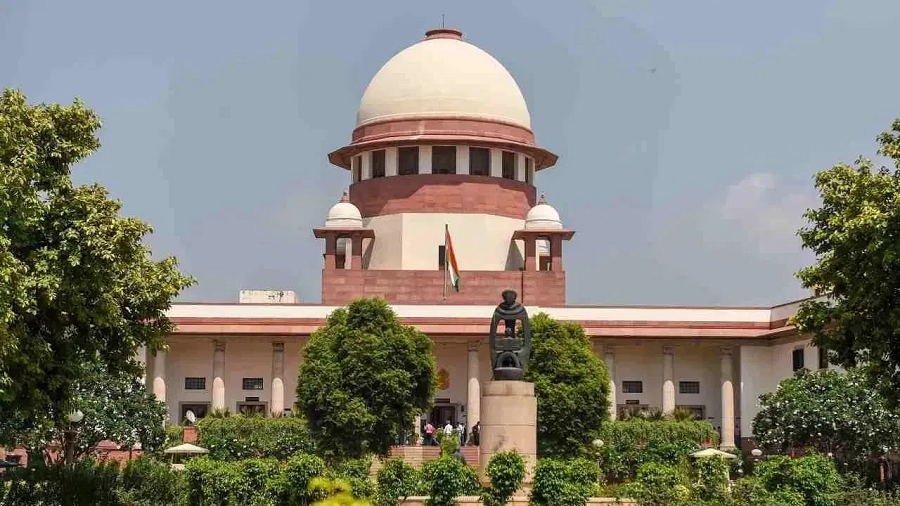
The Supreme Court on Tuesday took up petitions challenging the validity of anti-conversion laws enacted in several states. A bench led by Chief Justice B.R. Gavai and Justice K. Vinod Chandran issued notices to Uttar Pradesh, Uttarakhand, Madhya Pradesh, Haryana, Gujarat, Rajasthan and others, directing them to submit their replies within four weeks. The matter will be heard again after six weeks.
The petitions question the constitutional validity of laws that prescribe punishment for alleged illegal religious conversions. According to the petitioners, these provisions are being misused to harass interfaith couples, disrupt religious gatherings, and intimidate minority communities.
During the hearing, senior advocate Chander Uday Singh, appearing for Citizens for Justice and Peace, argued that while these legislations are titled “Freedom of Religion Acts,” in practice they restrict religious liberty. He pointed out that amendments to the Uttar Pradesh law in 2024 made it far more stringent—introducing a minimum sentence of 20 years, extendable to life imprisonment, tightening bail conditions, and even allowing third parties to file complaints. Singh added that ordinary church gatherings and interfaith marriages are increasingly facing harassment under such provisions.
Advocate Vrinda Grover, representing the National Federation of Indian Women, informed the court that similar applications have also been filed by her client. She highlighted that the Gujarat High Court in 2021 had stayed certain provisions of the Gujarat Religious Conversion Act, while the Madhya Pradesh High Court had issued a comparable interim order. Both states have since approached the Supreme Court to challenge those stays.
The Additional Solicitor General, K.M. Nataraj, appearing for the respondent states, was asked to file replies on the stay applications. Senior advocates Indira Jaising, Sanjay Hegde, M.R. Shamshad, and Sanjay Parikh also appeared for parties opposing the laws.
Earlier, in January 2020, a bench headed by then CJI D.Y. Chandrachud had issued notice on similar petitions. Later, Jamiat Ulama-e-Hind approached the Supreme Court seeking transfer of 21 pending cases across six High Courts—Gujarat, Himachal Pradesh, Jharkhand, Karnataka, Madhya Pradesh, and Uttar Pradesh. Of these, Gujarat and Madhya Pradesh High Courts have granted partial stays on their respective legislations.
For now, the Supreme Court has declined to grant any interim stay, but will revisit the matter after the states file their responses.