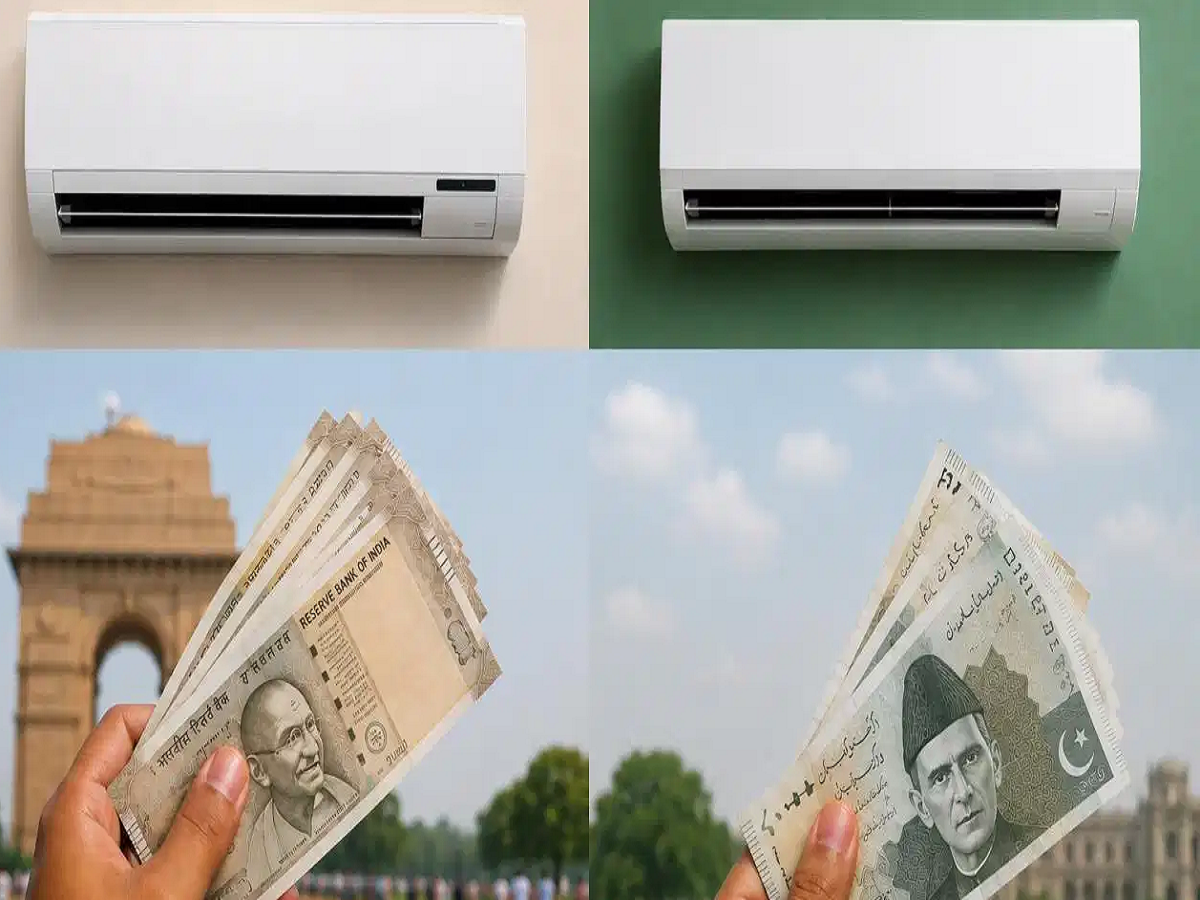
As scorching summer temperatures roll in across South Asia, air conditioners quickly shift from luxury appliances to absolute survival essentials. While consumers in both India and Pakistan are rushing to appliance stores to beat the heat, the financial hit to their wallets looks vastly different.
If you have ever wondered about the price gap between neighboring countries, the numbers are eye-opening. A closer look at the retail prices for a standard 1.5-ton split AC highlights a massive disparity, leaving Pakistani consumers paying significantly more for the exact same cooling capacity.
The Cost of Cooling in Pakistan
Purchasing a reputable 1.5-ton inverter air conditioner in Pakistan requires a hefty chunk of savings. According to current listings on major brand portals, prices lean heavily into six figures in Pakistani Rupees (PKR):
-
TCL (Premium Inverter Models): Retails at PKR 204,900 (which translates to roughly ₹71,034 INR).
-
Haier (Standard Models): Available for around PKR 152,999 (equivalent to roughly ₹53,041 INR).
The Cost of Cooling in India
By contrast, the competitive electronic market in India offers much softer landing prices for summer shoppers. On major e-commerce platforms like Amazon and Flipkart, the entry-level pricing for a reliable 1.5-ton split AC hovers right around ₹33,000 INR.
Prices naturally scale depending on energy star ratings and smart features, but the baseline remains highly accessible:
-
Voltas 1.5-Ton AC: Starts at ₹33,900 INR.
-
Panasonic 1.5-Ton AC: Listed around ₹38,990 INR.
Side-by-Side: Price Comparison (INR Equivalent)
When we look at the lowest baseline options across both countries converted to Indian Rupees (INR), the cross-border gap becomes starkly clear.
Comparing India's entry-level online price (₹33,999) against Pakistan’s more budget-friendly Haier option (converted to ₹53,050), Indian consumers pay roughly ₹19,051 less than their neighbors for a 1.5-ton cooling unit.
Why is the Price Gap So Big?
The primary driver behind the steep appliance prices in Pakistan boils down to heavy import tariffs and economic duties. Because a significant portion of specialized electronic components, compressors, and refrigerants must be imported into Pakistan, stringent customs duties and luxury taxes heavily inflate the final price tag by the time the unit reaches a local showroom floor.