BUSINESS
Solar Panel Height: To avoid being uprooted by storms, learn how high it is safe to install solar panels. Understand the complete formula
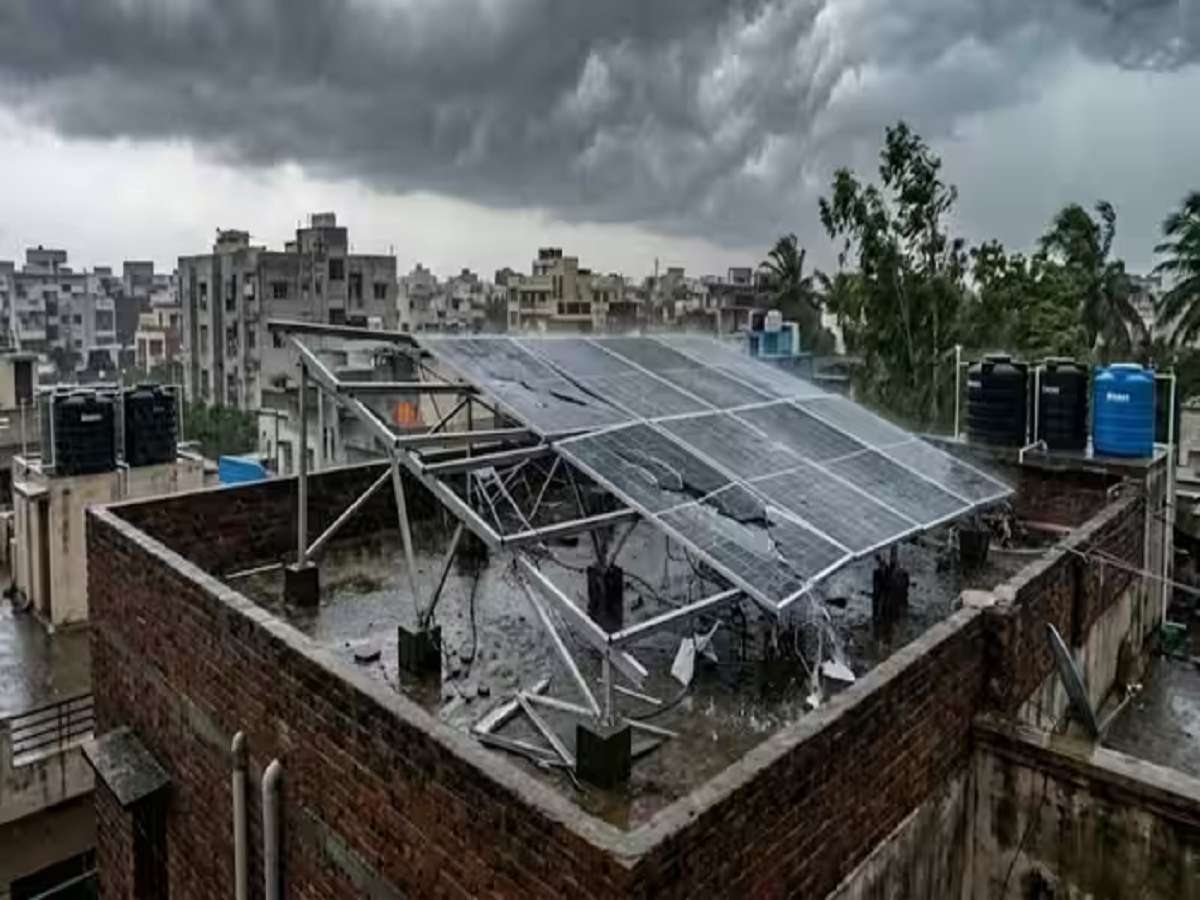
Solar Panel Correct Height Guide: If you're considering installing solar panels, along with well-branded panels, the right inverter, and budget planning, it's also important to understand the height at which your solar panels should be installed. Lower-mounted panels generate less electricity, while taller panels can be toppled over by storms. Therefore, understanding the requirements of low-rise and high-rise structures before installing solar panels is crucial.
Solar Structure Safe Height: When installing solar panels, people often conduct thorough research on the brand, inverter, and budget, but one factor that's often overlooked is the height of the solar panel. Installing a solar panel too low can reduce power production due to reduced sunlight and ambient heating. Installing it too high can also lead to significant damage or the risk of the panel blowing off during a severe storm. Therefore, it’s crucial to know the correct height for your solar panels. Typically, panels are installed at a height of 7 to 8.5 feet in low-rise buildings, but this requires concrete grouting and a heavy GI frame. High-rise structures can be installed at a height of 7 to 8.5 feet.
Disadvantages of installing panels too low
Many times, to avoid maintenance issues or to save on the panel's structure, people install solar panels too low, just 1 or 2 feet above the floor. This can be quite detrimental in the long run.
While people know that solar panels generate electricity from sunlight, few realize that overheating can reduce their efficiency. Therefore, airflow beneath the panels is essential to keep them cool.
Furthermore, being too close to the floor can lead to increased dust and dirt accumulation. Furthermore, excessive exposure to water during rain can damage the panel's wiring and frame.
Furthermore, installing solar panels too close to the ground can expose them to shadows from boundary walls or water tanks, etc. This also reduces the panel's efficiency.
Risk of panel dislodgement with higher height
- Apart from this, many times, in the greed of continuing to use the roof, people erect the panels on a 9 to 10 feet high scaffolding-like structure, due to which your solar system worth lakhs can get destroyed.
- In fact, with increasing altitude, air pressure increases exponentially. Furthermore, during storms, winds blowing at speeds of 80 to 100 km/h can bend weakened structures or cause panels to fall.
- Additionally, installing very tall solar panels requires extensive civil work on the roof. This significantly increases the load on the roof. This raises the question: what should be the appropriate height for solar panels? You can consider the following points.
At what height should solar panels be installed?
The height of solar panels is divided into two categories based on engineering principles and technology.
- The first is a low-rise structure, which is 3 to 5 feet high. If you only need to walk around on your rooftop and don't engage in much activity, it's safe to place the solar panel at a height of 3 to 4 feet from the rooftop, and the top at a height of 5 to 6 feet.
- This has two advantages: first, there's sufficient airflow beneath the solar panels, preventing them from losing their efficiency due to overheating. Furthermore, at this height, there's less risk of the panels being blown off course by storms.
- The second category is high-rise or shade structures, which are 7 to 8.5 feet high. This is ideal for those who want to fully utilize their rooftop space for walking, sitting, or gardening. In such cases, a 7 to 8.5 feet high structure is erected for solar panels.
- It's worth noting that high-rise structures require heavy-duty structures with GI and reinforced 4x4-inch legs, along with concrete grouting in the ground. Simply put, the structure is reinforced with cement concrete by recessing the roof. Without this, high-rise structures can suffer significant damage during storms.
Keep these things in mind when deciding the height
In addition to installing solar panels at the correct height, ensure they are tilted at a 15-30 degree angle. The front of the panel should be at least 2.5 to 3 feet high for easy cleaning.
Use GI (Hot-Dip Galvanized Iron) instead of lightweight iron for the structure. This can hold your solar panels, worth lakhs, securely in place for 25-30 years without rusting.
Furthermore, to protect against storms, it's important to anchor the structure's legs to concrete blocks weighing at least 25 to 30 kg. With this information, you can verify that your solar system is installed at the correct height and strength.
PC: NBT