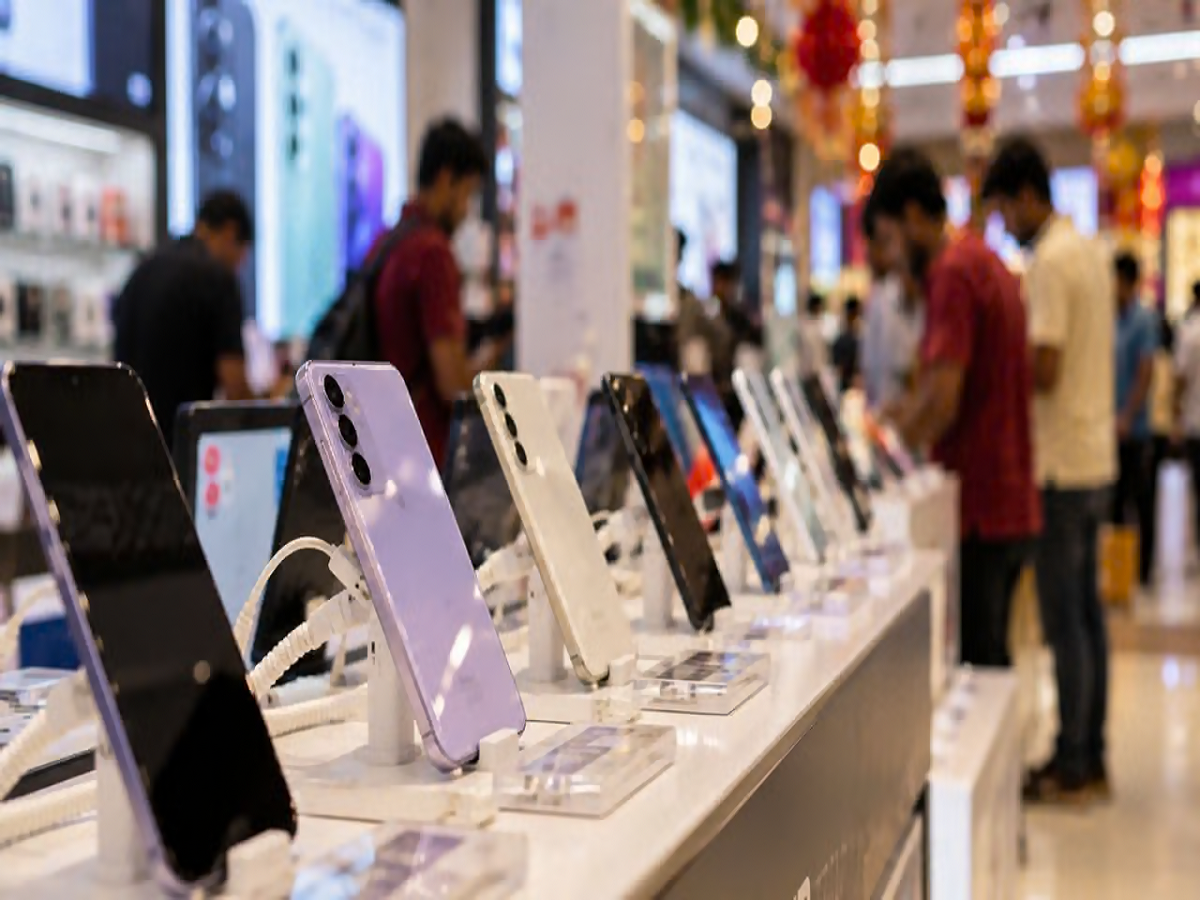
India's festive season is usually one of the biggest shopping periods for smartphones, with brands and e-commerce platforms offering attractive deals to encourage customers to upgrade their devices. However, this year's festive sales have reportedly started on a disappointing note, with fewer consumers purchasing new phones despite promotional offers.
According to the market data cited in the report, smartphone sales during e-commerce platforms' Navratri sales declined by 16% compared with the previous year. Rising prices, shrinking discounts and tighter household budgets appear to be among the key reasons behind the slowdown.
1. Higher Prices and Smaller Discounts
Festive discounts have traditionally encouraged customers to buy smartphones they might otherwise consider too expensive. However, the discounts available this year are reportedly lower than in previous seasons.
While consumers previously saw offers in the range of 25% to 40% on some devices, the reported discounts this year are closer to 10% to 25%. The actual savings vary depending on the model, bank offers and exchange deals.
Manufacturers are also facing higher component costs, particularly for memory chips, along with currency-related and logistics pressures. These factors can increase production costs and limit how much companies can reduce retail prices.
As a result, many buyers are finding that festive offers do not make smartphones as affordable as they expected.
2. Offline Mobile Stores Are Also Feeling the Pressure
The slowdown is not limited to online shopping platforms. According to figures attributed to the All India Mobile Retailers Association (AIMRA), physical mobile retailers have also reported weaker sales and lower customer footfall during the festive period.
With fewer customers visiting stores, retailers may find it harder to meet their sales targets and clear existing inventory. Some brands and sellers are reportedly extending promotional periods in an attempt to attract buyers and move unsold stock.
The trend highlights the financial pressure facing both online platforms and traditional mobile retailers.
3. Consumers Are Repairing Their Existing Phones
One of the biggest reasons behind the slowdown may be that consumers are choosing to delay upgrades.
When smartphone prices rise faster than household budgets, replacing a working device becomes less attractive. Many users can continue using their existing phones for another year or two, particularly if the battery, display and other essential components remain in good condition.
Some consumers are also opting for repairs or purchasing second-hand smartphones instead of spending more on new devices.
Easy availability of consumer financing and instalment plans may encourage purchases, but monthly payments alone cannot overcome affordability concerns when household expenses are already high.
4. Premium Smartphones Are Showing Greater Resilience
Despite weaker overall demand, the premium smartphone segment appears to be holding up relatively well.
The report suggests that demand for smartphones priced above ₹45,000 remains comparatively strong. It also cites a divergence between unit sales and market revenue: smartphone sales reportedly declined by 10% during the first eight months of 2026, while revenue increased by 4%.
This difference suggests that consumers are spending more per device, even as fewer smartphones are being sold. A shift towards higher-priced models can support overall market revenue despite a decline in unit volumes.
However, premium demand does not necessarily mean that every brand or high-end model is performing strongly.
5. Why Smartphone Companies Are Still Earning More
A decline in the number of phones sold does not automatically translate into lower revenue. If customers purchase more expensive devices, the average selling price can rise enough to offset some of the decline in sales volume.
For example, a company selling fewer premium smartphones at higher prices may generate more revenue than one selling a larger number of budget devices at lower prices.
This is one reason the smartphone market can experience falling unit sales while maintaining or increasing its overall revenue. Revenue, however, should not be confused with profit, which also depends on costs and