INTERNATIONAL
Russia No. 1, Israel No. 2! What Do Young Indians Think About India's Closest Friends? New Survey Reveals Interesting Findings
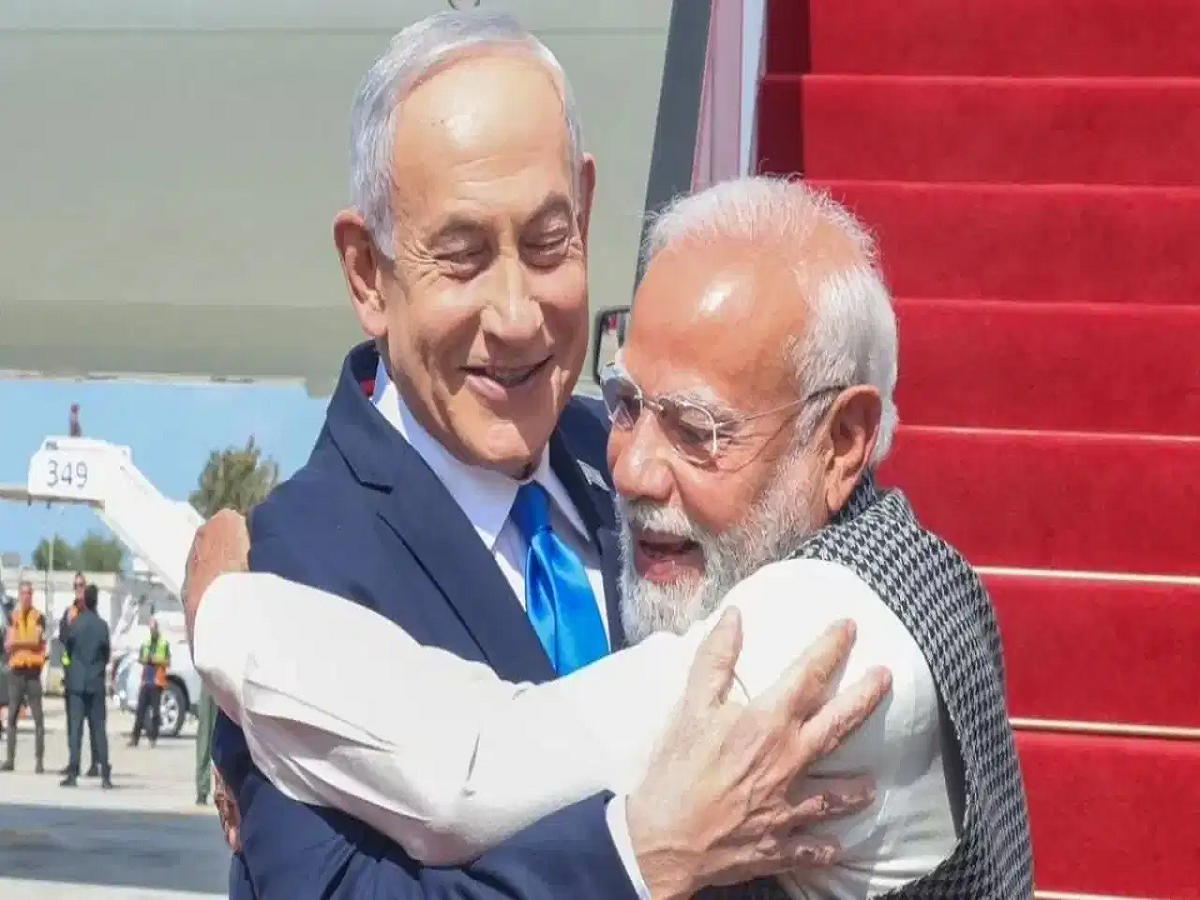
Which country do young Indians consider India's closest friend? Russia continues to hold the top position, but Israel has emerged as the second-most trusted friend among young people in India's Hindi-speaking states. A new survey has revealed interesting insights into how young Indians view India's international relationships and strategic partnerships.
According to the survey, 62% of respondents identified Israel as a good friend of India, while 57% believed that Israel stands alongside India during difficult times. Russia ranked ahead of Israel in both categories.
The findings come from a survey conducted by the India-Israel Center in New Delhi in October 2026. It highlights growing awareness of India-Israel cooperation, particularly in defence, technology, agriculture and trade.
How Was the Survey Conducted?
The survey covered 1,023 respondents between the ages of 21 and 40 across five Hindi-speaking states: Uttar Pradesh, Bihar, Madhya Pradesh, Jharkhand and Uttarakhand.
These states collectively represent a population of approximately 420 million people.
The researchers conducted interviews through both online and face-to-face interactions in Hindi. The objective was to understand how young people perceive Israel's relationship with India and whether they consider the country an important strategic partner.
The findings suggest that Israel enjoys considerable goodwill among respondents, particularly those who are familiar with the cooperation between the two countries.
Israel Ranks High in Trust and Friendship
According to the survey, Israel received positive responses across several categories.
-
62% considered Israel a good friend of India.
-
57% believed Israel supports India during difficult times.
-
57% expressed trust in Israel.
-
42% considered Israel a country that contributes to India's development.
In terms of trust, Israel ranked third, behind Russia and Japan. Countries such as the United States, France, the UAE and Singapore were placed behind Israel in this particular survey.
An interesting finding was the relationship between awareness and trust. Among respondents who knew about India-Israel cooperation, 75% expressed trust in Israel. Among those who were unaware of this cooperation, the figure was only 43%.
This suggests that awareness of diplomatic and economic partnerships may influence how people perceive foreign countries.
Why Do Young Indians Consider Israel an Important Partner?
Defence and technology cooperation emerged as two major reasons behind Israel's positive image.
According to the survey, 83% of respondents who were aware of India-Israel cooperation believed that partnerships in these sectors were beneficial for India. Among respondents who were unaware of this cooperation, only 46% shared this opinion.
Overall, 61% considered defence and technology cooperation with Israel beneficial, with 30% describing it as very beneficial.
Israel was also increasingly recognised for its technological capabilities. Around 63% of respondents identified Israel as a technological leader, compared with 51% in the May 2026 survey.
Agriculture and Water Management Also Strengthen Ties
India-Israel cooperation is not limited to defence and advanced technology. Agriculture, irrigation and water management have also become important areas of partnership.
Around 60% of respondents considered cooperation with Israel in agriculture, water management and trade essential for India. Among those already aware of the partnership, support increased to 75%.
With Israeli assistance, 35 Centres of Excellence for Agriculture have been established across India.
Four of these centres are located in the Hindi-speaking belt:
-
Basti, Uttar Pradesh
-
Kannauj, Uttar Pradesh
-
Vaishali, Bihar
-
Nalanda, Bihar
These centres help farmers learn modern agricultural techniques, including drip irrigation, fertigation and improved farming practices.
Such initiatives are aimed at improving water efficiency, agricultural productivity and the adoption of modern farming technologies.
50% Want India-Israel Relations to Become Stronger
The survey also examined whether respondents wanted India to strengthen its relationship with Israel.
The findings revealed the following preferences:
-
50% wanted India-Israel relations to become stronger.
-
28% preferred maintaining existing relations.
-
13% wanted the relationship to become less close.
The results indicate an increase in support for stronger bilateral relations compared with the May 2026 survey. At that time, 41% supported strengthening ties, while 20% wanted to reduce them.
India-Israel Trade and Economic Cooperation
Economic relations between India and Israel have also continued to develop.
According to the figures mentioned in the report, bilateral trade reached approximately $3.93 billion in 2025–26, compared with $3.62 billion in the previous financial year.
The two countries signed an investment agreement in September 2025. They also held two rounds of negotiations in 2026 concerning a proposed free trade agreement.
The survey also highlighted particularly high levels of trust in Israel among respondents from certain cities. Gorakhpur recorded 91% trust, while Varanasi recorded 88%.
The report suggested that agricultural cooperation and employment opportunities for Indians in Israel could be contributing to greater awareness of the relationship, although it did not establish any single reason for these results.
What Does the Survey Tell Us?
The findings indicate that Russia remains the leading friendly country in the perception of young respondents across the five surveyed states, while Israel has established a strong position at number two in the friendship category.
More importantly, the survey suggests that awareness of international cooperation plays a significant role in shaping public opinion.
From defence partnerships and technology to agriculture, water management and trade, India-Israel relations cover several important sectors. As cooperation continues to expand, public awareness and perceptions of the partnership may evolve further.
However, these findings represent the views of the surveyed respondents and should not be treated as the opinion of all young Indians or the entire country.