BUSINESS
Road Accident Victims Can Get Cashless Treatment Up to ₹1.5 Lakh: Everything You Need to Know About PM-RAHAT Scheme
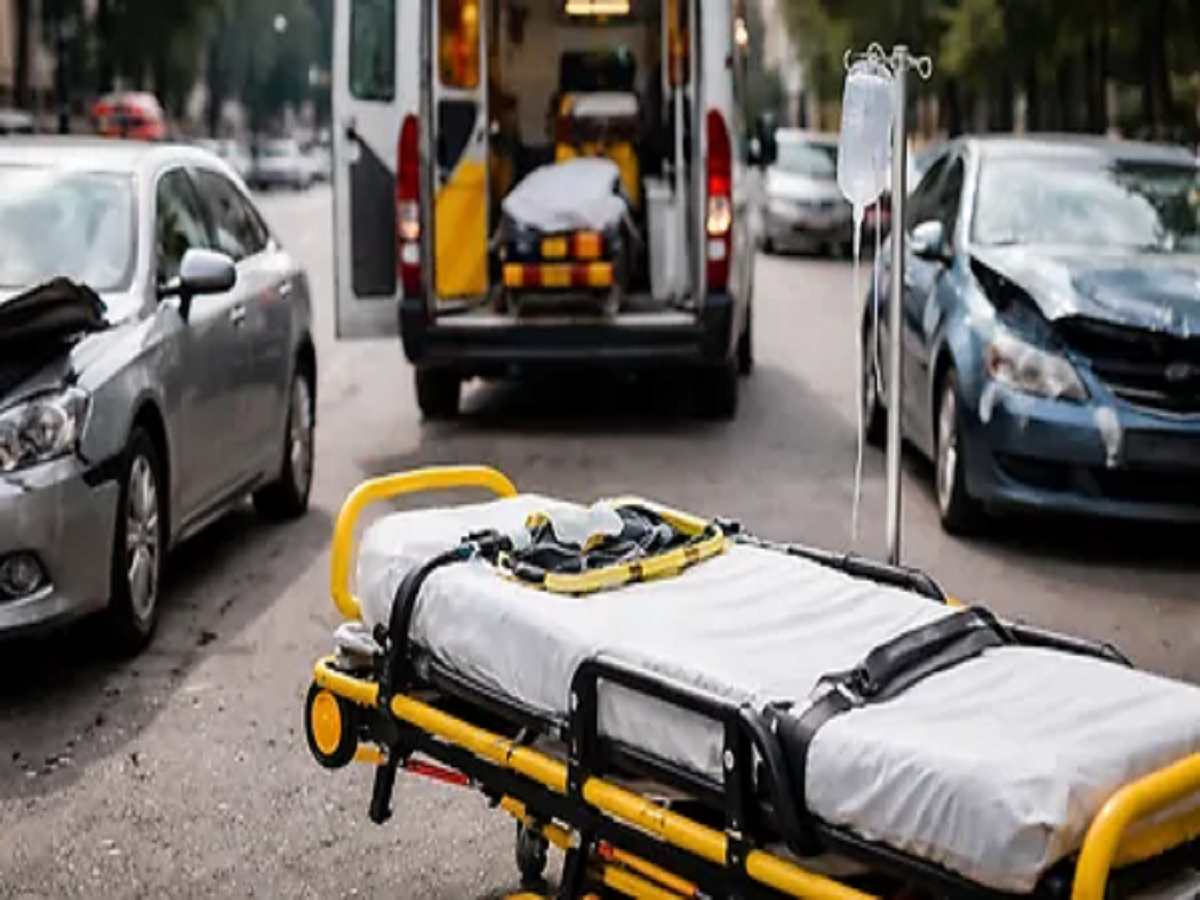
A road accident can turn into a medical emergency within seconds. For many families, the immediate challenge is not only reaching a hospital but also arranging money for emergency treatment. Delays in medical assistance can have serious consequences, particularly during the critical first hour after an injury.
To address this problem, the Government of India launched the Prime Minister – Road Accident Victims' Hospitalisation and Assured Treatment (PM-RAHAT) Scheme in February 2026. The scheme aims to ensure that eligible road accident victims receive timely medical treatment without having to arrange immediate payment.
Under the scheme, eligible victims can receive cashless treatment worth up to ₹1.5 lakh for a maximum period of seven days from the date of the accident. <Cite refs={["turn361548search0","turn361548search1"]} />
Here is what every vehicle owner, driver and citizen should know about this initiative.
What Is the PM-RAHAT Scheme?
PM-RAHAT is a government initiative designed to provide cashless medical treatment to victims of road accidents involving motor vehicles.
The scheme operates under the statutory framework of Section 162 of the Motor Vehicles Act, 1988. It is intended to help accident victims access emergency medical care without delays caused by immediate financial difficulties.
Unlike schemes that cover only people enrolled in advance, PM-RAHAT is designed to cover eligible road accident victims irrespective of whether they were previously registered as beneficiaries of a particular health insurance programme.
The scheme was launched nationwide on February 13, 2026. <Cite refs={["turn361548search1","turn361548search3"]} />
How Much Cashless Treatment Is Available?
The scheme provides the following treatment benefits:
-
Maximum treatment cover: ₹1.5 lakh per eligible victim.
-
Treatment period: Up to seven days from the date of the accident.
-
Non-life-threatening cases: Stabilisation treatment for up to 24 hours at designated hospitals.
-
Life-threatening cases: Stabilisation treatment for up to 48 hours, subject to the scheme's procedures.
The stabilisation provisions are particularly important because they support urgent medical intervention while the required verification process is carried out. <Cite refs={["turn361548search0","turn361548search1"]} />
The ₹1.5 lakh limit is a maximum treatment cover, not an unconditional cash payment to the victim. Treatment is provided through the scheme's designated hospital network under the applicable rules.
Who Is Eligible for the Scheme?
The scheme is intended for people who suffer injuries in road accidents caused by motor vehicles, across categories of roads.
This means that eligibility is not restricted solely to accidents occurring on national highways. Accidents on other roads can also fall within the scheme's scope.
However, treatment must follow the prescribed procedures, including the relevant hospital and accident-verification requirements.
People should not assume that the scheme automatically pays for every medical expense arising from any type of accident. Its coverage is specifically linked to eligible road accidents involving motor vehicles.
How Can an Accident Victim Access Treatment?
One of the most useful features of PM-RAHAT is its integration with India's emergency response system.
Step 1: Call 112
If you witness a road accident or need emergency assistance, dial 112, India's Emergency Response Support System number.
The helpline can help callers obtain information about the nearest designated hospital and request ambulance assistance.
Step 2: Reach a Designated Hospital
The victim should be taken to a designated hospital that can provide treatment under the scheme.
Emergency care should not be unnecessarily delayed while family members arrange money or attempt to complete paperwork themselves.
Step 3: Hospital Initiates the Process
The hospital initiates the treatment and the required digital documentation. The scheme connects hospital treatment records with accident-reporting and verification systems.
Step 4: Police Verification
Police authentication is initiated through the integrated system. The prescribed response timelines differ depending on whether the case is classified as life-threatening.
The process is intended to enable urgent care while maintaining the required verification and accountability.
These procedures are managed through the relevant emergency response, hospital and police systems rather than through a conventional reimbursement application submitted by the victim. <Cite refs={["turn361548search0","turn361548search1"]} />
Does the Victim Need to Purchase Health Insurance First?
No prior enrolment in a health insurance policy is required simply to qualify under PM-RAHAT's intended coverage for eligible road accident victims.
The scheme is different from Ayushman Bharat Pradhan Mantri Jan Arogya Yojana (AB PM-JAY), which has its own beneficiary eligibility framework.
PM-RAHAT is intended to provide treatment cover for eligible motor vehicle road accident victims, while AB PM-JAY provides health coverage to eligible beneficiary families under its separate rules. <Cite refs={["turn361548search3","turn361548search5"]} />
This distinction is important because citizens should not assume that they must possess an existing health insurance card before seeking assistance under PM-RAHAT.
Who Pays the Hospital?
The scheme uses the Motor Vehicle Accident Fund to reimburse hospitals for eligible treatment.
Where the offending motor vehicle is insured, the funding mechanism draws on contributions from general insurance companies. For eligible cases involving uninsured vehicles and hit-and-run accidents, government budgetary support is provided.
The system is designed to create a digital record connecting accident reporting, hospital admission, treatment, police authentication and claim processing.
The government has also prescribed a period of 10 days for payment to hospitals after claims are approved by the relevant State Health Agency, subject to the applicable process. <Cite refs={["turn361548search0","turn361548search1"]} />
What Should Citizens Do After a Road Accident?
In an emergency, knowing the basic steps can make a meaningful difference.
-
Call 112 and request emergency assistance.
-
Provide the accident location as accurately as possible.
-
Avoid moving an injured person unnecessarily if doing so could worsen the injury, unless there is an immediate danger.
-
Follow instructions from emergency responders.
-
Inform hospital staff that the incident involves a road accident and ask about PM-RAHAT coverage.
-
Keep available accident and hospital documentation for future reference.
The priority should always be obtaining emergency medical care. People should not delay calling for help while trying to establish insurance status or determine eligibility.
What If There Is a Problem With the Treatment Process?
PM-RAHAT includes a grievance-redressal mechanism at the district, state and national levels.
At the district level, a designated Grievance Redressal Officer or point of contact is intended to address complaints relating to implementation.
If a grievance is not resolved satisfactorily, it can be escalated through the prescribed authorities, including the District Collector and the relevant State Road Safety Council.
Victims and their families should request the applicable complaint procedure from the hospital or district administration if they encounter difficulties accessing eligible treatment. <Cite refs={["turn361548search1","turn361548search4"]} />
Where Can You Find Official Information?
For verified information about PM-RAHAT, citizens can consult the Government of India's National Portal at India.gov.in or the Ministry of Road Transport and Highways through its official website.
The scheme's operating procedures and designated hospital arrangements may be updated, so it is advisable to confirm the latest instructions through official channels.
Remember that PM-RAHAT is a treatment-support scheme, not a direct cash-transfer programme. Do not pay an unofficial agent who promises guaranteed approval or asks for money to release a government benefit.
Conclusion
The PM-RAHAT Scheme is an important public-service initiative aimed at reducing financial barriers to emergency treatment following road accidents. Its provision of cashless treatment up to ₹1.5 lakh for a maximum of seven days could help eligible victims access essential medical care when time is critical.
The most important information for the public is simple: call 112 in an emergency, seek care at a designated hospital and ask about the applicable PM-RAHAT procedures.
Awareness of such schemes can help people respond more effectively during emergencies and ensure that financial uncertainty does not become an additional obstacle to seeking urgent medical assistance.