BUSINESS
Reliance Industries Stock Falls 17% in 2026: Why ₹3.63 Lakh Crore of Market Value Has Been Wiped Out
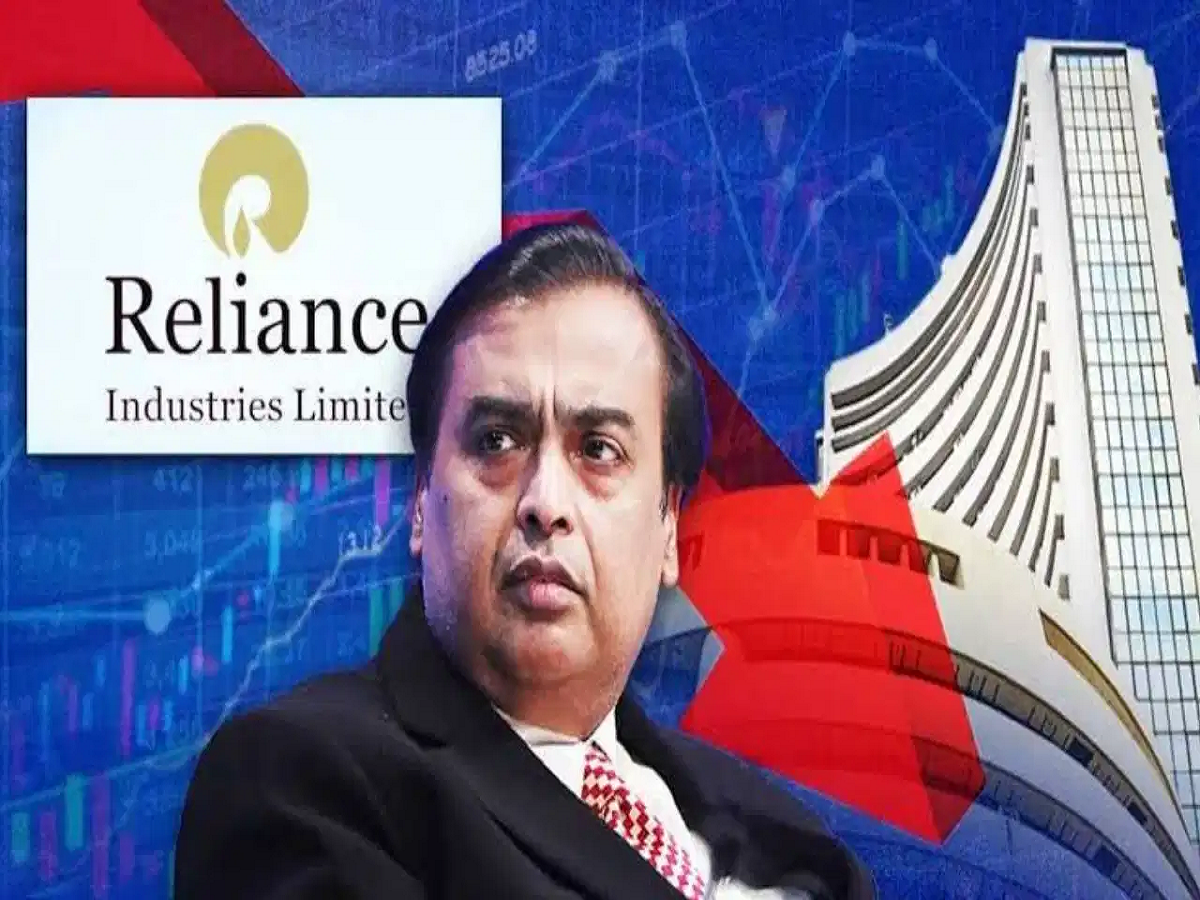
Shares of Reliance Industries have come under pressure in 2026 despite a strong improvement in the company's core oil-to-chemicals (O2C) business. The stock has fallen sharply this year, raising questions about why investors remain cautious even as refining margins have recovered.
According to the figures provided, Reliance Industries' market capitalisation declined by around ₹3.63 lakh crore between the end of last year and August 3. Analysts believe the weakness is less about the company's current O2C earnings and more about concerns surrounding Reliance Retail, new-energy investments and the company's ability to generate stronger free cash flow.
Reliance shares down sharply this year
Reliance Industries shares closed at ₹1,569.40 on the last trading day of the previous year. By August 3, the stock had fallen to ₹1,301.05, representing a decline of around 17%.
The company's market capitalisation also dropped significantly. BSE data cited in the report puts Reliance's valuation at ₹21,23,796.62 crore at the end of last year, compared with ₹17,60,650.95 crore on August 3.
That represents a decline of approximately ₹3,63,146 crore.
The stock did recover somewhat in the following session, rising more than 2% during August 4 trading, but it remained substantially below its year-end level.
O2C business is performing strongly
Interestingly, Reliance's oil-to-chemicals business has been benefiting from a much stronger refining environment.
Singapore gross refining margins averaged around $21.2 per barrel in the second quarter of FY27 so far, compared with approximately $7.5 per barrel in FY26. Disruptions to global refinery operations have also contributed to tighter fuel inventories and stronger refining margins.
Petrochemical spreads have improved as well, with margins for products such as polyethylene, polypropylene and polyethylene terephthalate showing significant gains.
Jefferies expects this favourable environment to support Reliance's earnings in FY27. The brokerage has maintained a Buy rating with a target price of ₹1,710.
So why isn't the stock rising?
This is where the market's concerns become important.
Investors are increasingly looking beyond Reliance's traditional O2C business. Refining margins are already elevated, and analysts believe it could be difficult for them to rise substantially further.
In other words, strong refining margins can support earnings, but investors may not be willing to assign a significantly higher valuation to the company unless there is evidence that its other major businesses can deliver stronger growth.
JPMorgan's analysis suggests that the market is particularly focused on Reliance Retail and the new-energy business.
Reliance Retail is a major valuation factor
Reliance Retail has become one of the most closely watched parts of the Reliance conglomerate.
JPMorgan estimates that the retail business is currently valued at around 26 times FY28 blended EBITDA, compared with roughly 34 times for Avenue Supermarts, the operator of DMart.
The concern is that Reliance Retail needs to demonstrate stronger and more consistent growth to justify a higher valuation.
Recent margin pressure and slower store expansion have also raised questions about the pace of EBITDA growth. If retail growth remains subdued, investors could assign a lower multiple to the business, putting additional pressure on Reliance's overall valuation.
New energy is another big test
Reliance's ambitious new-energy plans are another important factor behind investor caution.
The company has been investing heavily in areas including solar manufacturing, batteries, energy storage, green hydrogen and related technologies. Large-scale manufacturing capacity is expected to come online as Reliance develops its New Energy Complex.
However, the market wants to see these projects move from investment to actual earnings and cash generation.
Any significant delays in commissioning plants, lower-than-expected efficiency or additional borrowing could affect investor sentiment.
At the same time, successful execution could unlock significant long-term value for shareholders.
Free cash flow could change the story
Another important issue is free cash flow.
Reliance has spent heavily in recent years on businesses including retail, petrochemicals and new energy. As a result, free cash flow has remained under pressure.
JPMorgan expects the situation to improve as Reliance's EBITDA run rate increases. The brokerage expects the company to eventually generate positive free cash flow even while continuing to invest.
If that happens, it could strengthen the company's balance sheet and potentially reduce the discount investors currently apply to Reliance's holding-company structure.
What investors are watching now
Reliance's current situation is therefore more complicated than simply saying the company's earnings are weak.
Its O2C business is benefiting from stronger refining and petrochemical margins. However, investors are looking for evidence that Reliance Retail can accelerate growth, the new-energy projects can be commissioned on schedule, and the group's heavy investment cycle can translate into stronger free cash flow.
Until those factors become clearer, strong O2C earnings alone may not be enough to trigger a sustained re-rating of the stock.
In short, the market appears to be asking a simple question: Can Reliance convert its massive investments in retail and new energy into durable growth and cash flow? The answer could play a major role in determining the stock's next big move.