BUSINESS
Ration Card Holders Should Know: New ₹25,530 Crore Government Scheme Will Modernise the Ration System
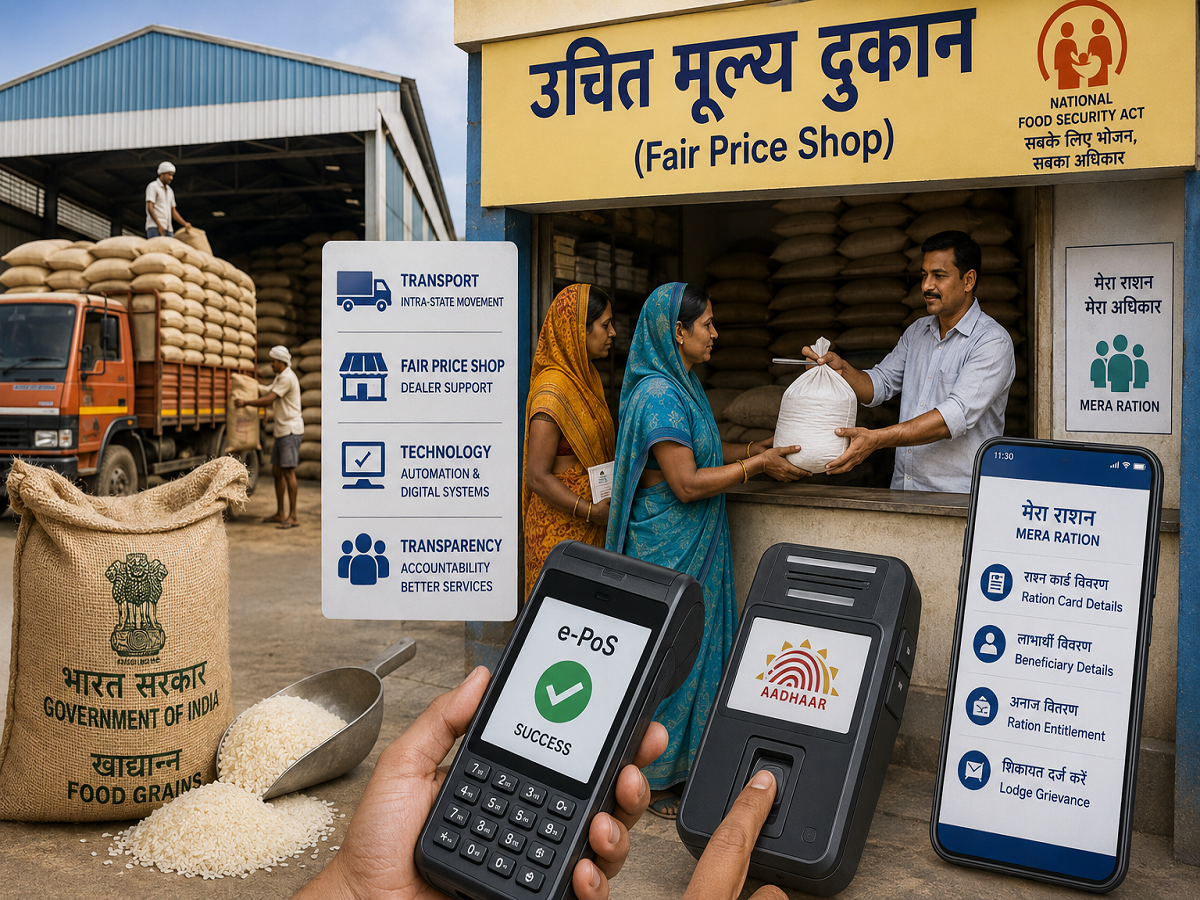
The central government has taken a major step to modernise India's Public Distribution System (PDS) with the approval of the SARTHAK-PDS scheme. The initiative is designed to make ration distribution more transparent, technology-driven and efficient, while improving last-mile delivery of foodgrains to eligible beneficiaries.
The Union Cabinet approved the scheme in May 2026 with a Central share outlay of ₹25,530 crore for the next five years. The scheme will continue up to March 31, 2031.
What is SARTHAK-PDS?
SARTHAK-PDS stands for Scheme for Assistance in Ration Transport and Handling-Income with Automation in PDS. It brings together two existing initiatives related to foodgrain transportation and modernisation of the Public Distribution System under one umbrella programme.
The main objective is to ensure that foodgrains reach beneficiaries more efficiently while reducing leakages and improving monitoring throughout the distribution chain.
According to the government, around 79.8 crore beneficiaries were covered under the National Food Security Act as of December 2025, making improvements in the ration distribution network significant for a very large number of households.
What will change for ration beneficiaries?
The biggest focus of SARTHAK-PDS is the use of technology in the ration distribution system.
The government plans to strengthen the system through technologies such as:
-
Artificial Intelligence (AI)
-
Machine Learning (ML)
-
Natural Language Processing (NLP)
-
Blockchain
-
Unified databases
-
Real-time monitoring systems
-
AI-based grievance and analytics systems
State-level command and control centres are also planned to improve data-based monitoring of PDS operations.
For ordinary ration card holders, this could mean better monitoring of ration movement, improved transparency at Fair Price Shops and quicker identification of irregularities.
Why is this scheme important?
The Public Distribution System involves several stages, from the movement and handling of foodgrains to their final distribution through Fair Price Shops. SARTHAK-PDS is intended to bring these operations into a more integrated and technology-enabled framework.
The scheme also provides financial assistance for intra-state transportation and handling of foodgrains as well as